Home → Blog → Specials → Diwali 2026: Date, Lakshmi Puja Muhurat, Puja Vidhi and 5 Days
Diwali 2026: Date, Lakshmi Puja Muhurat, Puja Vidhi and 5 Days
 On October 16, 2026
Overview
Diwali 2026 falls on Sunday, November 8, 2026, for the main Lakshmi Puja and Amavasya celebration. However, regional traditions differ. In Tamil Nadu and several South Indian traditions, Deepavali is closely associated with Naraka Chaturdashi on Saturday, November 7, 2026.
Diwali, also called Deepavali, is the Festival of Lights. The celebration brings together lamps, family traditions, prayer, Lakshmi-Ganesha worship and the spiritual message of moving from darkness toward light.
For devotees performing Lakshmi Puja, the local Puja Muhurat is especially important. The correct time depends on sunset, Amavasya Tithi and the local Panchang, so the Muhurat changes from one city to another.
This guide covers the Diwali 2026 date, Lakshmi Puja Muhurat, meaning of Diwali, five festival days, home Puja Vidhi, Puja Samagri, mantras and ways to participate in Diwali worship remotely.
Table of Contents
Diwali 2026 Date and Lakshmi Puja Muhurat
The main Diwali Lakshmi Puja falls on Sunday, November 8, 2026. In Tamil Nadu and several South Indian traditions, Deepavali is associated more strongly with Naraka Chaturdashi on Saturday, November 7.
This regional difference explains why people may see both November 7 and November 8 mentioned as the Diwali 2026 date.
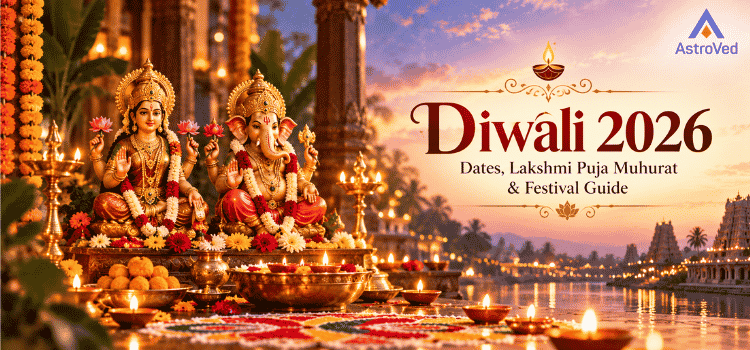
Diwali 2026 Date in India
In many North Indian traditions, the main Diwali celebration takes place on Amavasya with Lakshmi Puja on November 8.
In Tamil Nadu, Deepavali is traditionally observed from early morning on Naraka Chaturdashi. Families may take a traditional oil bath, wear new clothes, offer prayers and celebrate with sweets and festive meals.
| Diwali 2026 Observance |
Date |
Main Significance |
| Dhanteras |
November 6 |
Health, prosperity and beginning of Diwali celebrations |
| Naraka Chaturdashi / Tamil Deepavali |
November 7 |
Krishna's victory over Narakasura and removal of negativity |
| Diwali Lakshmi Puja |
November 8 |
Lakshmi-Ganesha worship and prayers for prosperity |
| Govardhan Puja |
November 9 |
Krishna and Govardhan worship |
| Bhai Dooj |
November 11 |
Celebration of the bond between siblings |
These observances do not always fall on five consecutive calendar dates because Hindu festival dates depend on lunar Tithis rather than midnight-to-midnight civil dates.
For more festival details, visit our Diwali festival guide
Lakshmi Puja Muhurat for Diwali 2026
Lakshmi Puja on Diwali 2026 is performed during the evening of November 8. The preferred worship period generally falls during Pradosh Kaal and Vrishabha Kaal.
The exact Lakshmi Puja Muhurat changes by location because sunset occurs at different times across India.
| City |
Diwali 2026 Lakshmi Puja Muhurat |
| New Delhi |
5:54 PM to 7:50 PM |
| Chennai |
6:07 PM to 8:09 PM |
| Mumbai |
6:27 PM to 8:27 PM |
| Bengaluru |
6:17 PM to 8:20 PM |
| Pune |
6:24 PM to 8:24 PM |
| Hyderabad |
6:07 PM to 8:08 PM |
| Jaipur |
6:03 PM to 7:59 PM |
| Kolkata |
5:20 PM to 7:18 PM |
These are local city timings. Devotees living elsewhere should use the Panchang for their own city rather than applying one India-wide Muhurat.
Meaning of Diwali and Why It Is Celebrated
Diwali is the Festival of Lights and represents the victory of light over darkness, knowledge over ignorance and Dharma over harmful forces.
The word Deepavali comes from "Deepa," meaning lamp, and "Avali," meaning a row. Deepavali therefore refers to a row of lamps.
Lighting Diyas during Diwali carries both practical and symbolic meaning. The lamps brighten the Amavasya night while representing hope, awareness and the removal of inner darkness.
Why Is Diwali Celebrated?
Diwali is connected with different sacred stories across India, so the festival should not be reduced to one tradition alone.
In North India, Diwali is widely associated with Lord Rama returning to Ayodhya with Sita and Lakshmana after defeating Ravana. Tradition describes the people of Ayodhya welcoming them with rows of lamps.
In South India, Deepavali is strongly connected with Lord Krishna's victory over Narakasura. Naraka Chaturdashi therefore carries special importance in Tamil and several South Indian traditions.
Goddess Lakshmi is central to the Amavasya evening celebration in many regions. Devotees worship her while praying for prosperity, abundance, harmony and auspiciousness.
In Bengal, Kali Puja receives particular importance during this period. Jain, Sikh and other Indian traditions also connect Diwali with significant spiritual events.
Although the stories vary, they share a similar spiritual theme: overcoming darkness, ignorance, injustice and limitation.
Diwali vs Deepavali
Diwali and Deepavali are two names for the same broad Festival of Lights. Deepavali is closer to the Sanskrit name and is widely used in South India. Diwali is more common in North India and in English-language usage.
The difference is mainly linguistic, but regional celebration styles can differ. North Indian families often give greater importance to evening Lakshmi Puja on Amavasya, while Tamil families traditionally emphasize Naraka Chaturdashi and early morning Deepavali observances.
The Five Days of Diwali 2026
Diwali is commonly celebrated through five major observances, and each day has its own spiritual meaning, deity connection and family tradition.
Day 1: Dhanteras - November 6
Dhanteras begins the Diwali festival period and is associated with Dhanvantari, Goddess Lakshmi and Kubera.
Families may clean their homes, light lamps and make new purchases according to tradition. Devotees also pray for health, responsible prosperity and well-being.
Day 2: Naraka Chaturdashi - November 7
Naraka Chaturdashi commemorates Lord Krishna's victory over Narakasura and represents freedom from harmful forces.
In Tamil Nadu, this is the main Deepavali morning. Traditional practices may include an early oil bath, new clothes, prayers, sweets and family celebrations.
Learn more about the meaning of Naraka Chaturdashi.
Day 3: Diwali and Lakshmi Puja - November 8
The main Diwali Amavasya evening is dedicated to Goddess Lakshmi in many traditions.
Families clean and decorate their homes, light Diyas, create Rangoli and perform Lakshmi-Ganesha Puja. The worship expresses gratitude for existing blessings while seeking prosperity, wisdom and an auspicious path ahead.
Day 4: Govardhan Puja - November 9
Govardhan Puja remembers Lord Krishna lifting Govardhan Hill to protect the people of Vrindavan from heavy rain.
The festival highlights Krishna's protection and the importance of gratitude toward nature. In several traditions, the day is also observed as Annakut, with different foods offered to Krishna.
Day 5: Bhai Dooj - November 11
Bhai Dooj celebrates affection, protection and goodwill between brothers and sisters.
Sisters traditionally pray for their brothers' well-being, while families come together to strengthen sibling bonds.
Lakshmi and Ganesha Worship on Diwali
Goddess Lakshmi and Lord Ganesha are commonly worshipped together during Diwali because they represent two complementary forms of blessing.
Goddess Lakshmi represents prosperity, abundance, fortune and auspiciousness. Lord Ganesha represents wisdom, clear beginnings and the removal of obstacles.
Their combined worship carries a deeper meaning. Prosperity alone is not enough. Wisdom is needed to use prosperity well, while clarity helps remove obstacles that stand in the way of progress.
This is why many families place Lakshmi and Ganesha together on the altar before beginning the Diwali evening Puja.
Read more about the significance of Lakshmi and Ganesha worship.
Diwali Lakshmi Puja at Home
Diwali Lakshmi Puja at home can be simple, organized and devotional. The exact ritual can differ according to family and regional traditions.
Before beginning, clean the worship area and arrange the Puja items so the family can perform the ritual without interruption.
- Prepare the altar: Cover a Chowki or clean surface with a fresh cloth and place Lakshmi and Ganesha images or idols on it.
- Arrange the Kalash: If followed in your tradition, prepare a Kalash with water, leaves and coconut and place it near the altar.
- Light Diyas: Light oil or ghee lamps and incense before beginning the main prayers.
- Begin with Ganesha: Pray to Lord Ganesha first for an auspicious beginning and the removal of obstacles.
- Invoke Goddess Lakshmi: Offer flowers, Kumkum, turmeric, sandal paste and Akshata while praying to Mahalakshmi or invoke blessings through AstroVed's MahaLakshmi's Puja.
- Offer Naivedyam: Present fruits, sweets or food prepared for the occasion.
- Offer symbols of prosperity: Families may place coins, account books or business ledgers before Lakshmi according to tradition.
- Chant prayers: Recite simple Lakshmi and Ganesha mantras, Sri Suktam or other prayers followed by the family.
- Perform Aarti: Conclude the main worship with Aarti.
- Share Prasad: Distribute the blessed offerings among family members.
The number of ritual items is less important than performing the Puja with attention and devotion. Families should also continue any customs passed down through their own tradition.
For a more detailed ritual reference, see our guide on how to perform Lakshmi Pooja on Diwali.
Diwali Puja Samagri, Mantras and Online Participation
A well-prepared Diwali Puja setup helps the family focus on worship without searching for items during the ritual.
Diwali Puja Samagri
The exact Puja Samagri varies according to region and family tradition. The following checklist covers the common items used for a simple Lakshmi-Ganesha Puja.
| Puja Item |
Purpose |
| Lakshmi and Ganesha images or idols |
Main deities for worship |
| Chowki and clean cloth |
Creates the Puja altar |
| Kalash, water, leaves and coconut |
Traditional sacred setup where followed |
| Diyas, oil or ghee |
Lighting the Puja space |
| Kumkum and turmeric |
Traditional sacred offerings |
| Sandal paste |
Used during deity worship |
| Flowers or lotus |
Floral offering to the deities |
| Rice or Akshata |
Used during different stages of Puja |
| Fruits and sweets |
Naivedyam and Prasad |
| Incense and camphor |
Used during worship and Aarti |
| Betel leaves and betel nuts |
Traditional Puja offering |
| Coins or account books |
Included in prosperity prayers by some families |
Not every item is compulsory. If a full Puja setup is not possible, devotees can keep the worship simple with Diyas, flowers, fruit, prayer and devotion.
Diwali Lakshmi and Ganesha Mantras
Simple mantras can be included during Diwali Puja even when the family does not follow an elaborate ritual.
For Goddess Lakshmi:
Om Shreem Mahalakshmyai Namah
The mantra is a simple invocation to Goddess Mahalakshmi and may be chanted as part of prosperity and auspiciousness prayers.
For Lord Ganesha:
Om Gam Ganapataye Namah
This mantra invokes Ganesha for an auspicious beginning and the removal of obstacles.
Families may also recite Sri Suktam, Lakshmi Ashtottara, Lakshmi Ashtakam or other traditional prayers they are familiar with.
Diwali Aarti
Aarti generally marks the concluding part of the Puja and is offered after the main prayers and Naivedyam.
Families may perform Lakshmi Aarti and Ganesha Aarti while keeping the lit lamp before the deities. After Aarti, Prasad is shared among those present.
It is not necessary to perform many chants. A smaller number of prayers performed with concentration can make the worship easier for all family members to follow.
Participating in Diwali Puja Online
Online Diwali Puja allows devotees to participate in priest-performed worship when they cannot arrange an elaborate ritual at home or visit a temple in person.
AstroVed's Diwali 2026 observances begin with Dhanteras on November 6, continue through Naraka Chaturdashi on November 7 and culminate with Mahalakshmi worship on November 8.
The 2026 celebration includes Mahalakshmi worship, sacred chanting and Homa. Selected participation options may also include Sankalpa and remote participation.
This option can be useful for devotees living outside India, away from family or in places where traditional priest services are not easily available.
Remote participation can complement a simple personal prayer or lamp-lighting practice at home.
Conclusion
Diwali 2026 brings together prayer, family traditions, spiritual renewal and the symbolism of light.
The main Lakshmi Puja celebration falls on Sunday, November 8, while Tamil Deepavali and Naraka Chaturdashi are observed on November 7.
Families can celebrate through Lakshmi-Ganesha Puja, Diyas, traditional food, mantras and the customs followed in their region. Devotees who cannot arrange a full home Puja can also participate in priest-performed worship remotely.
Beyond the rituals, Diwali carries a lasting message: welcome light with awareness, prosperity with wisdom and new beginnings with gratitude.
Frequently Asked Questions About Diwali 2026
When is Diwali in 2026?
The main Diwali Lakshmi Puja falls on Sunday, November 8, 2026. Tamil Deepavali and Naraka Chaturdashi fall on Saturday, November 7.
What is the Lakshmi Puja Muhurat for Diwali 2026?
Lakshmi Puja is performed during the evening of November 8, 2026. The exact Muhurat varies by city because it depends on local sunset, Pradosh Kaal and Panchang calculations.
What is the difference between Diwali and Deepavali?
Diwali and Deepavali refer to the same broad Festival of Lights. Deepavali is closer to the Sanskrit name and is widely used in South India, while Diwali is more common in North India and English usage.
Why is Diwali celebrated?
Diwali is connected with different sacred traditions across India, including Rama's return to Ayodhya, Krishna's victory over Narakasura and Lakshmi worship. The festival broadly represents the victory of light over darkness and Dharma over harmful forces.
What are the five days of Diwali 2026?
The main observances are Dhanteras on November 6, Naraka Chaturdashi on November 7, Diwali Lakshmi Puja on November 8, Govardhan Puja on November 9 and Bhai Dooj on November 11.
Why are Lakshmi and Ganesha worshipped together on Diwali?
Lakshmi represents prosperity and auspiciousness, while Ganesha represents wisdom, auspicious beginnings and the removal of obstacles. Their combined worship symbolizes prosperity supported by wisdom and clarity.
Which mantra can I chant during Diwali Puja?
A simple Lakshmi mantra is "Om Shreem Mahalakshmyai Namah." For Lord Ganesha, devotees may chant "Om Gam Ganapataye Namah."
Can I participate in Diwali Puja online?
Yes. Devotees who cannot visit a temple or arrange an elaborate home Puja can participate in priest-performed Diwali worship remotely when online participation options are available.- Deepavali
- Diwali
- Diwali 2026
- Diwali celebration
- Diwali pooja
- Lakshmi Kubera Pooja
- MahaLakshmi pooja


 The item has been added to your cart.


