

 The item has been added to your cart.
Karthigai Somavaram 2026: Dates, Vratham Rules, Pooja Vidhanam & Benefits
 On October 27, 2026
Overview:
Karthigai Somavaram 2026 brings four sacred Mondays for the worship of Lord Shiva during the Tamil month of Karthigai. For a devotee observing the Vratham for the first time, the practical details matter. You may want to know the correct dates, fasting rules, suitable offerings and the right way to perform Shiva Pooja at home. Updated for 2026: The four Karthigai Somavaram dates are November 23, November 30, December 7 and December 14, 2026.Karthigai Somavaram 2026 at a Glance
Karthigai Somavaram is the Monday worship of Lord Shiva during the Tamil month of Karthigai. In 2026, the four sacred Mondays fall on November 23, November 30, December 7 and December 14. Devotees may observe Vratham, perform Shiva Pooja, offer Bilva leaves and participate in Abishekam.
Table of Contents
| 1 | 2026 Dates |
| 2 | Meaning & Significance |
| 3 | Vratham & Fasting Rules |
| 4 | Home Pooja & Benefits |
| 5 | Special Shiva Worship |
| 6 | FAQs |
Karthigai Somavaram 2026 Dates
Karthigai Somavaram 2026 is observed on four Mondays during the Tamil month of Karthigai.| Monday | Date | Tamil Date, Chennai Calendar |
|---|---|---|
| First Karthigai Somavaram | November 23, 2026 | Karthigai 7 |
| Second Karthigai Somavaram | November 30, 2026 | Karthigai 14 |
| Third Karthigai Somavaram | December 7, 2026 | Karthigai 21 |
| Fourth Karthigai Somavaram | December 14, 2026 | Karthigai 28 |
Meaning and Significance of Karthigai Somavaram
Karthigai Somavaram refers to the Mondays that fall during the Tamil month of Karthigai. "Somavaram" means Monday. The word "Soma" is also a traditional name for Chandra, the Moon. Mondays already hold an important place in Lord Shiva worship. During Karthigai, Monday worship takes on added devotional importance.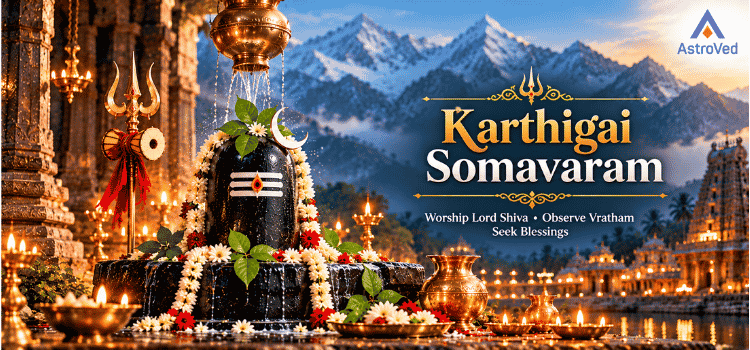 Devotees may observe a Vratham, meaning a devotional vow or disciplined observance. Others perform Shiva Pooja, visit a temple, offer Bilva leaves or participate in Abishekam.
The practice is especially familiar in Tamil Shaiva traditions. However, the exact form of worship can differ between families and temples.
Devotees can also explore the traditional observance through AstroVed's Karthigai Somavaram guide.
Monday and Lord Shiva
Monday is traditionally associated with Chandra, the Moon, and Lord Shiva as Someshwara or Chandramouleeshwarar. Chandramouleeshwarar means the form of Shiva who bears the crescent Moon. This relationship gives Somavaram an important place in Shiva worship. Devotees commonly use Mondays for prayer, fasting, Abishekam and Shiva mantra chanting. During the Tamil month of Karthigai, these practices are followed with greater devotional focus.The Traditional Story of Shiva and Chandra
According to tradition, Chandra was married to the 27 daughters of King Daksha. However, Chandra showed special affection toward Rohini. Daksha became angry and cursed Chandra. As a result, the Moon began to lose his strength and radiance. Chandra then sought refuge in Lord Shiva. Moved by Chandra's prayers, Lord Shiva reduced the effect of the curse and gave Chandra a place on his matted hair as the crescent Moon. This form of Shiva became known as Chandramouleeshwarar or Someshwara. A devotional tradition connects Chandra's blessing with a Monday during Karthigai. Therefore, Karthigai Somavaram is regarded as a meaningful period for Shiva worship. The story also carries an inner message. Just as Chandra sought refuge when his light was fading, devotees turn toward Lord Shiva seeking clarity, strength and spiritual renewal. Read more about the traditional connection between Somavaram fasting and Chandra.Karthigai Somavaram Vratham and Fasting Rules
Karthigai Somavaram Vratham is a devotional observance followed on the Mondays of Karthigai to worship Lord Shiva with greater discipline. The Vratham may include fasting, simple food, prayer, mantra chanting, temple worship and self-control. There is no single fasting method followed by every devotee. Family customs, health needs and temple traditions can differ.Traditional Somavaram Fasting Practices
A devotee who wishes to observe Karthigai Somavaram Vratham can follow these broad principles:- Begin the day with a bath and prayer to Lord Shiva.
- Keep the daily routine simple and devotional.
- Avoid alcohol and non-vegetarian food.
- Observe a full or partial fast according to health and family tradition.
- Chant "Om Namah Shivaya" during the day.
- Visit a Shiva temple if possible.
- Offer Bilva leaves, flowers, water or simple Naivedyam.
- Avoid unnecessary anger, harsh speech and distractions.
- Conclude the Vratham according to the tradition you follow.
Fasting Is Not the Only Form of Worship
A strict fast is not the only way to observe Karthigai Somavaram. A devotee who cannot fast can still light a lamp, chant Shiva's name, offer Bilva leaves or spend time in prayer. For people with work, travel or health responsibilities, a simpler observance may be more suitable. The central idea is disciplined remembrance of Lord Shiva.Karthigai Somavaram Pooja at Home
A simple Karthigai Somavaram Pooja can include purification, lamp lighting, Shiva worship, mantra chanting, offerings and Aarti. The procedure does not need to copy an elaborate temple ritual. A beginner can follow this simple devotional sequence:- Clean the prayer space and take a bath before beginning.
- Place a Shiva Lingam or image of Lord Shiva on a clean altar.
- Light an oil or ghee lamp.
- Begin with a short prayer to Lord Ganesha.
- Offer clean water to the Shiva Lingam if your home tradition permits Abishekam.
- Apply sandal paste or Vibhuti according to your practice.
- Offer fresh Bilva leaves and flowers.
- Chant "Om Namah Shivaya" with attention and devotion.
- Offer fruits or another simple vegetarian Naivedyam.
- Conclude with Aarti and quiet prayer.
🪔
Place your Sankalpam in priest-performed Shiva worship across the four sacred Karthigai Mondays.
Participate in Pooja →Traditional Benefits of Karthigai Somavaram
Karthigai Somavaram is traditionally observed to seek Lord Shiva's grace, inner purification, peace of mind and spiritual strength. The practice also encourages greater discipline through prayer and Vratham. Devotees traditionally pray for:- greater inner peace
- mental clarity
- strength during difficult periods
- relief from the burden of past actions
- family well-being
- protection and spiritual support
- deeper devotion to Lord Shiva
- progress on the spiritual path
Sangu Abishekam, Bilva Archana and Special Shiva Worship
Sangu Abishekam and Bilva Archana are important forms of Shiva worship associated with Karthigai Somavaram in many Tamil temples. Both express devotion in different ways.Sangu Abishekam
Sangu Abishekam is a sacred hydration ceremony in which water or another prescribed offering is offered to Lord Shiva using conch shells. "Sangu" means conch. "Abishekam" refers to ceremonial bathing or hydration of the deity. During Karthigai, many Shiva temples perform special conch Abishekam. Larger observances may use 108 conches. This form is commonly called 108 Sangu Abishekam or Shankhabishekam. The conch water is offered to the Shiva Lingam while priests chant sacred prayers.108 Conch Abishekam
108 Conch Abishekam uses 108 sacred conch shells in an extended hydration ceremony for Lord Shiva. The number 108 holds sacred importance in several Hindu traditions. During the ritual, the repeated offerings are accompanied by mantra chanting and prayer. The exact Vidhanam belongs to the temple or priest conducting the ceremony. Therefore, devotees do not need to reproduce a 108-conch ritual at home without proper guidance.Bilva Archana
Bilva Archana is the offering of Bilva leaves to Lord Shiva while his sacred names or prayers are recited. Bilva, also called Vilva, is one of the most familiar sacred offerings associated with Shiva. During Karthigai Somavaram, devotees may offer Bilva leaves at home or participate in priest-performed Bilva Archana. A simple home offering can consist of clean Bilva leaves offered respectfully while chanting "Om Namah Shivaya."🙏
Participate in 108 Conch Abishekam and sacred Shiva worship during Karthigai Somavaram.
Choose Shiva Worship →Four Karthigai Mondays in 2026
The four Karthigai Somavaram dates can be observed as one continuous devotional journey rather than four unrelated Mondays. The following is a simple devotional plan. It is not a fixed scriptural requirement.First Monday: November 23, 2026
Begin the observance with a clear Sankalpam, meaning devotional intention. Set aside time for Shiva Pooja and chant "Om Namah Shivaya." If you plan to observe all four Mondays, use the first day to establish a simple routine that you can continue.Second Monday: November 30, 2026
Continue the same worship with greater consistency. Offer Bilva leaves and spend a few minutes in quiet prayer after the Pooja. Instead of adding many rituals, focus on maintaining the observance steadily.Third Monday: December 7, 2026
Use the third Monday to deepen the practice through additional Shiva mantra chanting or meditation. Devotees may also visit a Shiva temple according to their family tradition.Fourth Monday: December 14, 2026
Use the final Karthigai Monday as a day of gratitude and completion. Repeat the prayers followed during the previous weeks. Offer Bilva leaves or simple Naivedyam and conclude with a prayer for continued devotion and right conduct.🔔
Join Shiva worship performed across November 23, November 30, December 7 and December 14.
Join Four Mondays →Online Participation in Karthigai Somavaram Pooja
Devotees who cannot visit a Shiva temple can still observe Karthigai Somavaram through home worship or priest-performed Pooja on their behalf. Online participation can be helpful for devotees living outside India or those who cannot travel. A sponsored service may include Sankalpam, where the devotee's name and prayer intention are included in the ritual. AstroVed's Karthigai Somavaram 2026 worship covers the four sacred Mondays on November 23, November 30, December 7 and December 14. The program includes priest-led worship and special Shiva rituals through selected participation options. Home prayer and sponsored worship can also complement each other. A devotee may light a lamp and worship Lord Shiva at home while also sponsoring traditional worship at a sacred Powerspot.Conclusion
Karthigai Somavaram offers four sacred Mondays to turn toward Lord Shiva through prayer, restraint and devotion. The observance does not need to be elaborate. A lamp, a few Bilva leaves and sincere chanting can become a meaningful Shiva Pooja. Devotees seeking priest-performed worship may also observe Karthigai Somavaram through Sankalpam, Abishekam, Archana and Homa performed on their behalf. May these sacred Mondays deepen your connection with Lord Shiva and inspire peace, clarity and devotion.Key Takeaways
- Karthigai Somavaram is Monday worship of Lord Shiva during the Tamil month of Karthigai.
- The 2026 dates are November 23, November 30, December 7 and December 14.
- Vratham may include fasting, prayer, Shiva mantra chanting and simple living.
- A strict fast is not the only way to observe Karthigai Somavaram.
- Home Shiva Pooja can include a lamp, Bilva leaves, flowers, Naivedyam and "Om Namah Shivaya."
- Sangu Abishekam uses sacred conches for Shiva Abishekam.
- Bilva Archana involves offering sacred Bilva leaves with Shiva prayers.
- Devotees unable to visit a temple may continue home worship or participate in priest-performed Karthigai Somavaram services.


