

 The item has been added to your cart.
Ayyappa Pooja: Vidhanam, 41-Day Vratham, Padi Pooja & Sabarimala
 On October 26, 2026
Overview
A first Ayyappa Vratham can bring many questions. How should Ayyappa Pooja be performed at home? What should be offered? Why do devotees observe 41 days of discipline? What is Irumudi? And why are the 18 steps at Sabarimala so sacred? Ayyappa Pooja brings these practices together through devotion, discipline and surrender to Ayyappa, also known as Dharma Sastha and Harihara Putra. Devotees preparing for Sabarimala traditionally observe a Ayyappa Deeksha, 41-day Vratham. The journey then includes Irumudi Kettu, Pathinettam Padi and sacred worship at Ayyappa's shrine.Quick Summary
Ayyappa Pooja can be performed simply at home with a clean altar, lamp, flowers, offerings and prayer. Devotees undertaking the Sabarimala pilgrimage traditionally observe a 41-day Vratham, prepare the Irumudi Kettu, climb the sacred Pathinettam Padi and offer Neyyabhishekam to Ayyappa.
Table of Contents
| 1 | Ayyappa & His Story |
| 2 | Ayyappa Pooja at Home |
| 3 | 41-Day Ayyappa Vratham |
| 4 | Sabarimala & Irumudi |
| 5 | 18 Steps & Sacred Rituals |
| 6 | Ayyappa Pooja FAQs |
Who Is Ayyappa?
Ayyappa is a Hindu deity associated with Dharma, discipline, protection and spiritual self-control. Ayyappa is also known as Dharma Sastha, Manikandan and Harihara Putra. Harihara Putra means the son of Hari, Vishnu, and Hara, Shiva. Ayyappa worship has a close connection with disciplined living. This is especially clear in the Sabarimala pilgrimage, where devotees prepare through prayer, simplicity and self-control. Devotees can learn more about the deity, his forms and significance through AstroVed's Ayyappa guide.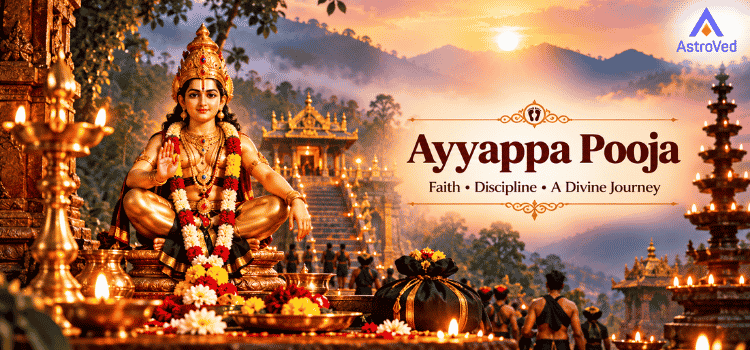
What Is the Story of Ayyappa?
The story of Ayyappa explains why devotees connect him with Dharma, courage and spiritual discipline. According to tradition, Ayyappa was born from the Divine union of Shiva and Vishnu in the form of Mohini. As an infant, Manikandan was found and later raised by King Rajasekhara of Pandalam. As he grew, Manikandan displayed unusual wisdom and courage. A major part of the legend describes Manikandan's journey into the forest and his victory over Mahishi. After completing his Divine purpose, Ayyappa revealed his true nature. Pandalam therefore holds an important place in the Ayyappa tradition. Readers interested in this part of his story can explore the Pandalam Ayyappa Temple. The story reminds devotees that Ayyappa worship is not only about asking for blessings. It also emphasizes courage, righteous conduct, discipline and surrender.What Is Ayyappa Pooja?
Ayyappa Pooja is devotional worship offered to Ayyappa through prayer, lamps, flowers, chanting and sacred offerings. The exact Ayyappa Pooja Vidhanam, meaning method of worship, can vary by family, temple and regional tradition. Therefore, a simple home Pooja does not need to copy the full ritual followed at Sabarimala. For a family beginning Ayyappa worship, the focus can remain on cleanliness, devotion and sincere prayer.How to Perform Ayyappa Pooja at Home
A simple Ayyappa Pooja at home can follow these steps.- Clean the prayer area and bathe before beginning the Pooja.
- Place an image or Ayyappa statue on a clean, raised altar.
- Light a lamp and incense.
- Begin with a short prayer to Ganesha.
- Offer flowers to Ayyappa.
- Offer fruit, coconut or another simple Naivedyam.
- Chant "Swamiye Saranam Ayyappa."
- Recite Ayyappa prayers or names followed by your family.
- Sit quietly for a few moments in prayer.
- Conclude with Aarti and distribute Prasad.
What Can Be Offered to Ayyappa?
Ayyappa Pooja offerings can remain simple. The intention behind the offering is more important than making the home altar elaborate.| Offering | Use in Worship |
|---|---|
| Oil or ghee lamp | Light offered during prayer |
| Flowers | Devotional offering |
| Coconut | Traditional sacred offering |
| Fruits | Naivedyam and Prasad |
| Incense | Used during worship |
| Camphor | Commonly used for Aarti |
| Vibhuti | Sacred ash where followed |
| Sandal paste | Traditional Pooja offering |
| Appam or traditional food | Offered according to family custom |
Choosing an Ayyappa Statue for Home Pooja
An Ayyappa statue can become the visual focus of the home prayer space. Choose a form that fits comfortably on the altar. Keep the surrounding area clean and uncluttered. The statue should rest on a stable and raised surface used respectfully for worship. Selected AstroVed Ayyappa participation packages also include an energized miniature Ayyappa statue and Ayyappa Mala.🪔
Deepen your Ayyappa worship with selected packages that include energized Ayyappa sacred items for your prayer space.
Explore Energized Ayyappa Items →What Is the 41-Day Ayyappa Vratham?
The 41-day Ayyappa Vratham is a period of disciplined living traditionally observed before the Sabarimala pilgrimage. This period is also called Mandala Vratham or Ayyappa Deeksha. One Mandala covers 41 days of devotional preparation. The Vratham focuses on simplicity, prayer, self-control and a disciplined daily routine. Devotees can also read more about the season through AstroVed's Mandala Pooja guide.How Does the Ayyappa Vratham Begin?
The Vratham traditionally begins with Mala Dharanam, meaning wearing the sacred Mala. A devotee may receive the Mala under the guidance of a Guru Swami or according to the practice followed by the family or temple. From that point, the devotee follows a more disciplined way of life.What Is Followed During the 41-Day Vratham?
The traditional Vratham emphasizes a simple and prayerful lifestyle. Common observances include:- regular prayer and Ayyappa chanting
- simple living
- avoiding alcohol and smoking
- celibacy
- wearing the sacred Mala
- wearing simple dark clothing according to tradition
- avoiding unnecessary luxury
- developing greater control over speech and behavior
A Simple Daily Vratham Routine
The Vratham can be understood as a daily spiritual rhythm. Begin the morning with bathing and prayer. Chant Ayyappa's name and remember the intention of the Vratham. During the day, practice restraint in speech, food and personal habits. In the evening, light a lamp and offer prayer again. The goal is consistency. The 41-day practice prepares the mind as much as the body.What If the Vratham Is Broken?
Do not create your own penalty or restart rule. Practices can vary between traditions. Therefore, speak with the Guru Swami or priest guiding the Vratham if an important observance is broken.🙏
Cannot undertake the full pilgrimage this season? Participate in priest-performed Ayyappa Poojas, Nei Abishekam, Padi Pooja and sacred Mandala-season worship.
Explore Ayyappa Pooja Services →Sabarimala Pilgrimage and Irumudi Kettu
The Sabarimala pilgrimage is a sacred journey to the Sree Dharma Sastha Temple in Kerala, where Ayyappa is the presiding deity. The pilgrimage connects the 41-day Vratham with Irumudi Kettu, Pamba, Pathinettam Padi and Darshan of Ayyappa. Temple opening dates can change each season. Therefore, devotees planning travel should always check the official Sabarimala schedule before departure.What Is Irumudi Kettu?
Irumudi Kettu is the sacred two-part bundle carried during the traditional Sabarimala pilgrimage. Kettunirakkal means preparing and packing the Irumudi. This ritual is traditionally performed under the guidance of a Guru Swami. The Irumudi contains offerings for Ayyappa as well as items required by the devotee during the pilgrimage. One of the most important items is the coconut filled with ghee for Neyyabhishekam. The Irumudi is not ordinary travel luggage. It represents the devotee's discipline, preparation and offerings for Ayyappa.What Are the 18 Sacred Steps of Sabarimala?
The 18 sacred steps at Sabarimala are known as Pathinettam Padi. They lead toward the sacred presence of Ayyappa. Several traditional interpretations explain the meaning of the 18 steps. Therefore, no single symbolic explanation should be treated as the only interpretation. One widely known interpretation connects the steps with the five senses, eight inner tendencies, three Gunas, Vidya and Avidya.Meaning of the 18 Sacred Steps
| Step | Traditional Meaning |
|---|---|
| 1 | Sight |
| 2 | Hearing |
| 3 | Smell |
| 4 | Taste |
| 5 | Touch |
| 6 | Kama, desire |
| 7 | Krodha, anger |
| 8 | Lobha, greed |
| 9 | Moha, attachment |
| 10 | Asuya, jealousy |
| 11 | Dambha, ego or pretence |
| 12 | Mada, pride |
| 13 | Matsarya, unhealthy rivalry |
| 14 | Sattva, purity and balance |
| 15 | Rajas, activity and passion |
| 16 | Tamas, inertia and darkness |
| 17 | Vidya, knowledge |
| 18 | Avidya, ignorance |
What Is Ayyappa Padi Pooja?
Padi Pooja is the worship of the 18 sacred steps associated with Ayyappa. At Sabarimala, Pathinettam Padi itself receives ritual worship on selected days. Outside Sabarimala, some Ayyappa temples and devotional groups also conduct symbolic Padi Pooja using 18 arranged steps. The exact Padi Pooja Vidhanam can vary by temple and tradition. Therefore, a detailed ritual should follow the priest or Guru Swami conducting the worship. A simple understanding of Padi Pooja includes preparing the sacred steps, lighting lamps, invoking Ayyappa, offering worship and concluding with Saranam chanting and Aarti.What Is Neyyabhishekam?
Neyyabhishekam is the sacred offering of ghee to Ayyappa. It is one of the best-known rituals connected with the Sabarimala pilgrimage. Pilgrims traditionally carry ghee inside a coconut in the Irumudi. After reaching Sannidhanam, the ghee is offered for Abhishekam to Ayyappa. The ritual also carries a spiritual meaning. The ghee represents the individual soul, while Ayyappa represents the Supreme Divine. Offering the ghee therefore symbolizes surrender. The emptied coconut represents the physical form after the inner offering has been given to the Divine.What Does "Swamiye Saranam Ayyappa" Mean?
"Swamiye Saranam Ayyappa" expresses surrender and refuge in Ayyappa. The word Saranam means refuge, protection or surrender. Devotees repeat this chant during prayer, Vratham and the Sabarimala pilgrimage. The chant also reminds the devotee to release ego, distraction and fear. Ayyappa devotees often address one another as "Swami." This reflects the spiritual idea of seeing the sacred presence in fellow pilgrims.🔔
Seek Ayyappa's blessings through traditional temple services, including Ayyappa Pooja, Abishekam and Homa.
Explore Ayyappa Temple Services →Key Takeaways
- Ayyappa Pooja can be performed simply at home with prayer, a lamp, flowers and offerings.
- The 41-day Vratham is traditionally connected with preparation for the Sabarimala pilgrimage.
- Irumudi Kettu is prepared before the pilgrim ascends Pathinettam Padi.
- The 18 sacred steps carry several symbolic interpretations connected with spiritual progress.
- Padi Pooja specifically worships the sacred steps associated with Ayyappa.
- Neyyabhishekam is a sacred ghee offering that symbolizes surrender to the Divine.
- Devotees who cannot travel to Sabarimala can continue Ayyappa worship at home or through priest-performed services.


