

 The item has been added to your cart.
Kala Bhairava Ashtami 2026: Date, Pooja Vidhi, Benefits & Homa
 On November 13, 2026
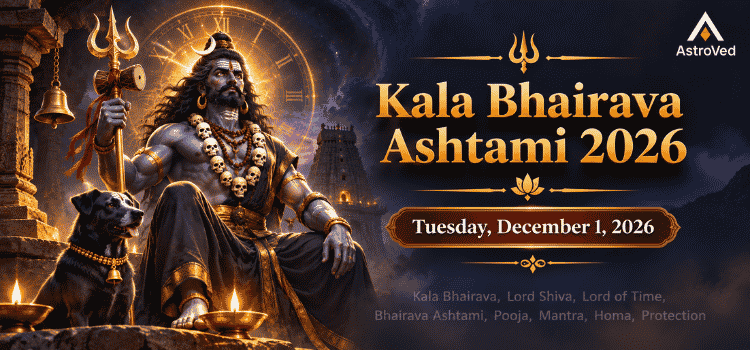
Kala Bhairava Ashtami 2026 falls on Tuesday, December 1. The sacred day honors Kala Bhairava, the fierce form of Lord Shiva and the Lord of Time.
Devotees often turn to Kala Bhairava during periods of delay, fear or uncertainty. Career stagnation, debt pressure, legal disputes and repeated obstacles are common prayer concerns.
Through worship, devotees seek courage, protection, clarity and discipline. However, prayer should continue alongside practical efforts in daily life.
Ashta Bhairava worship gives devotees a broader way to place different concerns before the Divine. For example, someone facing career stagnation may pray for professional progress. Another devotee may seek courage during competition or conflict.
Likewise, someone facing repeated delays may pray for better timing and clarity.
Kala Bhairava Ashtami 2026 at a Glance
| Festival | Kala Bhairava Ashtami / Kala Bhairava Jayanti |
| Date | Tuesday, December 1, 2026 |
| Paksha | Krishna Paksha |
| Tithi | Krishna Ashtami |
| Main Deity | Kala Bhairava |
| Important Practices | Pooja, fasting, mantra chanting, Bhairava Ashtakam, dog feeding and Homa |
Exact Panchang timings can vary by location. Therefore, follow the local Panchangam used by your temple or family.
Table of Contents
| 1 | 2026 Date & Significance |
| 2 | Kala Bhairava, Story & Time |
| 3 | Ashta Bhairava |
| 4 | Pooja, Fasting & Mantra |
| 5 | Benefits, Homa & Participation |
| 6 | FAQs |
Kala Bhairava Ashtami 2026 Date and Significance
Kala Bhairava Ashtami 2026 falls on Tuesday, December 1, during Krishna Paksha Ashtami. The festival is also known as Kala Bhairava Jayanti, Bhairava Ashtami and Kalabhairav Jayanti. The day honors Kala Bhairava, a powerful manifestation of Lord Shiva. Devotees also observe Krishna Paksha Ashtami every month as Kalashtami. However, Kala Bhairava Jayanti is the major annual Bhairava observance. On this sacred day, devotees may perform Pooja, fast, chant mantras or recite Kala Bhairava Ashtakam. Dog feeding and Homa are also traditional practices. Learn more in AstroVed's Kala Bhairava Ashtami guide.Kala Bhairava, His Story and the Power of Time
Who Is Kala Bhairava?
Kala Bhairava is a fierce and protective manifestation of Lord Shiva. The word "Kala" has a close connection with time. Meanwhile, Bhairava represents Shiva in a powerful form linked with protection, discipline, justice and fearlessness. Tradition also recognizes Kala Bhairava as a Kshetrapala, or guardian of a sacred place. His fierce appearance does not represent destruction alone. Instead, it represents awareness, discipline and the courage to face necessary change. Explore AstroVed's Kala Bhairava guide for more information about the deity.
The Story of Kala Bhairava
According to tradition, Lord Brahma once became proud of his position and knowledge. Lord Shiva then manifested as Kala Bhairava. In the story, Kala Bhairava removed Brahma's fifth head. The episode carries a strong lesson about pride and ego. However, the act also brought a karmic consequence. Kala Bhairava wandered with Brahma's skull until he reached Kashi. There, the burden finally ended. As a result, devotees also revere Kala Bhairava as the guardian of Kashi. The story carries a deeper message about humility. Bhairava represents the Divine force that breaks pride and restores spiritual awareness.Kala Bhairava as the Lord of Time
Devotees traditionally revere Kala Bhairava as the Lord of Time. Once time passes, it never returns. Therefore, Bhairava worship also reminds devotees to value discipline, responsibility and opportunities. This connection becomes especially meaningful when life seems delayed. A devotee may be:- waiting a long time for a suitable job
- facing slow career growth
- repeatedly missing opportunities
- struggling to complete important work
- delaying major decisions
- experiencing business stagnation
- finding it difficult to manage time effectively
Ashta Bhairava: The Eight Forms of Bhairava
Ashta Bhairava refers to eight principal forms of Bhairava. Tradition connects these forms with the eight directions. The eight forms are Asitanga, Ruru, Chanda, Krodha, Unmatta, Kapala, Bheeshana and Samhara Bhairava. However, different traditions may describe their qualities in slightly different ways.| Form of Bhairava | Traditional Prayer Focus |
|---|---|
| Asitanga Bhairava | Relief from afflictions and obstacles |
| Ruru Bhairava | Influence, recognition and prosperity |
| Chanda Bhairava | Confidence and strength during competition |
| Krodha Bhairava | Clear decisions and overcoming obstacles |
| Unmatta Bhairava | Career and business progress |
| Kapala Bhairava | Productive use of time and material progress |
| Bheeshana Bhairava | Courage and protection from fear |
| Samhara Bhairava | Release from difficult past patterns |
Kala Bhairava Pooja, Fasting and Mantra
Kala Bhairava Ashtami Pooja Vidhi
Devotees can perform a simple Kala Bhairava Ashtami Pooja at home. Temple rituals may include more elaborate procedures. Therefore, home worship does not need to reproduce every priest-led ritual. A simple devotional sequence can include:- Clean the prayer space and take a bath.
- Place an image or form of Kala Bhairava on a clean altar.
- Light a lamp.
- Begin with a prayer to Lord Ganesha.
- Offer flowers and simple sacred offerings.
- Pray to Lord Shiva and Kala Bhairava.
- Chant a simple Kala Bhairava mantra.
- Recite or listen to Kala Bhairava Ashtakam.
- Offer Naivedyam according to family tradition.
- Perform Aarti and sit quietly in prayer.
Kala Bhairava Ashtami 2026
Unable to Perform the Full Pooja Yourself?
Have trained priests perform sacred Kala Bhairava worship on your behalf with your Sankalpam.
Explore Kala Bhairava Worship →Kala Bhairava Ashtami Fasting
Fasting is a traditional part of Kala Bhairava Ashtami. Some devotees keep a full fast. Others take fruits, milk or simple vegetarian food. Since traditions differ, families may follow different fasting methods. During the day, devotees may pray, worship Shiva or chant Kala Bhairava mantras. They may also recite Kala Bhairava Ashtakam. However, the Vratham should remain safe. Children, pregnant people, older adults and people with health conditions should choose a suitable form of observance. They should avoid a strict fast without appropriate guidance.Kala Bhairava Mantra and Ashtakam
Mantra chanting is one of the simplest forms of Kala Bhairava worship. A simple devotional mantra is: Om Kalabhairavaya Namah Devotees may repeat the mantra calmly and with devotion. In addition, devotees may recite Kala Bhairava Ashtakam. The hymn praises Kala Bhairava as the guardian of Kashi and the Lord of Time. Beginners do not need complicated mantra counts. Instead, they can focus on sincere and consistent chanting.Dog Feeding on Kala Bhairava Ashtami
Tradition regards the dog as the Vahana, or Divine vehicle, of Kala Bhairava. Therefore, devotees often feed dogs on Kala Bhairava Ashtami and monthly Kalashtami. They may offer safe food and clean water to community or stray dogs. This practice also represents Seva, or compassionate service. Rather than viewing dog feeding only as a remedy, devotees can see it as an act of kindness toward living beings. Always choose food that is safe for dogs.Problems, Benefits, Homa and Online Participation
Problems Devotees Pray About During Kala Bhairava Worship
Devotees often choose Kala Bhairava worship when problems repeat or progress feels blocked. Common prayer concerns include:- job delays or unemployment
- career stagnation
- business obstacles
- debt or financial pressure
- court cases or legal disputes
- fear and uncertainty
- strong competition or opposition
- repeated delays
- missed opportunities
- difficulty making important decisions
Traditional Benefits of Kala Bhairava Worship
Tradition connects Kala Bhairava worship with courage, protection, discipline and strength during difficult periods. Devotees may pray for:- relief from repeated delays
- courage during difficult situations
- better use of time
- career and business progress
- protection from difficult influences
- relief from fear
- strength while facing competition
- spiritual discipline
- release from difficult past patterns
Kala Bhairava Homa
Priests perform Kala Bhairava Homa with prescribed Bhairava mantras and sacred offerings. The Homa is more elaborate than simple household worship. It may include Sankalpam, Bhairava invocation, mantra chanting, fire offerings and final prayers. Ashta Bhairava Homa invokes all eight principal forms of Bhairava together. Devotees may choose this worship when they want to place several concerns within one prayer, including:- career progress
- business growth
- repeated obstacles
- strong competition
- fear and uncertainty
- better use of time
- important decisions
- difficult recurring situations
Kala Bhairava Ashtami 2026 Online Participation
Devotees who cannot visit a Bhairava temple can continue simple worship at home. They can also participate in priest-performed worship on their behalf. For Kala Bhairava Ashtami 2026, AstroVed's worship includes Kala Bhairava Ashtakam chanting and an 8-Priest Ashta Bhairava Homa. The program also includes worship connected with the eight Bhairava forms. In addition, it includes Kala Bhairava Yantra Pooja, Powerspot worship and dog feeding. This option may help devotees who live abroad or cannot travel on December 1. Meanwhile, home prayer can continue alongside priest-performed worship. You may light a lamp and chant "Om Kalabhairavaya Namah" at home. At the same time, priests can perform the chosen worship with your Sankalpam.December 1, 2026
Invoke the Eight Forms of Kala Bhairava
Participate in Kala Bhairava Ashtakam chanting, Ashta Bhairava Homa and sacred worship with your Sankalpam.
Participate in Kala Bhairava Worship →Key Takeaways
- Kala Bhairava Ashtami 2026 falls on Tuesday, December 1.
- Kala Bhairava is a fierce form of Lord Shiva and the Lord of Time.
- Ashta Bhairava refers to eight principal forms linked with different prayer intentions.
- Devotees may observe the day through Pooja, fasting, mantra chanting, Ashtakam, dog feeding and Homa.
- Tradition connects Kala Bhairava worship with courage, protection and discipline.
- Devotees may also pray about career delays, financial pressure, legal disputes, fear and repeated setbacks.


