Home → Blog → Yantras → Yantra Placement Rules for Home: A Complete Vastu Guide
Yantra Placement Rules for Home: A Complete Vastu Guide
 On June 27, 2026
Yantra Placement Rules for Home: A Complete Vastu Guide
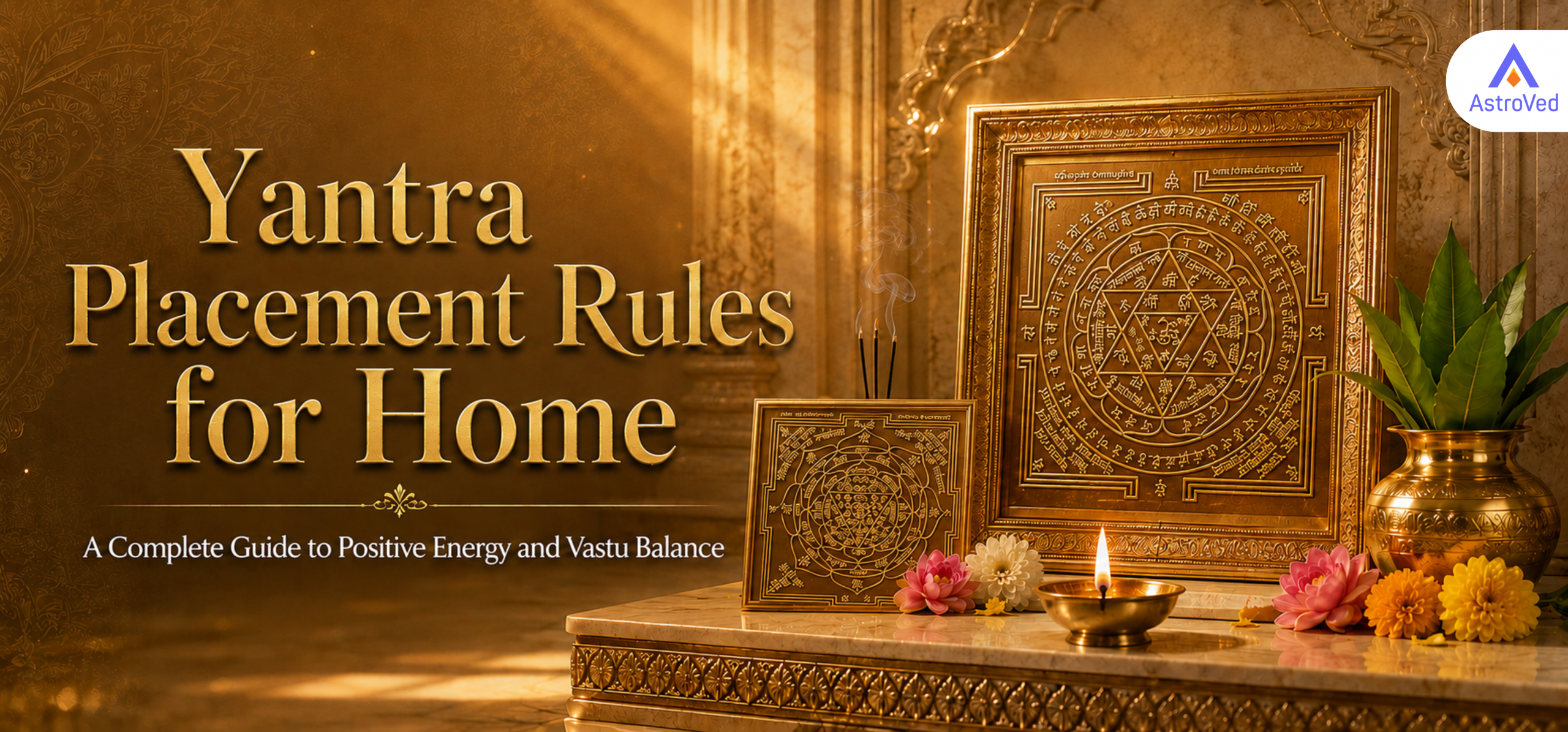
Following the correct yantra placement rules for home is traditionally believed to support positive energy, spiritual focus, harmony, and Vastu balance. Yantras are sacred geometric diagrams associated with specific deities, planetary energies, and spiritual intentions.
 Have you ever noticed that some areas of your home feel peaceful and uplifting, while others seem heavy, cluttered, or unsettled? In Vedic tradition, this difference is often explained by the flow of subtle energy within a space.
Yantras are believed to attract specific vibrations and harmonize the surrounding environment. However, their benefits depend not only on choosing the right yantra but also on placing it in a clean, respectful, and appropriate direction.
Understanding yantra placement rules can help you use these sacred symbols effectively and create a home environment that supports positivity, clarity, prosperity, protection, and spiritual well-being.
Have you ever noticed that some areas of your home feel peaceful and uplifting, while others seem heavy, cluttered, or unsettled? In Vedic tradition, this difference is often explained by the flow of subtle energy within a space.
Yantras are believed to attract specific vibrations and harmonize the surrounding environment. However, their benefits depend not only on choosing the right yantra but also on placing it in a clean, respectful, and appropriate direction.
Understanding yantra placement rules can help you use these sacred symbols effectively and create a home environment that supports positivity, clarity, prosperity, protection, and spiritual well-being.
Quick Answer: What Are the Yantra Placement Rules for Home?
Yantra placement rules for home are traditional Vedic and Vastu guidelines that determine where and how a sacred yantra should be installed.
The general rules include:
- Choose a clean and peaceful location
- Prefer the northeast, east, or north direction
- Place the yantra at a comfortable viewing height
- Keep it away from clutter and unclean areas
- Energize it before use
- Chant the associated mantra regularly
- Avoid moving it frequently
- Select the location based on the yantra’s purpose
The puja room or northeast corner is generally considered ideal for most spiritual yantras. However, the exact direction may vary depending on the specific yantra and its purpose.
What Is a Yantra?
A yantra is a sacred geometric diagram used in Vedic and Tantric traditions.
The Sanskrit word “yantra” means an instrument or tool used to focus divine energy and human consciousness.
A yantra may include:
- Triangles
- Circles
- Squares
- Lotus petals
- Dots
- Mantras
- Bija (seed) syllables
- Symbols related to a deity or planet
Each element of the design carries symbolic meaning.
Yantras are traditionally used for:
- Meditation
- Worship
- Spiritual protection
- Prosperity
- Planetary balance
- Mental focus
- Removing obstacles
- Positive energy
- Personal transformation
How Do Yantras Work?
Yantras are believed to work through sacred geometry, visual focus, mantra vibrations, intention, and devotion.
Each geometric pattern represents a spiritual principle or cosmic force.
When a person meditates on a yantra or places it respectfully in a suitable space, it may help:
- Improve concentration
- Deepen meditation
- Strengthen intention
- Encourage discipline
- Create a peaceful atmosphere
- Support devotion
- Connect with divine energy
Yantras should be seen as spiritual tools, not guaranteed solutions. Their effectiveness depends on sincerity, consistency, and proper use.
Why Is Proper Yantra Placement Important?
According to Vastu Shastra, different directions are associated with specific energies and elements.
Proper placement of a yantra helps align its symbolic energy with the energy of the home.
Correct placement may help:
- Improve positive energy flow
- Create a spiritual focus
- Reduce clutter
- Enhance meditation and prayer
- Promote harmony
- Maintain the sacredness of the yantra
Improper placement may not cause harm, but it can reduce its effectiveness.
Basic Yantra Placement Rules for Home
1. Choose a Clean and Sacred Location
Place the yantra in a clean, calm, and respectful area such as:
- Puja room
- Meditation space
- Northeast corner
- Living room wall
- Study room
- Home office
- Dedicated altar
Avoid placing yantras near:
- Dustbins
- Bathrooms
- Shoe racks
- Laundry areas
- Cluttered spaces
2. Select the Correct Direction
Preferred directions include:
The northeast (Ishan corner) is considered highly auspicious.
Examples:
- Prosperity yantras: North or northeast
- Knowledge yantras: East-facing study area
- Protection yantras: Entrance or puja room
3. Face an Auspicious Direction
While praying, face east or north. The yantra may also be positioned in these directions.
4. Keep the Yantra at Eye Level
Place the yantra at a comfortable viewing height to support focus and meditation.
5. Use a Stable Surface
Place the yantra on:
- A clean altar
- Shelf
- Wooden platform
- Wall frame
6. Avoid Placing Yantras on the Floor
If necessary during rituals, use a clean cloth or platform.
7. Keep the Area Clutter-Free
Maintain a clean and organized space around the yantra.
8. Energize the Yantra Before Placement
This may include:
- Cleaning the yantra
- Lighting a lamp
- Offering flowers and incense
- Chanting mantras
- Setting intention
9. Chant the Associated Mantra
Regular chanting enhances focus and spiritual connection.
10. Avoid Frequent Movement
Once placed, avoid shifting the yantra unnecessarily.
11. Handle with Respect
Always handle yantras with clean hands and care.
12. Follow Specific Instructions
Different yantras may have unique placement rules based on their purpose.
Best Directions for Yantra Placement
Northeast Direction
Best for spiritual yantras like Shri Yantra, Saraswati Yantra, and meditation yantras.
East Direction
Associated with knowledge and new beginnings. Suitable for Saraswati and Surya Yantras.
North Direction
Linked to wealth and career. Ideal for Kuber and Shri Yantras.
West Direction
Used occasionally depending on tradition.
South Direction
Generally avoided unless specifically recommended.
Room-Wise Yantra Placement
Puja Room
Best location for most yantras. Place on altar facing east or north.
Living Room
Supports harmony and prosperity. Keep in a clean, visible area.
Bedroom
Use calming yantras only. Avoid overcrowding.
Study Room
Ideal for Saraswati Yantra. Place on desk or east wall.
Home Office
Use yantras for career and success like Kuber or Ganesh Yantra.
Entrance
Place protective yantras like Ganesh or Hanuman Yantra.
Kitchen & Bathroom
Generally not suitable for yantras.
Popular Yantras and Placement
- Shri Yantra: Northeast or puja room
- Kuber Yantra: North direction
- Saraswati Yantra: Study room
- Hanuman Yantra: Entrance or puja room
- Ganesh Yantra: Entrance or office
- Navagraha Yantra: Puja room
- Vastu Yantra: Based on Vastu needs
- Lakshmi Yantra: North or northeast
How to Energize a Yantra
- Clean the space
- Clean the yantra
- Place on a clean cloth
- Light a lamp or incense
- Offer flowers
- Chant mantra
- Set intention
- Install respectfully
Maintenance Tips
- Keep it clean
- Avoid unnecessary touching
- Offer prayers regularly
- Protect from moisture
- Avoid harsh chemicals
If a Yantra Is Damaged
- Replace it respectfully
- Consult a priest
- Dispose of it properly (not in trash)
Common Mistakes
- Placing in dirty areas
- Wrong direction
- Too many yantras
- Frequent movement
- Ignoring prayers
- Treating as decoration
FAQs
Which direction is best?
Northeast is most preferred, followed by east and north.
Can I keep a yantra in the bedroom?
Yes, but choose calming yantras.
Do yantras need energizing?
Yes, it is recommended.
Can I place it at the entrance?
Yes, for protection yantras.
How many yantras can I keep?
Keep only what you can maintain properly.
Conclusion
Yantra placement rules help ensure that these sacred symbols are used respectfully and effectively.
Key points:
- Choose a clean location
- Prefer northeast, east, or north
- Keep at eye level
- Avoid clutter
- Energize before use
- Maintain regularly
Yantras are not just decorative items—they are spiritual tools that require respect, intention, and proper placement.
For personalized guidance, consult experienced Vastu or spiritual experts.- Energized Yantra
- learn vedic astrology
- Saraswathi Yantra


 The item has been added to your cart.


