Home → Blog → Remedies → Who Is Pratyangira Devi? Story, Mantra, Temples, Ayyavadi & Homam
Who Is Pratyangira Devi? Story, Mantra, Temples, Ayyavadi & Homam
 On November 13, 2026
Pratyangira Devi is a fierce lion-faced form of the Divine Mother. Devotees worship her mainly for protection, courage and strength during difficult situations. Her appearance is intense, but her role is protective. She is traditionally approached when a person faces repeated obstacles, conflict, fear or strong opposition.
For someone dealing with workplace hostility, business setbacks, family conflict, fear of failure or a long period of uncertainty, Pratyangira worship becomes a way to pray for inner strength and protection.
She is also known by names such as Narasimhi, Narasimhika and Atharvana Bhadrakali. Her worship includes Pooja, mantra chanting and sacred fire rituals such as Pratyangira Homam.
Pratyangira Devi at a Glance
| Deity |
Pratyangira Devi |
| Form |
Fierce lion-faced form of the Divine Mother |
| Also Known As |
Narasimhi, Narasimhika, Atharvana Bhadrakali |
| Traditional Prayer Focus |
Protection, courage, strength and relief from repeated obstacles |
| Important Worship |
Pooja, Mantra, Pratyangira Homam and Maha Pratyangira Homam |
| Famous Temple |
Ayyavadi Maha Pratyangira Devi Temple, near Kumbakonam |
Table of Contents
Who Is Pratyangira Devi?
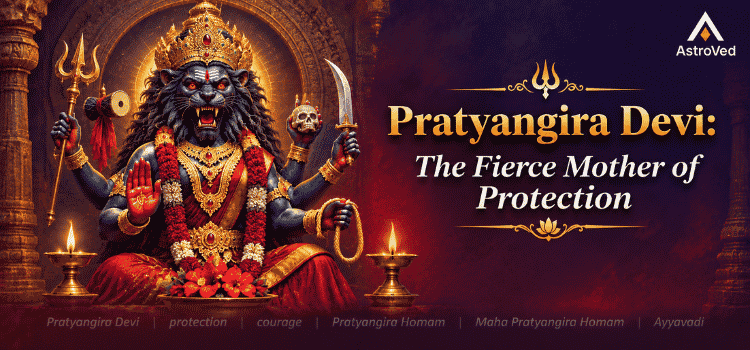
Pratyangira Devi is a powerful form of Shakti, the Divine Feminine energy. She is usually shown with a lion's face and a human body. Her form represents a combination of fierce power and motherly protection.
Traditional descriptions portray her with a dark complexion and red eyes. She may hold sacred symbols such as a trident, drum, skull and noose. Her lion-faced form explains names such as Narasimhi and Narasimhika.
She is also known as Atharvana Bhadrakali in some traditions. Although Pratyangira is considered an Ugra Devi, or fierce Goddess, devotees do not worship her simply because they are afraid.
 They approach her when they need courage to face something difficult. For example, a person may feel mentally exhausted after facing the same business problem again and again. Another person may be dealing with strong opposition at work.
In such situations, the prayer is not about attacking another person. Instead, devotees seek strength, protection and the clarity to respond wisely.
Learn more about Pratyangira Devi worship and temple services.
Story and Origin of Pratyangira Devi
Different traditions explain the origin of Pratyangira Devi in different ways. One of the best-known stories is connected with Lord Narasimha.
Pratyangira Devi and Narasimha
Lord Vishnu took the form of Narasimha, half-man and half-lion, to destroy the demon king Hiranyakashipu and protect Prahlada. After destroying Hiranyakashipu, Narasimha remained in an extremely fierce state.
According to one tradition, the intensity of Narasimha's anger became difficult to calm. Lord Shiva then appeared in the fierce form of Sharabha.
Pratyangira Devi is connected with this episode as a powerful Shakti capable of bringing fierce energy under control. Some Shaiva traditions describe Pratyangira and Shoolini as Shaktis associated with Sharabha. Other traditions give Pratyangira a more independent role in calming Narasimha.
The details vary, but the central meaning remains similar. Pratyangira represents the power that can contain intense anger and restore balance.
This is also why her worship is meaningful on a personal level. When fear, anger, conflict or pressure begins to control a person's decisions, Pratyangira represents the strength to regain balance.
Why Pratyangira Devi Is Worshipped
Pratyangira Devi is mainly worshipped for protection and courage. However, protection can mean different things for different devotees. Some people may be dealing with external conflict. Others may be struggling with fear, anger or mental pressure.
Devotees traditionally pray to Pratyangira Devi when facing:
- repeated obstacles in career or business
- strong workplace competition
- conflict with rivals or opponents
- fear and constant worry
- family or relationship disputes
- repeated setbacks despite sincere effort
- lack of confidence during a difficult period
- evil eye or Drishti according to traditional belief
- fear of harmful spiritual influences
- mental pressure caused by hostile situations
Consider someone who has worked hard to grow a business but continues to face disputes, competition and unexpected setbacks. The person may still need better planning, financial decisions or professional support. At the same time, he or she may worship Pratyangira Devi for courage and mental strength.
The same principle applies to workplace conflict. If a colleague, competitor or difficult environment is causing stress, Pratyangira worship is traditionally approached for protection and confidence.
The purpose should not be revenge. The prayer is to remain protected, think clearly and overcome the situation without allowing fear or anger to take control.
Pratyangira Homam and Maha Pratyangira Homam
What Is Pratyangira Homam?
Pratyangira Homam is a sacred fire ritual dedicated to Goddess Pratyangira. During the Homa, trained priests invoke the Goddess through prescribed mantras and make sacred offerings into the fire.
The fire represents transformation. Devotees participate with a Sankalpam, or prayer intention. The intention may relate to protection, courage, relief from repeated obstacles or strength during a difficult phase.
Traditionally, Pratyangira Homam is associated with prayers concerning:
- strong opposition
- repeated setbacks
- hostile situations
- fear and mental pressure
- Drishti or evil eye according to traditional belief
- obstacles affecting career or business
- a need for greater protection and confidence
The ritual is more elaborate than simple home worship. Therefore, devotees generally rely on experienced priests who know the required mantras and procedures.
Explore AstroVed's Pratyangira Devi Homa for priest-performed sacred fire worship.
What Is Maha Pratyangira Homam?
Maha Pratyangira Homam is an elaborate form of sacred fire worship dedicated to Pratyangira Devi. The exact procedure can vary according to the temple and priestly tradition.
It may include extended mantra chanting, multiple offerings and a more detailed invocation of the Goddess. In some ceremonies, several priests participate together.
A devotee may choose a more elaborate Pratyangira worship when several concerns are present at the same time. For example, a person may be dealing with business pressure, competition, family conflict and constant fear about the future.
Instead of praying for harm to an opponent, the devotee places these concerns before the Goddess and seeks protection, courage and clarity. That distinction is important. Pratyangira Devi is traditionally worshipped as a protector. Her worship should not become a justification for revenge or harmful intentions.
Traditional Benefits of Pratyangira Devi Worship
Traditional devotional practices associate Pratyangira Devi with protection and strength.
Devotees may pray for:
- courage during difficult situations
- relief from fear and insecurity
- protection from hostile influences
- strength while facing competition
- support while overcoming repeated obstacles
- career and business progress
- confidence when facing opposition
- mental clarity during stressful situations
- greater peace at home
- spiritual discipline
Devotional traditions also associate her worship with prayers concerning Drishti, hostile forces and other forms of negativity. Therefore, they should not be treated as guaranteed outcomes or proven explanations for personal problems.
A useful way to understand Pratyangira worship is this:
The devotee may not be able to control every difficult person or situation. However, the worship focuses on gaining the courage and stability to face the situation without being overwhelmed by it.
Pratyangira Devi Mantra and Moola Mantra
Pratyangira Devi Mantra
Mantra chanting is one of the most important forms of Pratyangira Devi worship. A mantra uses sacred sounds to focus the mind on the Divine form being worshipped.
For Pratyangira Devi, mantra practice centers on her protective and fierce energy. Devotees often chant her mantra when they want to strengthen courage, reduce fear or pray for protection. However, Pratyangira is associated with powerful mantra traditions.
Therefore, a beginner should keep the practice simple. Intensive Tantric practices or specialized mantra Sadhana should be undertaken only with suitable spiritual guidance.
For additional background, read AstroVed's guide to Pratyangira Devi Mantra meaning and benefits.
Pratyangira Devi Moola Mantra
A Moola Mantra is the root mantra associated with a deity. A commonly used Pratyangira Devi Moola Mantra is:
Om Ksham Paksha Jwala Jihve Karala Damshtre Pratyangire Ksham Hreem Hum Phat
The mantra contains Bija, or seed syllables, connected with the fierce energy of the Goddess. Devotees traditionally chant it with concentration rather than rushing through the words.
Tuesday and Friday are commonly associated with Pratyangira worship. Ashtami, Amavasya and Pournami are also considered important Tithis in different Pratyangira traditions.
A beginner can start with a simple devotional practice rather than focusing immediately on large repetition counts. Consistency and sincere prayer are more important than turning mantra chanting into a mechanical exercise.
Learn more through AstroVed's Pratyangira Devi Moola Mantra guide.
Famous Pratyangira Devi Temples
Pratyangira Devi has important temples and shrines in different parts of South India.
Some well-known temples include:
| Pratyangira Devi Temple |
Location |
| Maha Pratyangira Devi Temple |
Ayyavadi, near Kumbakonam, Tamil Nadu |
| Maa Pratyangira Kalika Temple |
Moranapalli, near Hosur, Tamil Nadu |
| Sri Maha Pratyangira Devi and Gnana Muneshwara Temple |
Jayanagar, Bengaluru |
| Sri Pratyangira Devi Temple |
Sholinganallur, Chennai |
| Sri Pratyangira Devi Temple |
Dilsukhnagar, Hyderabad |
Among these locations, Ayyavadi has become especially well known for Pratyangira worship and Nikumbala Yagam.
Ayyavadi Maha Pratyangira Devi Temple
Ayyavadi is located near Kumbakonam in Tamil Nadu's Thanjavur district. The temple is one of the best-known pilgrimage centers associated with Pratyangira Devi.
Ayyavadi is particularly famous for Nikumbala Yagam, a sacred fire ritual associated with the Goddess.
Why Is Ayyavadi Famous?
The temple tradition connects Ayyavadi with the Ramayana. According to local legend, Indrajit, the son of Ravana, began performing Nikumbala Yagam before battle.
The tradition says that completion of the Yagam would have given him exceptional power in war. However, the story ultimately places Dharma, or righteousness, above the use of spiritual power for an unjust purpose.
This gives the Ayyavadi tradition an important message. Power by itself is not the goal. The intention behind spiritual practice matters.
The Famous Red-Chilli Offering
One of the most distinctive features of Pratyangira worship at Ayyavadi is the use of dried red chillies in the sacred fire ritual. During Nikumbala Yagam, priests make several traditional offerings into the Homa fire.
Toward the end of the ritual, red chillies are also offered. This unusual practice has become strongly associated with Ayyavadi Pratyangira Devi.
Temple tradition describes the chilli offering as part of the fierce Goddess worship. Devotees attend the Yagam while praying for protection and relief from difficult circumstances. Because the ritual is specialized, visitors should not attempt to reproduce it casually at home.
Why Devotees Visit Ayyavadi
People visit Ayyavadi for many different prayer intentions. Some may be facing business or career obstacles. Others may be dealing with debt pressure, disputes, strong opposition or difficult family situations. Many simply visit to seek the protective blessings of Pratyangira Devi.
The visit gives devotees a sacred space to place these concerns before the Goddess. However, it does not remove the need for practical action.A person dealing with debt still needs financial planning. Likewise, someone involved in a legal dispute still needs proper legal guidance.
The spiritual practice can continue alongside those efforts.
Pratyangira Devi Worship From Home
Not everyone can travel to Ayyavadi or another Pratyangira Devi Temple. However, a simple form of worship can still be followed at home.
A devotee may:
- Clean the prayer space.
- Light a lamp.
- Place an image of Pratyangira Devi on the altar.
- Offer flowers.
- Pray for protection and courage.
- Chant a simple Pratyangira mantra.
- Sit quietly for a few minutes after the prayer.
The home practice does not need to imitate an elaborate temple Homa. That is especially important with a fierce deity such as Pratyangira.
Simple and sincere worship is more suitable than attempting advanced rituals without guidance.
Online Pratyangira Devi Pooja and Homam
Devotees who cannot visit a temple can also participate in priest-performed worship. In this form of participation, trained priests perform the selected Pratyangira Pooja or Homam.
The devotee provides a Sankalpam, which usually includes the person's name and prayer intention. This can be useful for someone living abroad or unable to travel to a Pratyangira temple.
For example, a devotee facing repeated workplace conflict may continue simple prayer at home while arranging priest-performed worship. Likewise, someone going through a difficult business period may participate with a Sankalpam for courage, protection and clarity.
AstroVed's current Pratyangira Devi worship program provides additional options for devotees seeking priest-performed rituals.
Pratyangira Devi Worship
Unable to Visit a Pratyangira Devi Temple?
Have trained priests perform Pratyangira Devi Pooja or Homam on your behalf with your Sankalpam.
Explore Pratyangira Devi Worship →
Key Takeaways
- Pratyangira Devi is a fierce lion-faced form of the Divine Mother.
- Devotees mainly worship her for protection, courage and strength.
- Her mythology is closely connected with Narasimha and the restoration of balance.
- Pratyangira Homam is a priest-performed sacred fire ritual dedicated to her.
- Her Moola Mantra is an important part of Pratyangira worship.
- Important Pratyangira temples are found in Tamil Nadu, Karnataka and Telangana.
- Ayyavadi near Kumbakonam is especially famous for Pratyangira worship and Nikumbala Yagam.
- The dried red-chilli offering is one of the distinctive traditions associated with Ayyavadi worship.
- Devotees who cannot visit a temple can pray at home or participate in priest-performed worship with their Sankalpam.
Conclusion
Pratyangira Devi represents the power to face difficult situations without being controlled by fear. Her fierce lion-faced form symbolizes protection, courage and the restoration of balance.
For one devotee, that may mean praying for strength during workplace conflict. For another, it may mean seeking courage while dealing with business setbacks, family tension or repeated obstacles. Her worship can take different forms, from simple mantra chanting at home to temple Pooja and Pratyangira Homam.
Ayyavadi adds another important dimension to this tradition through its famous Nikumbala Yagam and red-chilli offering. Whatever form of worship a devotee chooses, the central prayer remains the same: protection from harmful influences and the strength to move forward with greater courage and clarity.
Frequently Asked Questions About Pratyangira Devi
Who is Pratyangira Devi?
Pratyangira Devi is a fierce lion-faced form of the Divine Mother. Devotees traditionally worship her for protection, courage and strength during difficult situations.
Why is Pratyangira Devi worshipped?
Devotees worship Pratyangira Devi when seeking protection, courage, relief from fear and strength to face repeated obstacles or strong opposition.
What is Pratyangira Homam?
Pratyangira Homam is a sacred fire ritual in which trained priests invoke Goddess Pratyangira through prescribed mantras and offerings.
What is Pratyangira Devi Moola Mantra?
A commonly used Moola Mantra is "Om Ksham Paksha Jwala Jihve Karala Damshtre Pratyangire Ksham Hreem Hum Phat."
Where is the famous Pratyangira Devi Temple?
Ayyavadi near Kumbakonam in Tamil Nadu is one of the best-known pilgrimage places associated with Maha Pratyangira Devi.
Why are red chillies used in Pratyangira Homam?
At Ayyavadi, dried red chillies are traditionally offered into the sacred fire during Nikumbala Yagam. It is a distinctive temple ritual associated with fierce Pratyangira worship.
Can Pratyangira Pooja be performed on my behalf?
Yes. Devotees who cannot visit a temple may arrange priest-performed Pooja or Homam with their Sankalpam.
- goddess pratyangira devi
- pratyangira devi homam
- Pratyangira Devi Homam Benefits
- Pratyangira Homam


 The item has been added to your cart.


