

 The item has been added to your cart.
Pradosha: Meaning, Pradosha Kala, Pooja, Fasting and Benefits
 On October 12, 2026
Pradosham
Overview
Pradosham is a sacred time for worshipping Lord Shiva on Trayodashi, the 13th lunar day of each fortnight. Devotees observe it twice in a lunar month, once during the waxing phase and once during the waning phase of the Moon. The main worship takes place during Pradosha Kala, the sacred twilight period around sunset. Devotees may visit a Shiva temple, perform Abhishekam, offer Bilva leaves, chant Shiva mantras or observe a fast during this time. Lord Shiva and Nandi receive special worship during Pradosham. The observance is also linked with prayers for karmic relief, peace, spiritual growth and a clearer path forward. You can also explore our Pradosham worship page for upcoming observances and ritual options.Table of Contents
| 1 | Meaning & Significance |
| 2 | Pradosha Kala & Timing |
| 3 | Shiva, Nandi & Pooja |
| 4 | Fasting & Abhishekam |
| 5 | Benefits & Weekday Types |
| 6 | Pradosham FAQs |
Meaning and Significance of Pradosham
Pradosham is a sacred Shiva worship period connected with Trayodashi, the 13th lunar day. The name is traditionally associated with removing Dosha, negative effects or karmic burdens through prayer to Lord Shiva. Trayodashi occurs twice during every lunar month. One Trayodashi falls during Shukla Paksha, the waxing phase of the Moon. The other falls during Krishna Paksha, the waning phase.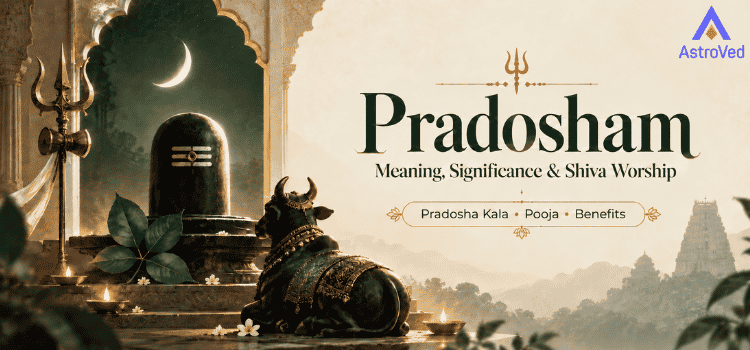 As a result, devotees usually receive two main opportunities for Pradosham worship each lunar month.
The spiritual purpose of Pradosham goes beyond asking for problems to disappear. It gives devotees a regular time to reflect on past actions, seek Shiva's blessings and make a more positive start.
As a result, devotees usually receive two main opportunities for Pradosham worship each lunar month.
The spiritual purpose of Pradosham goes beyond asking for problems to disappear. It gives devotees a regular time to reflect on past actions, seek Shiva's blessings and make a more positive start.
The Story Behind Pradosham
The best-known story of Pradosham comes from the churning of the cosmic ocean, known as Samudra Manthan. The Devas and Asuras churned the ocean in search of Amrita, the nectar of immortality. During the process, Vasuki released the dangerous Halahala poison. The poison threatened the worlds, so the Devas approached Lord Shiva for help. Shiva consumed the poison to protect creation. Goddess Parvati prevented it from moving further into his body, and the poison remained in his throat. His throat turned blue, which gave Shiva the name Neelakanta. Later, on Trayodashi, the Devas prayed to Lord Shiva. Pleased with their devotion, Shiva performed a joyful Divine dance between the horns of Nandi. This sacred dance became closely associated with Pradosham. The story also explains why Lord Shiva and Nandi receive special worship during the twilight period. For devotees, the story carries a simple message. Difficult karma, fear and past actions can become opportunities for prayer, reflection and positive change.Pradosha Kala and Worship Timing
Pradosha Kala is the sacred evening period around sunset when devotees offer the main Pradosham worship to Lord Shiva. The broader Pradosham period is traditionally understood as about three hours around sunset. It extends roughly one and a half hours before sunset and one and a half hours after sunset. In many temple schedules, Pradosham worship may take place roughly between 4 PM and 6 PM. However, devotees should not use this as a fixed time for every Pradosham because sunset and Trayodashi Tithi vary by date and location. Therefore, a local Panchang or temple schedule is the best guide for the exact Pradosha Kala. The evening is especially important because it marks the transition from day to night. This twilight period creates a natural time for prayer, reflection and a calmer state of mind. In simple terms, Trayodashi identifies the lunar day, while Pradosha Kala identifies the main time for Shiva worship. Devotees can also use our Pradosham calendar to check upcoming observances.Shiva and Nandi Worship During Pradosham
Lord Shiva is the main deity worshipped during Pradosham, while Nandi receives special importance because of his close connection with Shiva and the Pradosham story. Shiva represents transformation, meditation and the power to move beyond limitations. Devotees commonly worship him through the Shiva Lingam, Abhishekam, mantra chanting and prayer. You can learn more about his forms and worship through our Lord Shiva guide. Nandi is Shiva's sacred bull, vehicle and devoted attendant. He also serves as the guardian of Kailash and holds an important place in Shiva temples. Most Shiva temples place Nandi directly facing the Shiva Lingam. During Pradosham, temples may perform special Abhishekam and worship for both Shiva and Nandi. The tradition connects Nandi closely with Shiva's sacred evening dance. Shiva is believed to have performed the Pradosha Tandava between Nandi's horns. Some Shiva temples also follow the custom of viewing or praying toward Shiva through the space between Nandi's horns. However, this is a temple tradition rather than a compulsory practice for every devotee. Nandi ultimately represents steady devotion, faith and service to Shiva. Read more about the significance of Nandi.Pradosham Pooja and Valipadu
Pradosham Pooja focuses on Lord Shiva during the sacred evening Pradosha Kala. Devotees can worship at a Shiva temple or perform a simple Pradosam Valipadu at home. A home Pooja does not need to be elaborate. A clean prayer space, lamp, Shiva image or Lingam, water, flowers and Bilva leaves are enough for a simple observance.- Clean the prayer space before the evening worship.
- Light a lamp before Lord Shiva.
- Offer water to the Shiva Lingam if home Abhishekam is part of your tradition.
- Offer flowers and Bilva leaves.
- Chant "Om Namah Shivaya."
- Recite a familiar Shiva prayer or Stotram.
- Spend a few minutes in prayer or meditation.
- Conclude the worship with Aarti.
🪔
Honor Lord Shiva during Pradosham with traditional Abhishekam and sacred worship.
View Pradosham Rituals →Pradosham Fasting Rules
Pradosham fasting is a devotional practice that supports Shiva worship, prayer and self-discipline. Some devotees observe a full fast. Others fast from sunrise until the evening Pooja and then break the fast after worship. Families and traditions may follow different fasting practices. Therefore, there is no single duration that every devotee must follow. The purpose of the fast goes beyond avoiding food. It can help reduce distractions and bring greater focus to prayer and Shiva worship. A devotee who cannot follow a strict fast can still observe Pradosham through mantra chanting, temple worship, home Pooja and a disciplined state of mind. During the observance, devotees may also avoid anger, harsh speech, unnecessary arguments and habits that disturb mental peace. Children, pregnant people, older adults and anyone with a health condition should choose a safe form of observance.Discuss the fasting rules with our astrologers, Talk to our astrologer
Pradosham Abhishekam Offerings
Abhishekam is one of the main forms of Shiva worship during Pradosham. Devotees pour sacred offerings over the Shiva Lingam while chanting prayers or Shiva's names. Traditional Shiva worship commonly uses water, milk and Panchamritam for Abhishekam. Sandalwood and Bilva leaves also hold an important place in the worship.| Offering | Use in Shiva Worship |
|---|---|
| Water | A simple and sacred Abhishekam offering |
| Milk | A traditional offering for Shiva Lingam Abhishekam |
| Panchamritam | A sacred combined offering used during Abhishekam |
| Sandalwood | A traditional offering used in Shiva worship |
| Bilva Leaves | A sacred leaf offering closely associated with Lord Shiva |
Spiritual Benefits of Pradosham
Devotees traditionally observe Pradosham while praying for karmic relief, spiritual growth and the blessings of Lord Shiva. Traditional Pradosham worship is also associated with prayers for physical and mental cleansing, prosperity, fulfillment of sincere wishes and progress on the spiritual path. Devotees may use Pradosham to pray for:- relief from karmic burdens
- peace of mind
- success and well-being
- health and longevity
- spiritual knowledge
- prosperity
- greater spiritual awareness
Types of Pradosham by Weekday
The weekday on which Trayodashi falls gives Pradosham a special name and devotional focus. Every weekday Pradosham remains dedicated to Lord Shiva. However, traditional associations may add a specific prayer intention to the observance.| Weekday | Pradosham Name | Traditional Focus |
|---|---|---|
| Sunday | Surya Pradosham | Inner strength, prosperity and happiness |
| Monday | Soma Pradosham | Mental peace and karmic relief |
| Tuesday | Runa Vimochana Pradosham | Relief from debt-related burdens |
| Wednesday | Wednesday Pradosham | Spiritual growth and prosperity |
| Thursday | Guru Pradosham | Guru blessings, learning and guidance |
| Friday | Aishwarya Pradosham | Financial well-being and positive change |
| Saturday | Sani Pradosham | Karma, Saturn and Shiva worship |


