Home → Blog → Remedies → Ganapathi Homam: Benefits, Procedure, Muhurtham and Samagri
Ganapathi Homam: Benefits, Procedure, Muhurtham and Samagri
 On October 17, 2026
Overview
Ganapathi Homam is a sacred Vedic fire ritual dedicated to Lord Ganesha. Devotees perform it to seek his blessings for obstacle removal, wisdom and auspicious new beginnings.
The Homam is often performed before a new business, housewarming, education, marriage ceremony or major project. It may also be chosen when repeated delays make progress difficult.
The ritual includes Sankalpam, Ganesha invocation, mantra chanting, sacred fire offerings and Purnahuti. Ganapathi Homam is also known as Ganapati Homa, Ganesha Homam or Ganesh Homam in different regions.
Table of Contents
What Is Ganapathi Homam?
Ganapathi Homam is a Vedic fire ritual performed to invoke Lord Ganesha. Devotees seek his blessings for wisdom, clarity, obstacle removal and a positive beginning.
Lord Ganesha is traditionally worshipped before important activities. He is known as Vighnaharta, the remover of obstacles.
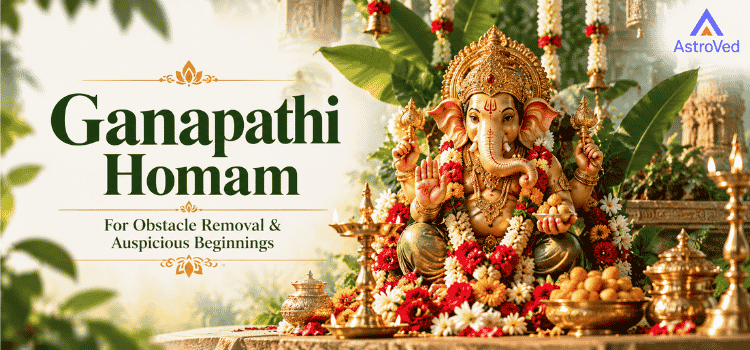 During the Homam, a priest establishes a sacred fire in the Homa Kunda. He then invokes Ganesha through prayers, mantras and traditional offerings.
Sankalpam is also an important part of the ritual. It states the purpose of the worship and may include the devotee's name and birth star.
For example, the Sankalpam may focus on a new business, education, housewarming or family ceremony.
Ganapathi Homam may also be called Ganapati Homam, Ganapati Homa, Ganesha Homam or Ganesh Homam. The names vary, but the central worship remains dedicated to Ganesha.
You can also explore our Ganapathi Homam for priest-performed traditional worship.
During the Homam, a priest establishes a sacred fire in the Homa Kunda. He then invokes Ganesha through prayers, mantras and traditional offerings.
Sankalpam is also an important part of the ritual. It states the purpose of the worship and may include the devotee's name and birth star.
For example, the Sankalpam may focus on a new business, education, housewarming or family ceremony.
Ganapathi Homam may also be called Ganapati Homam, Ganapati Homa, Ganesha Homam or Ganesh Homam. The names vary, but the central worship remains dedicated to Ganesha.
You can also explore our Ganapathi Homam for priest-performed traditional worship.
Why Ganapathi Homam Is Performed and Its Benefits
Ganapathi Homam is performed before important beginnings and during periods of repeated obstacles. The intention is to seek Ganesha's support for clearer and smoother progress.
Many devotees prefer to begin an important activity with Ganesha worship. As a result, this Homam often becomes the first ritual before a larger ceremony or new venture.
Common Occasions for Ganapathi Homam
| Occasion |
Traditional Intention |
| New Business or Office |
Seek clarity and steady progress |
| Griha Pravesh |
Begin life in the new home auspiciously |
| Education |
Pray for wisdom, focus and learning |
| Major Project |
Seek support for smoother completion |
| Marriage or Family Ceremony |
Begin the auspicious event with Ganesha worship |
| Career Change |
Seek clarity for a new professional phase |
| Repeated Obstacles |
Pray for relief from delays and difficulties |
Traditional Benefits of Ganapathi Homam
The traditional benefits of Ganapathi Homam focus on obstacle removal, wisdom and auspicious progress.
Devotees may perform the ritual while praying for:
- relief from repeated obstacles and delays
- confidence before a new beginning
- progress in business and career
- better focus in education
- clarity before important decisions
- successful completion of projects
- prosperity and well-being
- courage during challenging situations
- spiritual growth
These are traditional devotional intentions rather than guaranteed outcomes.
In addition, Ganapathi Homam can support the inner mindset behind a new beginning. Devotees pray not only for fewer obstacles, but also for the wisdom to handle them well.
Ganapathi Homam for New Beginnings
Ganapathi Homam has a strong connection with new beginnings because Ganesha traditionally receives the first worship in many auspicious ceremonies.
For a new business, devotees may pray for better decisions and steady progress. During Griha Pravesh, families seek an auspicious beginning in the new home.
Students may perform Ganesha worship before higher education or a new course. Similarly, families may invoke Ganesha before weddings and other major ceremonies.
The same principle applies to a major project or career change. Beginning with prayer can give the devotee a clear spiritual intention before taking action.
Best Day and Muhurtham for Ganapathi Homam
There is no single universal clock time for Ganapathi Homam. The suitable Muhurtham depends on the purpose, date, location and traditional calendar.
Tithi and Nakshatra may also influence the selected time. Therefore, devotees should consult a priest or local Panchang when they need a precise Muhurtham.
Ganesh Chaturthi is an important occasion for Ganesha worship. Chaturthi Tithis also hold special significance in Ganesha traditions.
However, devotees do not need to wait for a festival. A Homam connected with a housewarming or business opening can follow the Muhurtham chosen for that event.
For example, a family may perform Ganapathi Homam before entering a new home. Likewise, a business owner may arrange it before formally opening a new office.
Therefore, the purpose of the ritual often guides the timing.
Ganapathi Homam Procedure and Samagri
A traditional Ganapathi Homam follows a structured Vedic procedure. The main stages include preparation, Sankalpam, Ganesha invocation, fire offerings and final prayers.
The exact procedure may differ according to the priest and tradition. However, the following sequence explains the general flow.
Ganapathi Homam Procedure
- Purification and preparation come first. The priest prepares the Homa area, ritual materials and sacred fire altar.
- Next comes Sankalpam. The priest states the purpose of the Homam and may include the devotee's name and birth star.
- Lord Ganesha is then invoked through prayer, Dhyana and mantra chanting.
- After that, the priest establishes the sacred fire in the Homa Kunda.
- Ganapathi mantras are chanted while prescribed offerings are placed into the fire.
- Purnahuti forms the main concluding offering and marks the completion of the fire ritual.
- Finally, the ceremony concludes with prayers, Aarti and blessings. Prasad or sacred Homa ash may then be distributed.
A formal Homa follows specific mantra sequences and fire rituals. Therefore, trained priestly guidance is normally used for the complete ceremony.
Talk to our astrologer, to know more about homa and book the homa
Ganapathi Homam Samagri
Ganapathi Homam Samagri includes materials used for both Ganesha worship and the sacred fire.
The exact list can vary. However, the following items are commonly associated with the ritual.
| Samagri |
Purpose |
| Homa Kunda |
Sacred fire altar |
| Samidha |
Wood for the sacred fire |
| Ghee |
Traditional fire offering |
| Homa Dravya |
Prescribed fire offerings |
| Durva Grass |
Sacred Ganesha offering |
| Coconut |
Traditional Puja offering |
| Modakam or Sweets |
Naivedyam for Ganesha |
| Flowers |
Offering to the deity |
| Fruits |
Naivedyam and Prasad |
| Turmeric and Kumkum |
Traditional worship materials |
| Akshata |
Sacred rice used during worship |
| Incense and Camphor |
Used during Puja and Aarti |
Durva grass and Modakam have a close traditional association with Ganesha.
Ashta Dravya Ganapathi Homam
Ashta Dravya Ganapathi Homam is a specific form of Ganesha fire worship. It uses eight traditional offerings.
The materials may include sesame oil, molasses, sugarcane, honey, coconut, rice flakes, lemon and rice.
However, this list applies to Ashta Dravya Ganapathi Homam. It should not be treated as the standard Samagri for every Ganapathi Homam.
Ganapathi Homam Mantras and Ganesh Pooja
Ganapathi mantras are an important part of the fire ritual. Priests chant them while making prescribed offerings into the sacred fire.
Ganapathi Homam Mantras
One simple mantra associated with Ganesha fire worship is:
Om Gum Ganeshaya Swaha
Another Ganapathi mantra used in fire worship is:
Om Shreem Hreem Kleem Glaum Gum Ganapathayei Vara Varada Sarva Janame Vasa Manaya Swaha
For simple Ganesha worship, devotees commonly chant:
Om Gam Ganapataye Namah
A formal Homam may use specific mantra counts and Ahuti sequences. Therefore, devotees should follow the priest conducting the ceremony.
Ganapathi Homam vs Ganesh Pooja
Ganapathi Homam and Ganesh Pooja both worship Lord Ganesha. However, the ritual methods are different.
| Ganapathi Homam |
Ganesh Pooja |
| Uses a sacred fire |
Does not require a Homa fire |
| Usually priest-led |
Can be performed simply at home |
| Includes Ahutis into Agni |
Uses flowers, lamps and Naivedyam |
| Uses prescribed fire mantras |
Can use simple Ganesha mantras |
| Often chosen for important beginnings |
Suitable for regular devotional worship |
| Includes Purnahuti |
Usually concludes with Aarti |
Ganesh Pooja is simpler and works well for regular household worship. In comparison, Ganapathi Homam is a more elaborate Vedic fire ritual.
However, the two practices are not always separate. A Ganesha Pooja may also form part of a larger Ganapathi Homam ceremony.
🪔
Begin an important new phase with traditional Ganapathi Homam and priest-performed Ganesha worship.
Explore Ganapathi Homam →
Conclusion
Ganapathi Homam is a Vedic fire ritual dedicated to Lord Ganesha. Devotees perform it for obstacle removal, wisdom and auspicious beginnings.
The Homam may be chosen before a new business, housewarming, education, project, marriage ceremony or another important phase of life.
Its main stages include Sankalpam, Ganesha invocation, sacred fire offerings, mantra chanting and Purnahuti. However, the exact procedure and Samagri can vary by tradition.
Ultimately, Ganapathi Homam carries a simple spiritual message. Begin with Ganesha, seek clarity and move forward with confidence.
To know more about homas, check AstroVed's Fire Lab
Frequently Asked Questions About Ganapathi Homam
What is Ganapathi Homam?
Ganapathi Homam is a Vedic fire ritual dedicated to Lord Ganesha. Devotees traditionally perform it for obstacle removal, wisdom and auspicious new beginnings.
What are the benefits of Ganapathi Homam?
Devotees traditionally pray for relief from obstacles, greater clarity, confidence, educational progress and support for new ventures. These are devotional intentions rather than guaranteed results.
Which day is best for Ganapathi Homam?
Ganesh Chaturthi and Ganesha-related Chaturthi Tithis are especially meaningful. However, the Homam can also be performed on a suitable Muhurtham chosen for a housewarming, business opening or another important beginning.
What Samagri is needed for Ganapathi Homam?
Common Samagri includes Samidha, ghee, Homa Dravya, Durva grass, coconut, Modakam, flowers, fruits, Akshata and traditional Puja materials. The exact list may vary by ritual tradition.
Which mantra is used in Ganapathi Homam?
Ganapathi Homam uses prescribed Ganesha mantras. One simple mantra associated with Ganesha fire worship is "Om Gum Ganeshaya Swaha."
What is the difference between Ganapathi Homam and Ganesh Pooja?
Ganesh Pooja uses lamps, flowers, Naivedyam and prayer without requiring a sacred fire. Ganapathi Homam is a fire ritual that includes mantra chanting, Ahutis and Purnahuti.- Ganapathi homa
- Ganapathi homam
- Ganapathi pooja


 The item has been added to your cart.


