Home → Blog → Mantras → Mantras for Better Concentration: Sacred Sounds for Focus and Mental Clarity
Mantras for Better Concentration: Sacred Sounds for Focus and Mental Clarity
 On June 16, 2026
Mantras for Better Concentration: Sacred Sounds for Focus and Mental Clarity
Do you often struggle to stay focused on important tasks because of stress, constant thoughts, or digital distractions? In today’s fast-moving world, maintaining concentration can feel increasingly difficult.
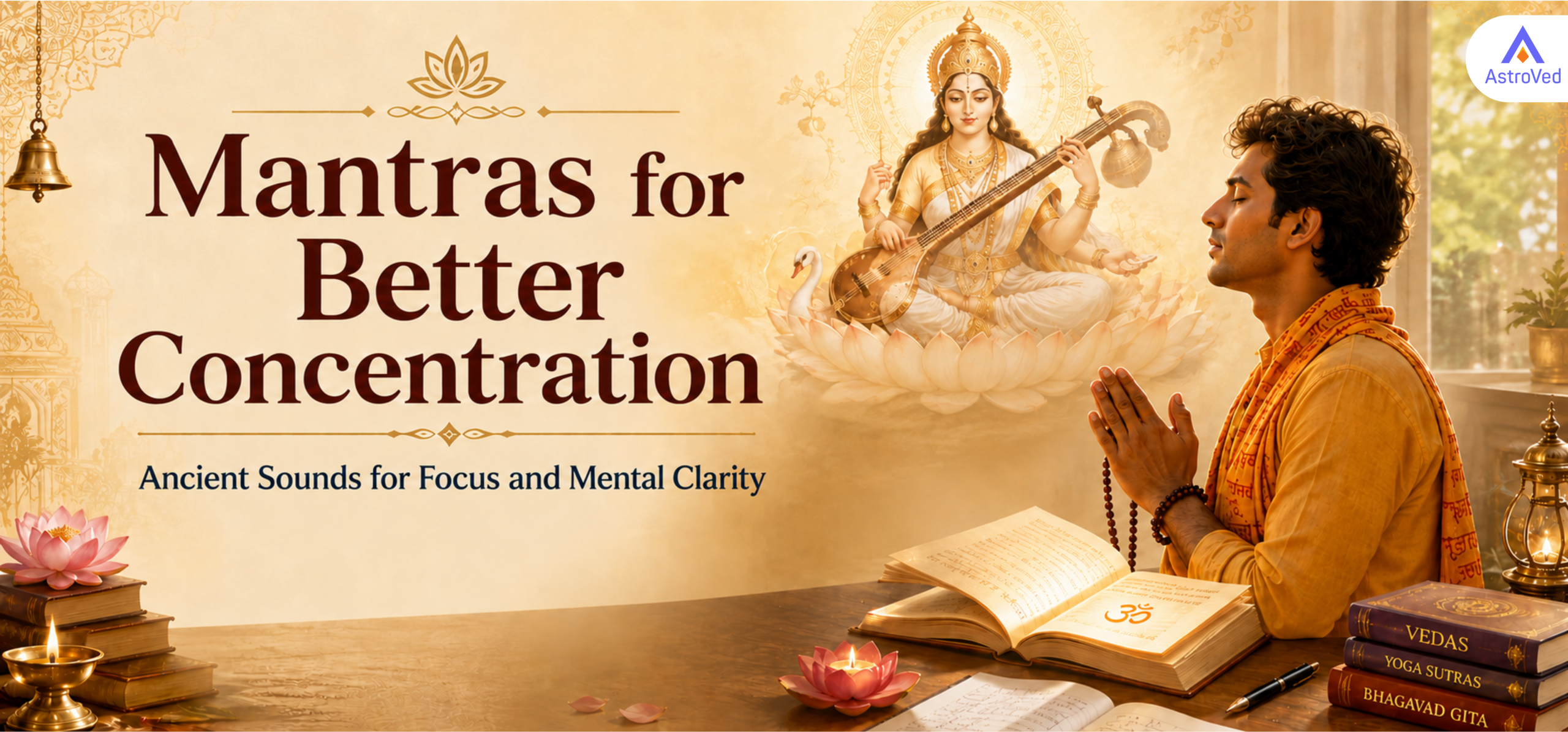 Although productivity techniques and time-management tools may help, Vedic tradition offers another time-tested practice: chanting mantras for better concentration.
Mantras are sacred sounds, words, or phrases that have traditionally been used to calm the mind, improve mental clarity, and strengthen focus. Through regular repetition, mantra chanting may train the mind to become more attentive, disciplined, and less affected by distractions.
Therefore, understanding how these sacred sounds work can support concentration during studies, professional tasks, meditation, and everyday life.
Although productivity techniques and time-management tools may help, Vedic tradition offers another time-tested practice: chanting mantras for better concentration.
Mantras are sacred sounds, words, or phrases that have traditionally been used to calm the mind, improve mental clarity, and strengthen focus. Through regular repetition, mantra chanting may train the mind to become more attentive, disciplined, and less affected by distractions.
Therefore, understanding how these sacred sounds work can support concentration during studies, professional tasks, meditation, and everyday life.
Quick Answer: What Are Mantras for Better Concentration?
Mantras for better concentration are sacred sounds, words, or phrases repeated during prayer, meditation, or mindful practice to support mental focus and clarity.
Regular chanting may help:
- Quiet distracting thoughts
- Reduce stress and mental restlessness
- Improve attention
- Strengthen memory
- Support emotional balance
- Create a calm and centred state of mind
As a result, it may become easier to focus on learning, work, decision-making, and personal growth.
What Is a Mantra?
The word “mantra” comes from Sanskrit. It is commonly understood as a sacred sound or phrase used to focus and protect the mind.
In Vedic tradition, sound is believed to carry a specific vibration. When a mantra is repeated with attention and devotion, its rhythm helps direct the mind toward a single point.
Unlike ordinary speech, mantra chanting is intentional and repetitive. Therefore, it may gradually reduce mental noise and improve concentration.
A mantra may be:
- Chanted aloud
- Repeated softly
- Whispered
- Recited mentally
- Used during meditation
The method can vary depending on the individual’s comfort, spiritual tradition, and purpose.
How Mantras May Improve Concentration
The mind often loses focus because it moves continuously between thoughts, memories, worries, and external distractions.
Mantra chanting gives the mind one sound or phrase to follow. Each time attention wanders, the practitioner gently returns to the mantra.
With regular practice:
- Mental distractions may gradually decrease
- Attention may become more stable
- Stress may reduce
- Emotional balance may improve
- Mindfulness may increase
- Mental discipline may become stronger
This process helps concentration develop naturally rather than through excessive force.
Furthermore, chanting actively engages the mind. Therefore, it may be more effective for some people than passive listening alone.
Why Concentration Matters in Daily Life
Concentration is essential for learning, productivity, decision-making, and personal development.
Without focus, even simple tasks may take longer and create frustration. On the other hand, a concentrated mind can use time and energy more effectively.
Strong concentration may support:
- Academic performance
- Workplace productivity
- Memory retention
- Clear decision-making
- Emotional stability
- Meditation
- Creative thinking
- Spiritual development
Whether you are preparing for an examination, completing professional responsibilities, or practising meditation, concentration determines how effectively you use your mental energy.
Causes of Poor Concentration
Several factors may affect the ability to focus.
Common causes include:
- Lack of sleep
- Excessive screen time
- Stress and anxiety
- Constant notifications
- Poor daily routines
- Mental exhaustion
- Multitasking
- Unhealthy eating habits
- Emotional concerns
- Lack of physical activity
Mantra chanting may support mental calmness. However, it should be combined with healthy lifestyle habits for better results.
Powerful Mantras for Better Concentration
Different mantras are traditionally associated with different aspects of mental clarity, wisdom, memory, and inner peace.
Gayatri Mantra for Wisdom and Mental Clarity
The Gayatri Mantra is among the most widely respected mantras in Vedic tradition.
It is traditionally associated with:
- Wisdom
- Intellectual growth
- Mental clarity
- Learning
- Spiritual awareness
Students and professionals may chant the Gayatri Mantra before activities that require sustained attention and thoughtful decision-making.
Regular practice may support:
- Improved focus
- Greater clarity
- Better understanding
- Mental discipline
- Learning ability
For many practitioners, early morning is considered a suitable time to chant this mantra.
Saraswati Mantra for Learning and Memory
Goddess Saraswati is associated with knowledge, learning, speech, music, and creativity.
Saraswati mantras are traditionally used to support:
- Academic success
- Memory
- Communication
- Intellectual development
- Creative thinking
- Confidence in learning
Students may chant a Saraswati mantra before studying, attending classes, or taking examinations.
However, mantra practice should be supported by consistent study and proper preparation.
Om for Mental Calmness
Om is regarded as a sacred primordial sound in Vedic tradition.
Because it is simple, Om chanting is often suitable for beginners.
Regular chanting may help:
- Calm mental chatter
- Improve awareness
- Reduce stress
- Slow racing thoughts
- Support meditation
- Strengthen concentration
The long vibration created while chanting Om may also encourage slower breathing and greater relaxation.
Om Namah Shivaya for Inner Peace
Om Namah Shivaya is a sacred mantra associated with Shiva.
It is traditionally chanted to support:
- Mental peace
- Emotional balance
- Self-awareness
- Inner stillness
- Focus during meditation
When mental restlessness decreases, concentration may improve naturally.
Therefore, this mantra may be suitable for people who struggle with excessive thoughts or emotional pressure.
Maha Mrityunjaya Mantra for Mental Strength
The Maha Mrityunjaya Mantra is widely associated with healing, protection, courage, and spiritual strength.
Its practice may support:
- Reduced fear
- Emotional resilience
- Mental stability
- Inner strength
- Calmness during difficult periods
Although it is not used only for concentration, a more stable and peaceful mind may focus more effectively.
Ganesha Mantra for Removing Obstacles
Ganesha is traditionally associated with wisdom, clarity, and the removal of obstacles.
The mantra “Om Gam Ganapataye Namaha” is often chanted before beginning:
- Studies
- Examinations
- Professional work
- New projects
- Important decisions
This practice may help create a focused and confident mindset before starting a task.
Hanuman Mantra for Courage and Discipline
Hanuman mantras are traditionally associated with courage, devotion, determination, and mental strength.
They may support individuals who experience:
- Fear
- Self-doubt
- Lack of motivation
- Emotional weakness
- Difficulty maintaining discipline
Since concentration requires persistence, Hanuman-related practices may help strengthen determination and resilience.
Budha Mantra for Communication and Intelligence
In Vedic astrology, Mercury or Budha is connected with:
- Intelligence
- Communication
- Memory
- Analysis
- Learning
- Reasoning
A Budha mantra may be recommended for individuals seeking greater clarity in communication, studies, business, or analytical work.
However, personalized guidance may be useful before beginning planet-specific mantra practices.
The Role of Sound and Repetition
Repetition is central to mantra chanting.
When the same sound is repeated rhythmically, the mind receives a stable point of focus. Consequently, distracting thoughts may become less dominant.
The chanting rhythm may also help regulate breathing.
Slower and more controlled breathing may support:
- Relaxation
- Emotional control
- Reduced mental tension
- Better awareness
- Improved concentration
Therefore, sound, breath, and attention work together during mantra practice.
Mantra Chanting and the Mind
Modern studies of meditation and repetitive sound practices suggest that focused repetition may support attention and relaxation.
Potential benefits may include:
- Reduced stress responses
- Greater mindfulness
- Improved emotional regulation
- Better attention control
- Increased mental calmness
However, mantra chanting should not be presented as a guaranteed cure for concentration disorders or mental health conditions.
Anyone experiencing ongoing concentration problems should seek appropriate medical or psychological guidance.
How to Practise Mantras for Concentration
The following steps can help beginners establish a meaningful practice.
Choose One Mantra
Begin with one mantra that aligns with your goal and spiritual preference.
Frequently changing mantras may make it harder to build consistency. Therefore, remain with one practice for a reasonable period.
Select a Quiet Place
Choose a clean and peaceful space where interruptions are less likely.
You may sit:
- On the floor
- On a meditation cushion
- On a chair
- In a prayer space
The goal is to remain comfortable while keeping the spine upright.
Establish a Regular Time
Practising at the same time each day can strengthen mental discipline.
Suitable times may include:
- Early morning
- Before studying
- Before beginning work
- Before meditation
- In the evening
Consistency is generally more important than practising for long periods.
Begin With Calm Breathing
Before chanting, take a few slow breaths.
This helps settle the mind and prepare it for focused repetition.
Focus on Pronunciation
Clear and mindful pronunciation helps maintain attention.
However, beginners should not become overly anxious about perfection. Learning gradually from a reliable teacher or authentic source is more helpful.
Use a Mala
A mala is a string of prayer beads traditionally used to count mantra repetitions.
It can help:
- Maintain rhythm
- Prevent distraction
- Track repetitions
- Build discipline
A traditional mala often contains 108 beads, although beginners may start with fewer repetitions.
Chant With Awareness
Avoid rushing through the mantra.
Instead, pay attention to:
- The sound
- The rhythm
- The breath
- The meaning
- The feeling created by the chant
Focused chanting is generally more meaningful than simply completing a large number of repetitions.
Finish With Silence
After chanting, sit quietly for a minute or two.
This period allows the mind to absorb the calmness created through the practice.
How Long Should You Chant?
Beginners may start with:
- 5 minutes
- 11 repetitions
- 21 repetitions
- One short mala practice
As concentration improves, the duration may gradually increase.
However, regular daily practice is usually more helpful than an occasional long session.
Best Times to Chant for Concentration
Early Morning
Morning is traditionally regarded as a peaceful time because the mind is often less distracted.
Chanting after waking may help establish clarity and calmness for the day.
Before Study Sessions
Students may chant briefly before studying to create a focused mental state.
This can also mark the transition from distraction to learning.
Before Work
Professionals may use a short mantra practice before beginning important tasks, meetings, or decisions.
Before Meditation
Mantras may help settle the mind before silent meditation.
During Stressful Periods
When mental overload increases, a few minutes of slow chanting may help restore calmness and attention.
Before Examinations
Students may chant a suitable mantra before examinations to reduce anxiety and improve mental steadiness.
However, mantra chanting should complement preparation rather than replace it.
Mantras for Students
Students often face distractions, examination pressure, and difficulties with memory.
Suitable practices may include:
- Gayatri Mantra for clarity
- Saraswati Mantra for learning
- Ganesha Mantra for overcoming obstacles
- Om chanting for mental calmness
Students should also maintain:
- A regular study schedule
- Proper sleep
- Limited phone use
- Short breaks
- Healthy food
- Physical activity
The combination of spiritual practice and disciplined study creates a stronger foundation for academic progress.
Mantras for Professionals
Professionals may experience stress, multitasking, deadlines, and decision fatigue.
A short daily mantra practice may help:
- Prepare the mind before work
- Reduce stress
- Improve clarity
- Support communication
- Encourage emotional control
Om, Gayatri Mantra, and Ganesha-related chanting are commonly used before professional responsibilities.
Mantras for Meditation
Mantras can act as an anchor during meditation.
Whenever the mind wanders, gently return attention to the sound.
This practice may gradually improve:
- Awareness
- Patience
- Inner stillness
- Emotional balance
- Concentration
Mental repetition may be useful once the practitioner becomes comfortable with audible chanting.
Common Mistakes to Avoid
Expecting Immediate Results
Concentration develops gradually.
Therefore, expecting instant transformation may lead to disappointment.
Chanting Inconsistently
Occasional chanting may not establish a stable routine.
Even a few minutes every day may be more useful than a long session once a month.
Focusing Only on Quantity
Repeating a mantra many times without attention may reduce the quality of the practice.
Awareness is more important than speed.
Practising in a Distracting Environment
Constant interruptions may make chanting difficult.
Therefore, silence phones and select a quiet place whenever possible.
Using Too Many Mantras
Following several mantras at the same time may create confusion.
Beginners may benefit from choosing one clear practice.
Ignoring Pronunciation
Mindful pronunciation is important, especially for Sanskrit mantras.
Reliable recordings or guidance from a qualified teacher may help.
Using Mantras as a Substitute for Action
Mantras may support clarity and discipline, but they do not replace studying, planning, healthy routines, or professional assistance.
Supporting Mantra Practice With Healthy Habits
For better concentration, combine mantra chanting with practical lifestyle changes.
Get Adequate Sleep
Sleep is essential for memory, emotional regulation, and mental focus.
Reduce Digital Distractions
Turn off unnecessary notifications and keep devices away during important tasks.
Follow a Study or Work Schedule
A clear routine reduces mental confusion and procrastination.
Take Short Breaks
Regular breaks may prevent mental fatigue.
Eat Balanced Meals
Healthy food and proper hydration support energy and brain function.
Exercise Regularly
Physical activity may improve mood, alertness, and stress management.
Practise Mindfulness
Mindfulness helps bring attention back to the present moment.
Together, these habits may make mantra practice more effective.
How Astrology May Help Select a Mantra
In Vedic astrology, mantra recommendations may be based on:
- Moon Sign
- Ascendant
- Planetary strength
- Current Dasha
- Planetary transits
- Nakshatra
- Individual concerns
For example, an astrologer may suggest a mantra connected with Mercury for communication or with Jupiter for wisdom.
However, personalized analysis is important because the same recommendation may not be suitable for everyone.
How Professional Guidance Can Help
At AstroVed, spiritual and astrology experts may recommend mantra practices based on the individual birth chart, planetary influences, and personal goals.
Personalized guidance may include:
- Mantras for concentration
- Mantras for memory
- Planet-specific chanting
- Daily spiritual routines
- Meditation techniques
- Practices for students
- Guidance for emotional balance
Such recommendations may help individuals follow a more focused and relevant spiritual routine.
Key Takeaways
- Mantras are sacred sounds traditionally used to calm and focus the mind
- Repetition may reduce mental distractions and strengthen attention
- Gayatri Mantra is associated with wisdom and clarity
- Saraswati mantras are connected with learning and memory
- Om chanting may support calmness and mindfulness
- Ganesha mantras may help create a focused beginning
- Consistency is more important than long chanting sessions
- Mantras should be combined with healthy routines and practical effort
- Personalized guidance may help identify a suitable mantra
Frequently Asked Questions
What Are Mantras for Concentration?
Mantras for concentration are sacred sounds, words, or phrases repeated to support focus, mental clarity, and attention.
They may help calm distracting thoughts and create a more centred state of awareness.
Which Mantra Is Best for Concentration?
The most suitable mantra depends on the individual’s goals and spiritual preference.
The Gayatri Mantra is commonly associated with wisdom and clarity, while Saraswati mantras support learning and knowledge.
Om may be suitable for beginners seeking mental calmness.
Which Mantra Is Best for Students?
Students commonly chant:
- Gayatri Mantra
- Saraswati Mantra
- Ganesha Mantra
- Om
These practices are traditionally associated with learning, memory, clarity, and the removal of obstacles.
How Long Should I Chant Each Day?
Beginners may start with 5 to 15 minutes or a small number of repetitions.
Regular daily practice is generally more important than duration.
Can Mantras Improve Memory?
Mantra chanting may support concentration and mental calmness, which can indirectly help memory and learning.
However, adequate sleep, revision, healthy nutrition, and effective study techniques remain essential.
Can Students Chant Mantras Before Examinations?
Yes. Students may chant briefly before examinations to create calmness and focus.
However, chanting should support proper preparation rather than replace it.
Do I Need to Know the Meaning of a Mantra?
Understanding the meaning may deepen the connection to the practice.
Nevertheless, rhythm, sound, attention, and regularity are also important aspects of chanting.
Can I Chant Mentally?
Yes. Mantras may be chanted aloud, softly, or mentally.
Beginners may find audible chanting easier because it provides a stronger point of focus.
Can Mantra Chanting Reduce Stress?
The repetitive rhythm of chanting may help calm the mind and support slower breathing.
As stress decreases, concentration may improve naturally.
How Long Does It Take to Notice Results?
The experience differs for each person.
Some may notice greater calmness within a few days, while deeper benefits may develop over weeks or months of consistent practice.
Can Mantras Replace Medical Treatment?
No. Mantra chanting should not replace medical or psychological care.
Anyone experiencing persistent concentration difficulties, anxiety, or emotional concerns should seek suitable professional guidance.
Conclusion
Mantras for better concentration offer a simple and meaningful way to support focus, mental clarity, emotional balance, and inner calmness.
Through regular chanting, sacred sounds may help reduce distractions and train the mind to return to one point of attention.
Whether you are a student preparing for examinations, a professional managing complex responsibilities, or someone seeking greater mindfulness, mantra practice may become a valuable part of your daily routine.
However, the best results come from combining spiritual practice with adequate sleep, healthy habits, disciplined work, and practical preparation.
At AstroVed, experienced astrologers and spiritual experts can provide personalized mantra recommendations based on your birth chart, planetary influences, and individual goals.
Discover a mantra practice that supports your focus, learning, and mental clarity.- benefits of hanuman mantra
- Budha Mantra
- mantras


 The item has been added to your cart.


