Angalamman Pooja for Protection and Removing Negative Energy
 On August 19, 2026
Angalamman Pooja for Protection and Removing Negative Energy
Angalamman, also known as Angala Amman or Goddess Angali, is worshipped as a powerful form of the Divine Mother. In Hindu tradition, she is revered for protection, courage, wisdom, prosperity, and the removal of negative forces. AstroVed describes Goddess Angali as a form of Mother Kali and also associates her with Saraswati, the Goddess of learning and wisdom.
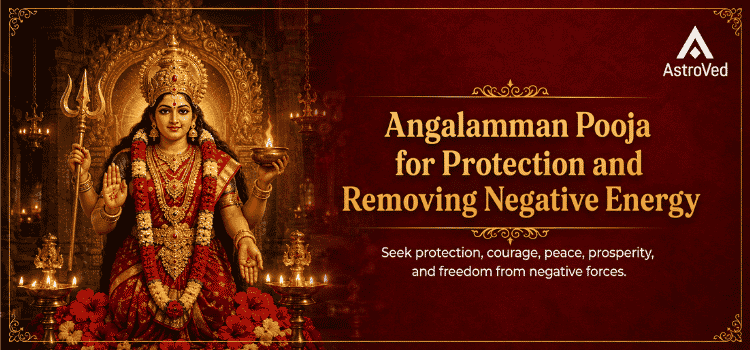 Many devotees worship Angalamman to seek relief from fear, obstacles, negative energy, family problems, and emotional disturbances. Her fierce yet compassionate energy is believed to protect devotees and guide them toward strength, clarity, and spiritual growth.
Who Is Angala Amman?
Angala Amman is a powerful Mother Goddess who is worshipped for protection and victory over negativity. She is also known as Angala Parameswari and Angali Amman. Devotees believe that she removes fear, destroys evil influences, and blesses sincere worshippers with courage, peace, prosperity, and divine grace.
AstroVed mentions that invoking Goddess Angali with devotion can help devotees receive Ashta Aishwarya, comforts, divine love, and protection.
Angalamman Pooja Benefits
Angalamman Pooja is traditionally performed to seek divine protection and positive transformation. Devotees pray to her for:
- Removing negative energy from home
- Protection from evil influences
- Relief from fear and anxiety
- Family peace and harmony
- Health and well-being
- Prosperity and success
- Courage to face challenges
- Spiritual strength
During Aadi month, Amman worship becomes especially significant. Therefore, many devotees perform Aadi Pooja and Amman Pooja to invoke the blessings of the Divine Mother.
How to Worship Angalamman
Angalamman can be worshipped through simple prayers at home or through temple rituals. Devotees may light a lamp, offer flowers, chant Amman mantras, and pray with devotion.
Traditional worship may include:
- Aadi Pooja
- Amman Pooja
- Angala Amman Pooja
- Abishekam
- Archana
- Homa
- Online Puja
- Pooja to remove negative energy
AstroVed offers Goddess Angali Pooja services, including Abishekam and Homa. The Angali Homa is described as a Homa for protection from negativity and overall victory.
What Are the Rituals for Angalamman?
The main rituals for Angalamman worship include Abishekam (sacred bathing of the deity), Archana (chanting of names), lighting lamps, offering flowers, and performing Homa (fire ritual). Devotees also recite Amman mantras and perform special poojas during Aadi month for stronger spiritual benefits.
What Offerings Are Made to Angalamman?
Common offerings made to Angalamman include flowers (especially red and yellow), turmeric, kumkum, coconut, fruits, neem leaves, lamps, and traditional sweets. Some devotees also offer pongal, garlands, and camphor during special poojas and temple rituals.
How to Worship Angalamman?
To worship Angalamman at home, devotees can follow simple steps:
- Clean the home and prayer space
- Light a lamp or diya
- Offer flowers and fruits
- Chant Angalamman or Amman mantras
- Pray with devotion and sincerity
- Meditate on the Divine Mother’s protection
For deeper rituals, devotees may also participate in temple poojas, Abishekam, Homa, or online puja services.
What Is the History of Angala Parameswari Amman?
Angala Parameswari Amman is a revered form of the Divine Mother worshipped mainly in South India. She is considered a fierce guardian goddess who protects villages and devotees from evil forces, diseases, and negative energies. Over time, her worship became associated with Shakti traditions, where she is seen as a powerful manifestation of the Mother Goddess who restores balance and justice.
Are Kali and Angalamman the Same?
Angalamman is often considered a form or manifestation of Goddess Kali. Both represent the fierce energy of the Divine Mother who destroys negativity and protects devotees. While Kali is widely worshipped across India, Angalamman is especially revered in Tamil traditions as a village guardian form of Shakti.
How Can I Remove Negative Energies from My Home?
To remove negative energy from home, devotees can:
- Light lamps daily in the prayer area
- Chant Amman or Kali mantras
- Keep the home clean and well-ventilated
- Burn camphor or incense
- Perform Angalamman or Amman pooja
- Conduct Homa or special pujas for purification
Angalamman worship is traditionally believed to be very effective in clearing fear, negativity, and spiritual disturbances.
Which God Helps to Remove Negative Energy?
Goddess Angalamman, Goddess Kali, and other forms of Shakti are widely worshipped for removing negative energy. They are believed to destroy evil forces, protect homes, and bring peace, strength, and positivity into devotees’ lives.
Pooja to Remove Negative Energy from Home
Many devotees look for a pooja to remove negative energy from home when they feel disturbed, blocked, or spiritually unsettled. Angalamman worship is traditionally believed to help remove internal and external negativity, fear, sorrow, and obstacles.
AstroVed’s Angali Homa is associated with prayers for protection from negativity, removal of obstacles, good fortune, wisdom, and overall victory.
For people who cannot visit a temple, online Puja services make it easier to participate in sacred rituals from anywhere.
Are Kali and Angalamman the Same?
Angalamman is often worshipped as a fierce form of the Divine Mother and is associated with Kali in many traditions. AstroVed describes Angali as Mother Kali and a powerful Goddess connected with protection, wisdom, and Siddhi powers.
Conclusion
Angalamman worship is a powerful spiritual practice for those seeking protection, courage, peace, prosperity, and relief from negative energy. Through Aadi Pooja, Amman Pooja, Angala Amman Pooja, Abishekam, Homa, and online Puja services, devotees can connect with the Divine Mother and seek her blessings for a positive and protected life.
AstroVed helps devotees participate in authentic Goddess Angali temple services and Homas performed according to traditional practices.- Abishekam
- Angalamman
- Free Homa


 The item has been added to your cart.


