Home → Blog → General → What Are the 7 Energy Centers of the Human Body? A Complete Chakra Guide
What Are the 7 Energy Centers of the Human Body? A Complete Chakra Guide
 On June 20, 2026
What Are the 7 Energy Centers of the Human Body? A Complete Chakra Guide
The 7 energy centers of the human body, commonly known as chakras, are believed to influence physical vitality, emotional well-being, mental clarity, relationships, and spiritual awareness. According to yogic and Vedic traditions, these energy centers are positioned along the spine, beginning at its base and extending to the crown of the head.
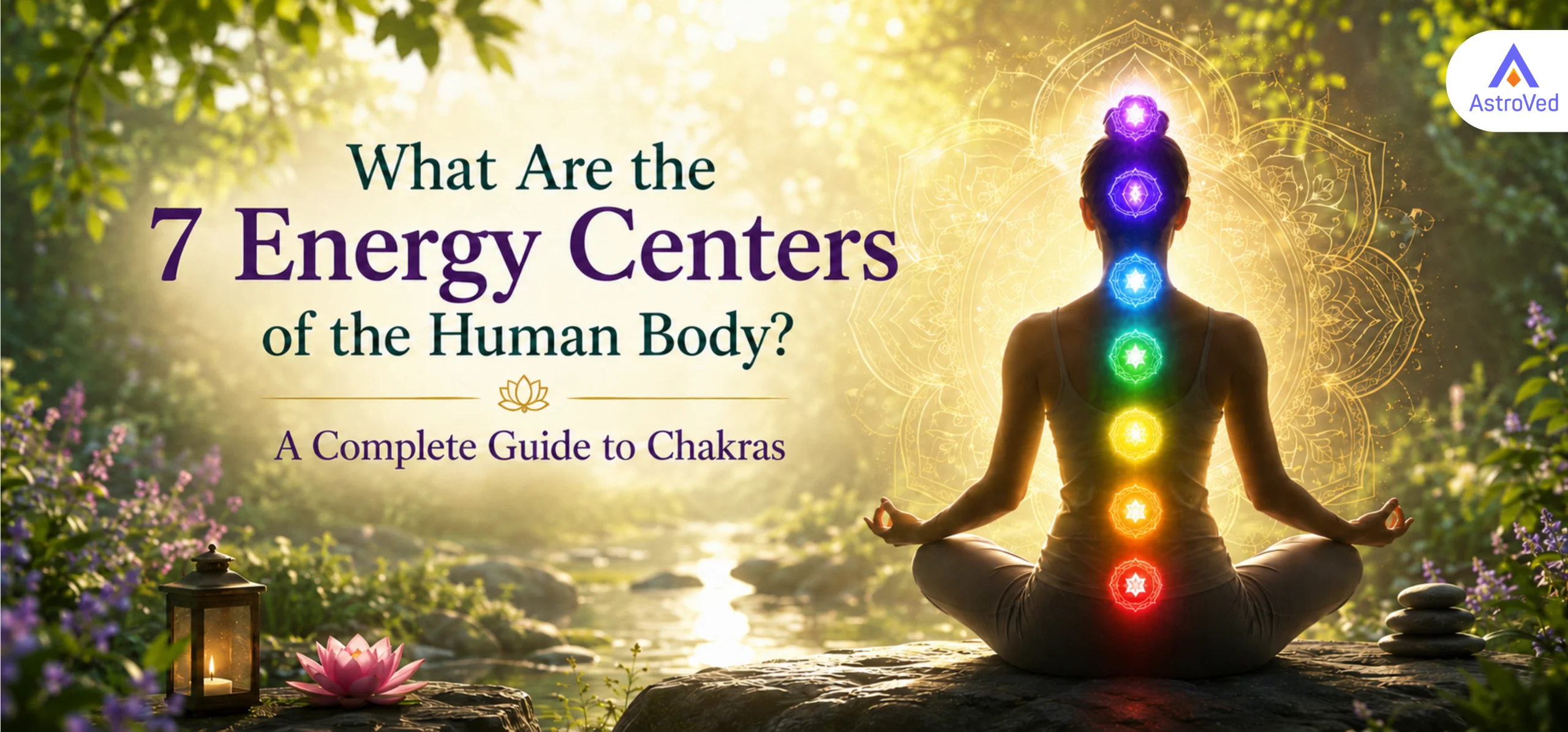 Have you ever felt emotionally blocked, mentally exhausted, or disconnected from your sense of purpose without knowing why? Ancient spiritual teachings suggest that such experiences may sometimes be understood through the chakra system.
When the seven chakras are balanced, energy is believed to flow more freely through the body. As a result, a person may experience greater stability, confidence, clarity, compassion, and inner peace. However, when one or more chakras feel blocked or imbalanced, challenges may arise in different areas of life.
Understanding the seven energy centers can therefore encourage greater self-awareness and support a more balanced approach to physical, emotional, and spiritual well-being.
Have you ever felt emotionally blocked, mentally exhausted, or disconnected from your sense of purpose without knowing why? Ancient spiritual teachings suggest that such experiences may sometimes be understood through the chakra system.
When the seven chakras are balanced, energy is believed to flow more freely through the body. As a result, a person may experience greater stability, confidence, clarity, compassion, and inner peace. However, when one or more chakras feel blocked or imbalanced, challenges may arise in different areas of life.
Understanding the seven energy centers can therefore encourage greater self-awareness and support a more balanced approach to physical, emotional, and spiritual well-being.
Quick Answer: What Are the 7 Energy Centers of the Human Body?
The 7 energy centers of the human body are:
- Root Chakra
- Sacral Chakra
- Solar Plexus Chakra
- Heart Chakra
- Throat Chakra
- Third Eye Chakra
- Crown Chakra
Each chakra is traditionally associated with particular physical, emotional, mental, and spiritual qualities.
Together, the seven chakras form an interconnected energy system believed to influence:
- Stability and security
- Creativity and emotions
- Confidence and willpower
- Love and compassion
- Communication and truth
- Intuition and insight
- Spiritual awareness and purpose
What Are Chakras?
The word “chakra” comes from Sanskrit and means “wheel” or “disc.”
In yogic and spiritual traditions, chakras are described as subtle centers of energy that help regulate the movement of life-force energy, commonly known as Prana.
The seven main chakras are aligned along the central axis of the body:
- The first chakra begins at the base of the spine
- The middle chakras are located around the abdomen, chest, and throat
- The final two are connected with the forehead and crown of the head
The chakra system is traditionally believed to influence:
- Physical vitality
- Emotional well-being
- Mental clarity
- Personal relationships
- Communication
- Intuition
- Spiritual development
When energy flows freely through the chakra system, a person may feel more balanced, focused, and energized.
Why the 7 Energy Centers Matter
The seven chakra system provides a spiritual framework for understanding the connection between the body, emotions, thoughts, and consciousness.
Balanced chakras may support:
- Emotional stability
- Greater self-confidence
- Clear communication
- Healthy relationships
- Stronger intuition
- Mental focus
- Spiritual awareness
- A deeper sense of purpose
By becoming aware of these energy centers, individuals may identify areas that require attention and develop practices that encourage greater harmony.
However, chakras should be understood as part of a spiritual tradition rather than as a replacement for medical or psychological care.
The 7 Energy Centers of the Human Body Explained
Each chakra is associated with a specific area of the body and particular qualities of life.
1. Root Chakra: Muladhara
Location
The Root Chakra is located at the base of the spine.
Associated Qualities
It is traditionally connected with:
- Stability
- Security
- Survival
- Grounding
- Physical safety
- Material well-being
The Root Chakra forms the foundation of the chakra system.
It is closely associated with basic needs such as shelter, food, financial security, family support, and physical safety.
Signs of a Balanced Root Chakra
When the Root Chakra is balanced, you may feel:
- Grounded
- Secure
- Emotionally stable
- Confident in daily life
- Connected to your body
- Capable of managing responsibilities
A balanced Root Chakra may also help create a stronger sense of belonging.
Signs of an Imbalanced Root Chakra
Possible signs may include:
- Fear
- Insecurity
- Constant worry
- Financial anxiety
- Lack of stability
- Restlessness
- Difficulty feeling grounded
Practices to Support the Root Chakra
Helpful practices may include:
- Walking in nature
- Grounding meditation
- Maintaining a regular routine
- Physical exercise
- Focusing on financial discipline
- Spending time with supportive family members
- Practising slow breathing
2. Sacral Chakra: Svadhisthana
Location
The Sacral Chakra is located in the lower abdomen, below the navel.
Associated Qualities
It is connected with:
- Creativity
- Emotions
- Pleasure
- Relationships
- Sensuality
- Adaptability
This chakra is traditionally associated with emotional expression, personal enjoyment, and creative energy.
Signs of a Balanced Sacral Chakra
When balanced, you may experience:
- Healthy emotional expression
- Strong creativity
- Positive relationships
- Emotional flexibility
- Greater enjoyment of life
- Openness to new experiences
Signs of an Imbalanced Sacral Chakra
Possible signs may include:
- Emotional instability
- Creative blocks
- Relationship difficulties
- Lack of motivation
- Excessive attachment
- Difficulty experiencing joy
Practices to Support the Sacral Chakra
You may consider:
- Creative activities
- Dance or movement
- Journaling
- Spending time near water
- Practising emotional awareness
- Building healthy relationship boundaries
- Allowing time for recreation
3. Solar Plexus Chakra: Manipura
Location
The Solar Plexus Chakra is located in the upper abdomen.
Associated Qualities
It is traditionally associated with:
- Confidence
- Willpower
- Personal identity
- Self-esteem
- Motivation
- Decision-making
The Solar Plexus Chakra is often described as the center of personal power.
Signs of a Balanced Solar Plexus Chakra
When balanced, you may experience:
- Strong self-confidence
- Healthy ambition
- Clear decision-making
- Personal discipline
- Motivation
- A sense of direction
Signs of an Imbalanced Solar Plexus Chakra
Possible signs may include:
- Low self-esteem
- Excessive self-doubt
- Lack of motivation
- Fear of failure
- Difficulty making decisions
- A need to control others
Practices to Support the Solar Plexus Chakra
Supportive practices may include:
- Setting realistic goals
- Completing small tasks consistently
- Positive affirmations
- Core-strengthening yoga poses
- Spending time in sunlight
- Developing personal boundaries
- Practising confident communication
4. Heart Chakra: Anahata
Location
The Heart Chakra is located at the center of the chest.
Associated Qualities
It is traditionally connected with:
- Love
- Compassion
- Forgiveness
- Emotional healing
- Relationships
- Kindness
The Heart Chakra forms a bridge between the lower chakras, which are connected with earthly life, and the higher chakras, which are associated with communication and spiritual awareness.
Signs of a Balanced Heart Chakra
When balanced, you may experience:
- Healthy relationships
- Emotional openness
- Compassion for others
- Self-love
- Forgiveness
- A sense of connection
Signs of an Imbalanced Heart Chakra
Possible signs may include:
- Difficulty trusting others
- Emotional pain
- Resentment
- Loneliness
- Fear of intimacy
- Difficulty accepting love
Practices to Support the Heart Chakra
Helpful practices may include:
- Gratitude
- Forgiveness exercises
- Loving-kindness meditation
- Spending time with loved ones
- Acts of kindness
- Journaling about emotions
- Practising self-compassion
5. Throat Chakra: Vishuddha
Location
The Throat Chakra is located in the throat area.
Associated Qualities
It is traditionally connected with:
- Communication
- Truth
- Self-expression
- Listening
- Authenticity
- Creativity through speech
The Throat Chakra influences how clearly and honestly a person communicates.
Signs of a Balanced Throat Chakra
When balanced, you may experience:
- Clear communication
- Honest self-expression
- Confidence when speaking
- Strong listening skills
- Respectful communication
- Greater authenticity
Signs of an Imbalanced Throat Chakra
Possible signs may include:
- Fear of speaking
- Difficulty expressing feelings
- Miscommunication
- Suppressed emotions
- Excessive talking
- Fear of judgment
Practices to Support the Throat Chakra
Helpful practices may include:
- Chanting
- Singing
- Journaling
- Speaking honestly and respectfully
- Listening without interrupting
- Reading aloud
- Practising mindful communication
6. Third Eye Chakra: Ajna
Location
The Third Eye Chakra is located between the eyebrows.
Associated Qualities
It is traditionally connected with:
- Intuition
- Insight
- Wisdom
- Inner vision
- Imagination
- Mental clarity
The Third Eye Chakra is associated with perception beyond ordinary thinking.
Signs of a Balanced Third Eye Chakra
When balanced, you may experience:
- Strong intuition
- Mental clarity
- Better decision-making
- Greater self-awareness
- Clear direction
- Trust in inner guidance
Signs of an Imbalanced Third Eye Chakra
Possible signs may include:
- Confusion
- Lack of direction
- Difficulty trusting intuition
- Excessive overthinking
- Poor concentration
- Limited imagination
Practices to Support the Third Eye Chakra
Supportive practices may include:
- Meditation
- Visualization
- Mindfulness
- Reducing screen time
- Maintaining a dream journal
- Quiet reflection
- Spending time in silence
7. Crown Chakra: Sahasrara
Location
The Crown Chakra is located at the top of the head.
Associated Qualities
It is traditionally connected with:
- Spiritual awareness
- Higher consciousness
- Enlightenment
- Inner peace
- Purpose
- Divine connection
The Crown Chakra represents the highest level of awareness in the seven-chakra system.
Signs of a Balanced Crown Chakra
When balanced, you may experience:
- A deep spiritual connection
- Inner peace
- A sense of purpose
- Greater wisdom
- Detachment from unnecessary worries
- Connection with something greater than yourself
Signs of an Imbalanced Crown Chakra
Possible signs may include:
- Spiritual disconnection
- Lack of meaning
- Emotional emptiness
- Excessive material attachment
- Isolation
- Confusion about life purpose
Practices to Support the Crown Chakra
Helpful practices may include:
- Meditation
- Prayer
- Silent reflection
- Spiritual study
- Gratitude
- Acts of service
- Spending time in peaceful natural surroundings
Overview of the Seven Chakra System
| Chakra |
Sanskrit Name |
Location |
Main Association |
| Root |
Muladhara |
Base of the spine |
Security and grounding |
| Sacral |
Svadhisthana |
Lower abdomen |
Creativity and emotions |
| Solar Plexus |
Manipura |
Upper abdomen |
Confidence and willpower |
| Heart |
Anahata |
Center of the chest |
Love and compassion |
| Throat |
Vishuddha |
Throat |
Communication and truth |
| Third Eye |
Ajna |
Between the eyebrows |
Intuition and insight |
| Crown |
Sahasrara |
Top of the head |
Spiritual awareness |
Signs of Chakra Imbalance
Spiritual traditions suggest that chakra imbalances may appear through emotional, mental, or behavioural patterns.
Possible signs include:
- Chronic stress
- Emotional instability
- Low energy
- Relationship difficulties
- Lack of focus
- Reduced confidence
- Poor communication
- Lack of direction
- Spiritual disconnection
For example:
- Root Chakra imbalance may relate to insecurity
- Sacral Chakra imbalance may appear as emotional or creative blocks
- Solar Plexus imbalance may affect confidence
- Heart Chakra imbalance may influence relationships
- Throat Chakra imbalance may affect communication
- Third Eye imbalance may create confusion
- Crown Chakra imbalance may affect purpose and spiritual connection
However, these signs may also have practical, physical, or psychological causes.
Therefore, chakra practices should be used as supportive spiritual tools rather than medical diagnosis.
What Causes Chakra Imbalance?
Different spiritual traditions identify several possible causes.
These may include:
- Emotional stress
- Unresolved experiences
- Negative thought patterns
- Poor lifestyle habits
- Lack of rest
- Relationship difficulties
- Fear and insecurity
- Suppressed emotions
- Lack of spiritual practice
- Constant mental overstimulation
Chakra balance is therefore often connected with both inner awareness and daily habits.
How to Balance the 7 Energy Centers
Balancing the seven energy centers is generally viewed as an ongoing process.
The following spiritual and wellness practices are commonly used.
Meditation
Meditation helps calm the mind and improve awareness of thoughts, emotions, and bodily sensations.
Chakra meditation may include:
- Focusing on one chakra at a time
- Visualizing a related colour
- Repeating a mantra
- Observing emotional patterns
- Practising mindful breathing
Regular meditation may support mental clarity and emotional balance.
Mantra Chanting
Certain seed sounds, known as Bija mantras, are traditionally associated with the chakras.
Common associations include:
- Root Chakra: Lam
- Sacral Chakra: Vam
- Solar Plexus Chakra: Ram
- Heart Chakra: Yam
- Throat Chakra: Ham
- Third Eye Chakra: Om
- Crown Chakra: Silence or Om
Mantra chanting gives the mind a focused point of attention and may support calmness.
Yoga
Different yoga poses are traditionally connected with particular chakras.
Yoga may help through:
- Physical movement
- Improved breathing
- Greater body awareness
- Emotional release
- Relaxation
However, it is best to practise yoga safely and under suitable guidance when necessary.
Breathwork
Controlled breathing practices may help calm the nervous system and improve awareness.
Simple practices include:
- Slow abdominal breathing
- Alternate nostril breathing
- Equal-length inhalation and exhalation
- Mindful breath observation
Anyone with medical concerns should seek professional guidance before attempting advanced breathing techniques.
Mindfulness
Mindfulness helps individuals observe thoughts and emotions without immediate reaction.
This practice can reveal patterns associated with:
- Fear
- Anger
- Self-doubt
- Emotional attachment
- Communication difficulties
- Lack of purpose
Greater awareness can support more balanced responses.
Positive Affirmations
Affirmations may help shift repetitive negative thought patterns.
Examples include:
- Root Chakra: “I am safe and grounded.”
- Sacral Chakra: “I allow creativity and joy.”
- Solar Plexus Chakra: “I trust my abilities.”
- Heart Chakra: “I give and receive love.”
- Throat Chakra: “I express myself clearly.”
- Third Eye Chakra: “I trust my inner wisdom.”
- Crown Chakra: “I am connected with higher awareness.”
Affirmations are most effective when supported by practical action.
Healthy Lifestyle Habits
Chakra practices work best alongside healthy routines.
Helpful habits may include:
- Adequate sleep
- Balanced nutrition
- Physical exercise
- Emotional support
- Time in nature
- Reduced digital overload
- Healthy relationships
- Regular self-reflection
The Connection Between Chakras and Daily Life
The chakra system is not limited to meditation or spiritual practice.
Each chakra is traditionally linked with everyday experiences.
For example:
- Root Chakra influences security and stability
- Sacral Chakra affects creativity and relationships
- Solar Plexus Chakra relates to confidence and motivation
- Heart Chakra influences love and compassion
- Throat Chakra affects communication
- Third Eye Chakra supports intuition and decision-making
- Crown Chakra relates to purpose and spiritual meaning
Understanding these connections may help individuals make more conscious choices.
Chakras and Emotional Well-Being
Each chakra is connected with specific emotional themes.
For example:
- Fear may relate to the Root Chakra
- Guilt may affect the Sacral Chakra
- Shame may influence the Solar Plexus Chakra
- Grief may affect the Heart Chakra
- Suppressed expression may influence the Throat Chakra
- Confusion may relate to the Third Eye Chakra
- Disconnection may affect the Crown Chakra
Emotional awareness, journaling, therapy, meditation, and supportive relationships may all play a role in healing.
Chakras and Physical Well-Being
Traditional chakra teachings associate each energy center with different areas of the body.
However, these associations are spiritual and symbolic rather than medically proven diagnoses.
Therefore, physical symptoms should always be discussed with an appropriate healthcare professional.
Meditation, yoga, breathing, and chakra practices may be used as complementary wellness practices when appropriate.
How Long Does Chakra Balancing Take?
There is no fixed timeline.
Some individuals may experience a sense of calmness after a single meditation session. However, deeper emotional or behavioural changes may take weeks or months.
The process depends on:
- Personal circumstances
- Consistency
- Emotional awareness
- Lifestyle habits
- The practices used
- Willingness to make changes
Therefore, chakra balancing is better understood as a continuing journey rather than a one-time solution.
Can More Than One Chakra Be Imbalanced?
Yes. Since the seven chakras are viewed as an interconnected system, an imbalance in one area may influence others.
For example:
- Insecurity in the Root Chakra may affect confidence in the Solar Plexus
- Emotional pain in the Heart Chakra may influence communication in the Throat Chakra
- Mental confusion may affect both the Third Eye and Crown Chakras
A balanced approach should therefore consider the full system.
Working With Chakras Effectively
To work with the chakra system safely and meaningfully:
- Begin with simple practices
- Focus on one chakra at a time when necessary
- Maintain realistic expectations
- Combine spiritual work with healthy habits
- Avoid interpreting every difficulty as a chakra problem
- Seek professional support when needed
- Practise consistently rather than intensely
Small and regular efforts are often more sustainable than occasional elaborate routines.
Common Mistakes to Avoid
Expecting Instant Results
Chakra balance usually develops gradually.
Focusing Only on One Chakra
Although one chakra may require attention, the system works as a whole.
Ignoring Practical Problems
Financial, relationship, health, or emotional concerns may require practical action.
Using Chakra Practices as Medical Treatment
Chakra meditation should not replace medical or psychological care.
Following Too Many Practices at Once
A simple and consistent routine is often easier to maintain.
Becoming Fearful About Imbalances
The chakra system is intended to encourage awareness, not anxiety.
How Professional Spiritual Guidance Can Help
Personalized guidance may help individuals understand how to approach chakra practices according to their needs and spiritual goals.
At AstroVed, spiritual experts may provide:
- Chakra awareness guidance
- Meditation recommendations
- Mantra suggestions
- Spiritual wellness practices
- Personalized growth strategies
- Guidance for emotional and spiritual balance
This may help individuals create a structured and meaningful spiritual routine.
Key Takeaways
- The human body is traditionally believed to contain seven primary energy centers
- These energy centers are known as chakras
- Each chakra is linked with specific emotional, mental, and spiritual qualities
- The Root Chakra supports stability and security
- The Sacral Chakra relates to creativity and emotions
- The Solar Plexus Chakra influences confidence and motivation
- The Heart Chakra supports love and compassion
- The Throat Chakra relates to communication
- The Third Eye Chakra is connected with intuition
- The Crown Chakra represents spiritual awareness
- Meditation, yoga, mantra chanting, and mindfulness may support chakra balance
- Chakra practices should complement healthy habits and professional care
Frequently Asked Questions
The seven energy centers are:
- Root Chakra
- Sacral Chakra
- Solar Plexus Chakra
- Heart Chakra
- Throat Chakra
- Third Eye Chakra
- Crown Chakra
Together, they form the seven chakra system.
What Is the Main Purpose of Chakras?
Chakras are traditionally believed to regulate the flow of life-force energy through the body.
Each chakra is associated with specific physical, emotional, mental, and spiritual qualities.
What Happens When Chakras Are Balanced?
When chakras are balanced, a person may experience:
- Emotional stability
- Mental clarity
- Greater confidence
- Improved communication
- Stronger intuition
- Inner peace
- Spiritual awareness
However, individual experiences may differ.
How Do I Know If a Chakra Is Blocked?
A blocked chakra may be associated with emotional or behavioural difficulties related to that chakra.
For example:
- Heart Chakra imbalance may affect relationships
- Throat Chakra imbalance may influence communication
- Solar Plexus imbalance may affect confidence
However, such difficulties may also have other causes.
Can Meditation Balance Chakras?
Meditation is one of the most commonly used chakra-balancing practices.
It may help calm the mind, increase awareness, and support emotional stability.
Which Chakra Is Most Important?
All seven chakras are important because they are viewed as an interconnected system.
The chakra requiring the most attention may vary according to the individual.
Are Chakras Connected to Physical Health?
Traditional teachings connect chakras with different areas of the body.
However, chakras are spiritual concepts and should not be used to diagnose medical conditions.
How Long Does It Take to Balance Chakras?
The timeline varies.
Some people may notice greater calmness quickly, while deeper changes may take weeks or months of consistent practice.
Can All Chakras Be Balanced at the Same Time?
Yes, general practices such as yoga, meditation, mindfulness, and healthy living may support the entire system.
However, focusing on one chakra at a time may be helpful when addressing a particular concern.
What Is the Best Way to Begin Chakra Meditation?
Begin with:
- A quiet environment
- Slow breathing
- A comfortable posture
- Focus on one chakra
- A simple mantra or visualization
- Five to ten minutes of practice
Consistency is more important than duration.
Can Chakra Balancing Replace Medical Treatment?
No. Chakra practices should not replace medical, psychological, or professional treatment.
They may be used as complementary spiritual or wellness practices.
Conclusion
The 7 energy centers of the human body provide a spiritual framework for understanding the relationship between physical vitality, emotions, thoughts, behaviour, and spiritual awareness.
The Root, Sacral, Solar Plexus, Heart, Throat, Third Eye, and Crown Chakras each represent a different area of life.
By learning about these chakras, individuals may gain deeper insight into:
- Security
- Creativity
- Confidence
- Relationships
- Communication
- Intuition
- Spiritual purpose
Practices such as meditation, yoga, mantra chanting, mindful breathing, and self-reflection may support greater balance and awareness.
However, chakra work should be approached as a gradual spiritual practice rather than an instant solution.
For personalized spiritual guidance, connect with AstroVed’s experienced experts to explore suitable meditation, mantra, and energy-awareness practices.- 7 Energy Centers of the Human Body
- Know About Your Yogas
- Power of Meditation


 The item has been added to your cart.


