Home → Blog → General → The Spiritual Meaning of Rahu Temple Offerings and Abhishekam Rituals: Sacred Ceremonies for Transformation
The Spiritual Meaning of Rahu Temple Offerings and Abhishekam Rituals: Sacred Ceremonies for Transformation
 On June 12, 2026
The Spiritual Meaning of Rahu Temple Offerings and Abhishekam Rituals: Sacred Ceremonies for Transformation
You stand before the temple altar, holding flowers and incense. As you approach the Rahu shrine, your hands tremble slightly. You have heard stories about Rahu, the shadow planet that disrupts, challenges, and transforms. However, today, you are not here in fear. Instead, you are here in reverence, ready to offer prayers to one of the most misunderstood forces in the cosmos.
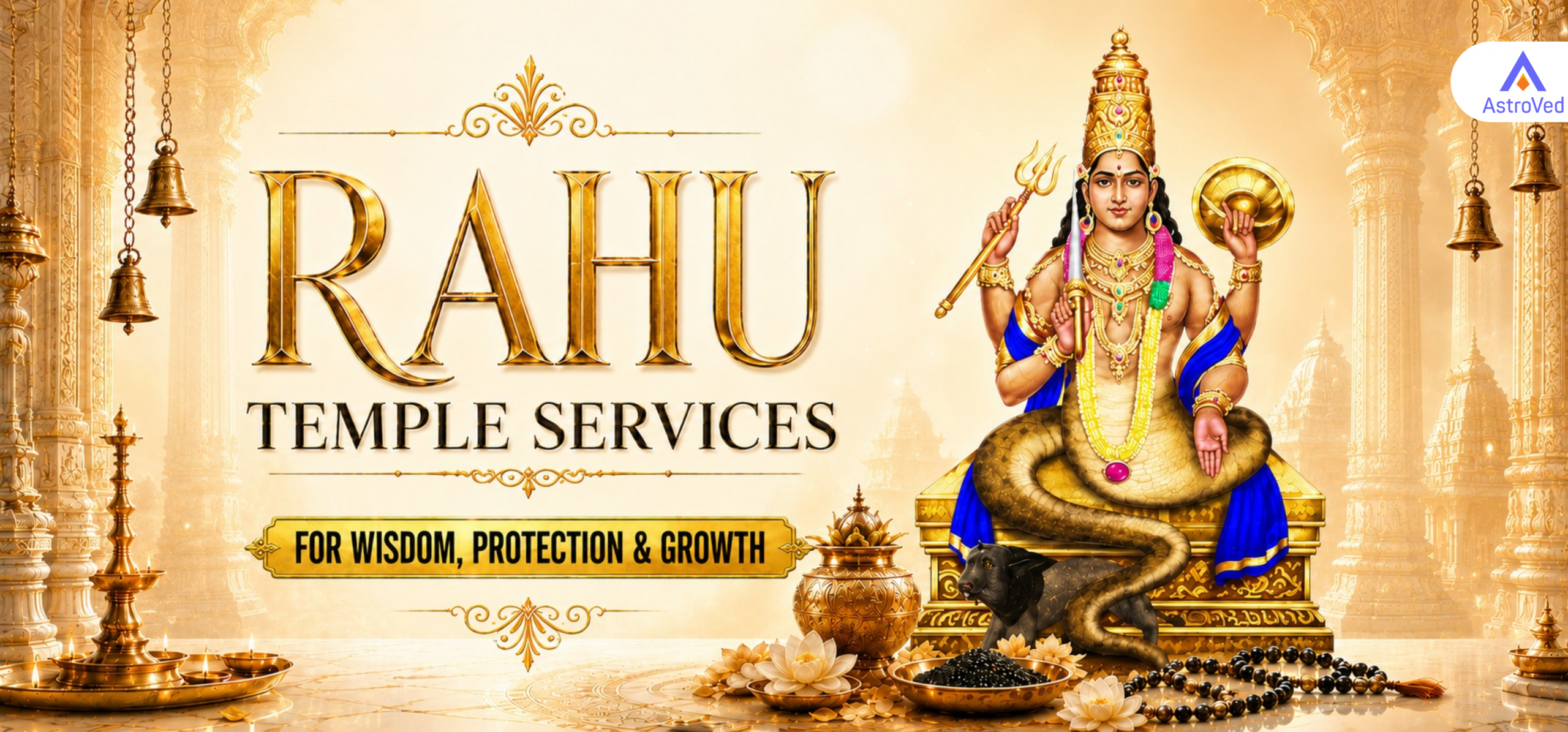 What brings seekers to the Rahu temple is not desperate fear. Rather, it is recognition. It is the recognition that Rahu’s challenges contain the seeds of profound spiritual growth. More importantly, it is the understanding that honoring Rahu through sacred offerings creates a bridge between the shadow and the light.
This is the spiritual power of temple offerings and Abhishekam rituals dedicated to Rahu.
In Vedic tradition, Abhishekam is not just a ceremonial bath of an idol. Instead, it is a sacred ritual that consecrates, purifies, and transforms. Water flows not only over stone, but also through the entire spiritual cosmos. Therefore, when Abhishekam is performed with intention toward Rahu, it becomes one of the most powerful ways to work with Rahu’s transformative energy.
What brings seekers to the Rahu temple is not desperate fear. Rather, it is recognition. It is the recognition that Rahu’s challenges contain the seeds of profound spiritual growth. More importantly, it is the understanding that honoring Rahu through sacred offerings creates a bridge between the shadow and the light.
This is the spiritual power of temple offerings and Abhishekam rituals dedicated to Rahu.
In Vedic tradition, Abhishekam is not just a ceremonial bath of an idol. Instead, it is a sacred ritual that consecrates, purifies, and transforms. Water flows not only over stone, but also through the entire spiritual cosmos. Therefore, when Abhishekam is performed with intention toward Rahu, it becomes one of the most powerful ways to work with Rahu’s transformative energy.
Quick Answer
Rahu temple offerings and Abhishekam rituals honor Rahu’s transformative power while seeking protection from its shadow effects. These sacred ceremonies realign the devotee with Rahu’s evolutionary purpose. As a result, fear can transform into wisdom, while obstruction can become breakthrough. On spiritual, karmic, and energetic levels, these rituals support deep transformation.
Key Takeaways
- Rahu temple offerings acknowledge Rahu as a divine force, not merely a malefic influence
- Abhishekam rituals purify and sanctify both the deity representation and the devotee’s consciousness
- Temple ceremonies create energetic shifts that personal practice alone may not achieve
- Rahu offerings redirect obsession and craving toward spiritual purpose
- Sacred rituals help dissolve karmic patterns at their source
- Timing Rahu rituals with planetary cycles can amplify their power
- Combining temple offerings with personal practice creates deeper transformation
Understanding Rahu Spiritually: Beyond Fear to Reverence
Rahu: The Divine Shadow
In many astrological traditions, Rahu is often feared. It is called the “head of the serpent” and is associated with obsession, illusion, and disruption. However, in Vedic spirituality, Rahu is understood in a far more nuanced and profound way.
Rahu is the planet of transformation through disruption. It is not challenging for the sake of causing suffering. Instead, Rahu becomes transformative because it breaks what is false within you. Through pressure and unexpected events, Rahu dissolves illusions, shatters denial, and pushes the soul toward evolution.
For this reason, ancient sages did not simply try to appease Rahu. They honored Rahu. They built temples for Rahu and created elaborate rituals to work with Rahu’s energy consciously. In this way, devotees could transform Rahu’s shadow influence into a force for awakening.
Rahu represents:
- The soul’s evolutionary edge, where real growth happens
- Worldly ambition when directed toward spiritual purpose
- The power to transcend limitations and achieve the impossible
- Shadow work and the integration of denied aspects of the self
- Obsession that, when redirected, becomes spiritual passion
- Craving that, when understood, points toward what the soul truly seeks
When you approach Rahu with reverence rather than fear, everything changes. The planet that once seemed like your enemy can become your greatest teacher.
Temple Offerings to Rahu: The Language of Sacred Devotion
What Are Rahu Temple Offerings?
Temple offerings to Rahu are physical and tangible expressions of spiritual intention. They are not merely ritual formalities. In fact, each offering carries symbolic meaning and energetic power.
Through these offerings, devotees express humility, devotion, surrender, and readiness for transformation. At the same time, the ritual creates a sacred connection between the devotee and Rahu’s karmic energy.
Traditional Rahu Temple Offerings
1. Flowers, Especially Blue or Dark Colors
Flowers represent the blooming of consciousness. Blue and dark flowers honor Rahu’s mysterious and unseen nature. Therefore, offering flowers expresses the intention: “I honor your hidden depths and transformative power.”
2. Incense and Aromatic Offerings
Incense rises upward, carrying prayers and intentions into the subtle realms. Since Rahu is a shadow planet, it responds powerfully to offerings that connect the visible and invisible worlds. In addition, the fragrance of incense creates a sacred atmosphere for prayer.
3. Milk and Milk Products
Milk represents purity and nourishment. By offering milk to Rahu, devotees symbolically seek to purify their consciousness from confusion, illusion, and fear. At the same time, they honor Rahu’s power to transform inner darkness into awareness.
4. Coconut
In Vedic tradition, coconut represents surrender and humility. Its multiple layers symbolize the layers of illusion that Rahu creates and dissolves. Therefore, offering coconut becomes a symbolic act of breaking through false identity and ego.
5. Sesame Seeds
Sesame seeds symbolize surrender, protection, and karmic purification. Offering sesame acknowledges Rahu’s power while seeking divine support during periods of transformation. Moreover, sesame is often used in rituals connected with karmic release.
6. Donations to Temples and Service
Donations and service are among the most powerful offerings to Rahu. Since Rahu can create compulsive desires, service redirects that energy toward spiritual purpose. As a result, desire becomes devotion, and ambition becomes selfless action.
7. Fasting and Dietary Offerings
Fasting on Saturdays, or following a sattvic diet as an offering, helps redirect the body’s energy from material indulgence to spiritual refinement. In this way, fasting becomes a discipline that supports clarity, restraint, and inner purification.
Each offering carries a message. Together, they create a complete spiritual conversation with Rahu.
Abhishekam Rituals: The Sacred Bathing Ceremony of Transformation
What Is Abhishekam?
Abhishekam, also spelled Abhiseka, is a sacred bathing ritual performed on deity idols in temples. During the ritual, water, milk, honey, yogurt, clarified butter, and other purifying substances are poured over the deity while mantras are chanted.
However, Abhishekam is far more than a ceremonial bath. It is an act of consecration. Through this ritual, divine grace and transformation are invoked through water as the sacred vehicle.
When performed for Rahu, Abhishekam becomes a powerful spiritual process. It helps purify karmic patterns, calm restless energy, and invite clarity into areas of life affected by Rahu.
The Spiritual Mechanics of Abhishekam
1. Purification at Multiple Levels
The waters used in Abhishekam are not ordinary water. They are infused with mantras, devotion, and intentional energy. When poured over the deity, they purify not only the physical idol but also the energetic field surrounding it. As a result, that purified energy extends to the devotee present.
2. Alignment With Cosmic Cycles
Abhishekam rituals are often performed according to planetary positions, lunar phases, and astrological timings. When the ritual is done at an auspicious time, its power becomes stronger. For example, Rahu Abhishekam performed during Rahu Hora carries special potency.
3. Transformation Through Water
Water is known for its ability to dissolve, purify, and transform. In Rahu Abhishekam, water becomes the medium through which crystallized karma, obsessions, illusions, and inner confusion are softened and released. Therefore, the ritual works symbolically and energetically at the same time.
4. Mantric Resonance
During Abhishekam, priests chant Rahu mantras and sacred incantations. These mantras create vibrational frequencies that reach into the subtle planes where Rahu operates. As the chanting continues, the ceremony becomes a direct transmission of spiritual energy.
5. Collective Energy Field
When several devotees gather for Abhishekam, their combined spiritual intention creates a powerful energetic field. Because of this collective devotion, group rituals can create a deeper impact than individual offerings alone.
The Spiritual Benefits of Rahu Abhishekam Rituals
1. Dissolution of Obsessive Patterns
Rahu can create obsession, whether with money, relationships, status, power, or desires. Through Abhishekam, these compulsive patterns are addressed at their energetic root. As a result, the ritual supports deeper release rather than temporary control.
2. Protection During Rahu Mahadasha
When Rahu’s 18-year Mahadasha is active, life can become intense and unpredictable. During this period, regular Rahu Abhishekam can provide spiritual protection and conscious guidance. Moreover, it can help devotees navigate transformation with greater awareness.
3. Karmic Release
Many Rahu-related challenges are connected to karmic debts from past actions. When Abhishekam is performed with sincere intention, it supports the release of these karmic burdens. In this sense, the ritual becomes a method of karmic resolution.
4. Mental Clarity and Illusion Dissolution
Rahu can create confusion, illusion, and restless thoughts. However, Abhishekam rituals help clarify the mind and make truth easier to recognize. Many devotees experience clarity about important life decisions after participating in Rahu Abhishekam.
5. Spiritual Activation and Breakthrough
Rahu is not only about shadow work. It is also connected with breakthrough and transformation. When properly honored, Rahu can activate the ability to transcend limitations. Therefore, Abhishekam rituals help unlock hidden potential.
6. Redirection of Ambition Toward Purpose
Rahu’s driving force can create strong worldly ambition. However, when this force is redirected, it becomes spiritual passion and dharmic purpose. Abhishekam helps transform restless desire into meaningful direction.
7. Integration of Shadow Aspects
Rahu represents denied or hidden aspects of the self. Through Abhishekam, these shadow aspects are acknowledged and purified. Gradually, they can transform from unconscious drivers into conscious strength.
8. Alignment With the Soul’s Evolutionary Intent
Ultimately, Rahu represents the soul’s evolutionary edge. Therefore, Rahu Abhishekam helps align your conscious intention with your deeper spiritual purpose. This alignment allows growth to happen with more awareness and less resistance.
How to Participate in Rahu Abhishekam Rituals
Finding a Rahu Temple
Many temples have Rahu shrines or dedicated Rahu worship days. Therefore, you can look for temples in your region that perform regular Rahu Abhishekam. If possible, visiting a powerful Rahu temple can enhance the spiritual experience.
Optimal Timing
- Saturdays: Saturn influences Rahu’s manifestation, making Saturdays highly auspicious
- Rahu Hora: This is the planetary hour when Rahu’s energy is strongest
- New Moon/Amavasya: Rahu’s influence is powerful during the dark moon
- Rahu Transits: Rituals are especially useful when transiting Rahu strongly affects your chart
- Rahu Mahadasha: During the 18-year Rahu period, regular Abhishekam can be highly beneficial
Preparing for Abhishekam
Before participating in Rahu Abhishekam, you can prepare yourself through simple practices:
- Fast or eat light on the morning of the ritual
- Bathe before arriving at the temple
- Bring offerings such as flowers, incense, coconut, or donations
- Set a clear intention for clarity, protection, or transformation
- Arrive with an open heart and a willingness to receive change
This preparation helps make the ritual more meaningful and spiritually focused.
During Abhishekam
During the ritual, remain present and receptive. You can chant along with the mantras if you know them. Otherwise, you can silently offer your prayers with devotion.
As the sacred substances are poured, visualize confusion, obsession, and karmic burdens being washed away. In addition, feel the ritual energy moving through your mind and heart. This mindful participation strengthens your connection with the ceremony.
After Abhishekam
After the ritual, receive the blessed water, known as theertham, and flowers as sacred grace. Then, try to maintain the clarity and intention you set during the ritual.
It is also important to practice restraint after Abhishekam. Avoid immediately returning to old patterns or impulsive choices. Instead, meditate on the transformation initiated by the ritual and allow its effects to unfold gradually.
Combining Personal Practice With Temple Rituals
The most powerful approach combines personal spiritual practice with temple ceremonies. In this way, transformation becomes both personal and collective.
Daily Personal Practice
- Chant the Rahu Beej mantra “Om Bram Breem Braum Sah Rahave Namaha” 108 times
- Meditate on releasing obsession and illusion
- Practice gratitude for Rahu’s evolutionary pressure
Monthly Temple Offerings
- Visit a Rahu temple during Rahu Hora
- Perform individual offerings and prayers
- Absorb the temple’s spiritual energy
Quarterly or Seasonal Abhishekam
- Perform or participate in Rahu Abhishekam at an auspicious time
- Combine it with Tarpanam if Rahu challenges are ancestral
- Set intentions for the coming phase
Annual Major Ritual
- Participate in Rahu Graha Shanti Homa performed by qualified priests
- Combine the ritual with birth chart consultation
- Receive personalized guidance for working with Rahu’s energy
At AstroVed, we specialize in authentic Rahu Abhishekam rituals performed at optimal timing by trained Vedic priests. In addition, we offer Rahu Graha Shanti Homas, Tarpanam for ancestral Rahu issues, birth chart analysis to understand your Rahu placement, and personalized guidance for working with Rahu’s transformative power.
Frequently Asked Questions
What is the spiritual meaning of Rahu Abhishekam?
Rahu Abhishekam is a sacred bathing ritual that purifies and honors Rahu’s transformative power. Spiritually, it dissolves karmic patterns, redirects obsession toward purpose, provides protection during Rahu Mahadasha, and aligns the devotee with the soul’s evolutionary intent. Rather than being an act of fear, it is a reverent partnership with Rahu’s transformative force.
Why are temple offerings important for Rahu worship?
Temple offerings create a direct spiritual conversation with Rahu. They acknowledge Rahu as a divine force and express sincere intention. Furthermore, they redirect compulsive energy toward spiritual purpose. Each offering carries symbolic meaning that communicates respect and readiness for transformation.
How often should I do Rahu Abhishekam?
Monthly Rahu Abhishekam is ideal, especially during Rahu Hora or on Saturdays during Amavasya. If you are in Rahu Mahadasha, quarterly or more frequent Abhishekam is recommended. However, the exact frequency depends on your birth chart and current Rahu-related challenges.
What makes temple rituals more powerful than personal practice?
Temple rituals combine several powerful factors, including consecrated space, trained priest expertise, collective devotional energy, optimal timing, and the accumulated spiritual power of long-standing worship. Although personal practice is valuable, temple rituals can reach deeper dimensions of consciousness.
Can I do Rahu Abhishekam if I am not Hindu?
Yes. Rahu Abhishekam welcomes sincere seekers regardless of religious background. The ritual honors universal spiritual principles that go beyond any single religion. Therefore, what matters most is genuine intention and respect for the practice.
What happens after Rahu Abhishekam?
After Rahu Abhishekam, many people experience a sense of peace and clarity. Some may notice obsessive thoughts becoming quieter, while others may receive insights about confusing situations. Over time, Rahu-related challenges may begin to resolve as the ritual’s transformation unfolds gradually.
Is Rahu Abhishekam safe if Rahu is challenging in my chart?
Yes. In fact, Rahu Abhishekam is especially beneficial when Rahu is challenging. The ritual transforms your relationship with Rahu from resistance to cooperation. Instead of suppressing Rahu’s energy, it helps you work with it consciously.
Can I combine Rahu Abhishekam with other remedies?
Yes. Combining Abhishekam with Rahu mantra chanting, Graha Shanti Homa, Tarpanam, and birth chart guidance creates a complete approach. As a result, Rahu’s influence can be addressed on multiple levels at the same time.
Conclusion
Rahu temple offerings and Abhishekam rituals are sacred ceremonies developed over thousands of years to transform Rahu’s energy from obstruction into breakthrough. These rituals help align you with your soul’s evolutionary purpose. Moreover, they support ancestral purification, karmic resolution, and spiritual clarity.
At AstroVed, trained Vedic priests perform authentic Rahu Abhishekam rituals at optimal cosmic timing. These sacred ceremonies support karmic balance, spiritual transformation, and personalized birth chart guidance. Schedule your Rahu Abhishekam today and step into your soul’s evolutionary purpose.
- best position of rahu in horoscope
- effects of rahu
- peacock feather remedy for rahu
- rahu


 The item has been added to your cart.


