

 The item has been added to your cart.
Makara Sankranti 2026: Astrological Significance and Spiritual Blessings
 On January 12, 2026
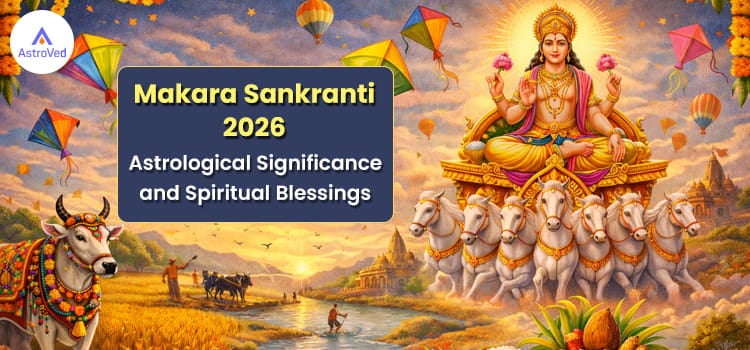
Makara Sankranti is that time of the year when there is a cosmic shift in the calendar. Unlike most Hindu festivals that follow the Moon’s cycle, this festival celebrates the Sun’s journey. The astrological meaning of Makara Sankranti reveals why this day is special and how you can invoke the Sun’s blessings.
What Makes Makara Sankranti Astrologically Special?
On Makara Sankranti, the Sun enters Capricorn, which is also referred to as Makara Rasi. This is the time when the Sun shifts from its Southern journey to the Northern journey. Astrologers refer to this period as Uttarayana.
The date for Makara Sankranti 2026 is January 14, when the Sun makes this transition. However, the main celebrations happen on January 15 in many regions. This happens because the Sun enters Capricorn after sunrise on January 14. Following traditional rules, rituals shift to the next day.
This solar event carries deep astrological weight. The Sun represents soul, father, authority, and vitality in Vedic astrology. When it moves into Capricorn, ruled by Saturn, a unique energy combination forms. The Sun's fire meets Saturn's discipline. This creates perfect conditions for spiritual growth.
The Uttarayana Period in Astrology
Makara Sankranti marks the beginning of Uttarayana - the six-month period when the Sun travels north. Ancient texts call this the "path of the gods."
During Uttarayana, days grow longer. Sunlight increases. This symbolizes the victory of light over darkness. Knowledge defeats ignorance. Good wins over evil.
The Bhagavad Gita mentions Uttarayana's importance. Lord Krishna tells Arjuna that souls who leave their bodies during Uttarayana attain liberation more easily. Those departing during Dakshinayana (southern journey) must return to earth.
This doesn't mean death during other times brings bad results. But it shows how sacred Uttarayana is considered. Starting on Makara Sankranti, this auspicious six-month window opens.
Astrological Effects of the Sun in Capricorn
The Sun spends a month in every zodiac sign. When it moves into Capricorn on Makara Sankranti, there are some astrological effects that can take place. Capricorn is an Earth sign and is ruled by Saturn. In astrology, Saturn teaches discipline, patience and hard work. When the Sun enters Saturn’s Earth domains, it is time for practical wisdom.
When this combination happens, there are a few precautions you need to take:
● Set goals that are realistic and work towards them in a steady way
● Be patient and build long-term success
● Take responsibility for your actions
● Maintain self-discipline and control
● Learn from the experience of teachers and elders
● Be courageous even when facing difficulties
Planetary Alignments During Sankranti 2026
The exact planetary positions during Makara Sankranti create specific effects. While the Sun's movement is the main event, other planets play supporting roles.
● Jupiter's position influences how you receive the festival's blessings. If Jupiter aspects the Sun positively, wisdom and growth multiply. Saturn's placement affects discipline and karmic lessons during this period.
● The Moon's nakshatra on January 15 determines the emotional tone of celebrations. Check your personal chart to see which house Capricorn falls in. This shows which life area gets activated during the Sankranti month.
● For students, if Capricorn touches the 5th house, studies improve. For business people, Capricorn in the 10th house boosts career. Health matters connect to the 6th house, and so on.
Spiritual Practices Based on Makara Sankranti Astrology
Holy Bath at Sunrise: Taking a bath in sacred rivers during Sankranti cleanses karmic debt. The water carries special purifying energy when the Sun enters Capricorn. If you can't reach a holy river, add sesame seeds to your bath water at home.
The early morning hours on January 15, 2026, hold the most power. Bathing before sunrise aligns you with the fresh Uttarayana energy.
Sun Worship and Mantras: Offer water to the rising Sun on Makara Sankranti 2026. Face east. Hold water in your palms. Let it flow toward the Sun while chanting:
"Om Suryaya Namaha" or "Om Hram Hreem Hroum Sah Suryaya Namaha"
This practice strengthens your Sun in the birth chart. Weak Sun causes low confidence, poor health, and father-related issues. Regular Sun worship during Sankranti month fixes these problems.
Charity and Donations: Saturn rules Capricorn. Saturn loves charity and helping the poor. Donating during Makara Sankranti pleases both Sun and Saturn. Traditional donations include sesame seeds (til) and jaggery sweets, warm clothes and blankets for the poor, food grains to needy families and money to temples or charitable organizations
The astrological benefit: giving reduces negative karma. It softens Saturn's harsh lessons in your chart.
Fasting and Diet: Some people fast on Sankranti. Others eat only specific foods. The traditional Sankranti diet includes sesame, jaggery, rice, and green vegetables. These foods have astrological significance. Sesame represents Saturn. Eating it honors Saturn and reduces his negative effects. Jaggery and rice connect to Sun energy. Together, they balance Sun-Saturn combination during this month.
Regional Variations and Astrological Timing
Different regions celebrate Makara Sankranti with slight timing differences. This happens because of sunrise variations across India.
Andhra Pradesh and Telangana: Main celebration on January 15. This follows the Telugu calendar's sunrise-based calculations.
Tamil Nadu: Celebrates as Pongal on January 15. The four-day Pongal festival extends from January 14-17.
North India: Many areas celebrate on January 14, following the astronomical moment of Sun's entry into Capricorn.
Gujarat and Rajasthan: Uttarayan celebrations begin on January 14 and continue for two days.
The Four-Day Sankranti Period
Makara Sankranti astrology extends across four days, each with its own energy:
January 14 - Bhogi: Clear old karma. Throw away broken items. Let go of bad habits. This creates space for new blessings.
January 15 - Pongal / Sankranti: The main day. Sun officially enters Capricorn. Perform all major rituals on this day.
January 16 - Kanuma/Mattu Pongal: Honor animals, especially cows and bulls. They represent earthly abundance and Saturn's practical nature.
January 17 - Kaanum Pongal/Mukkanuma: Family gatherings. Strengthen relationships. Visit relatives and friends.
Conclusion
Makara Sankranti reminds us that life follows cosmic rhythms. The Sun's journey North teaches us to move toward light. The entry into Capricorn shows that discipline and dedication bring lasting success. Celebrate Makara Sankranti with awareness. Know why you take the holy bath. Understand the power behind Sun worship. Feel the shift as darkness decreases and light increases. This knowledge transforms a simple festival into a life-changing spiritual practice.


