

 The item has been added to your cart.
Ekadashi Fasting: Meaning, Importance, Benefits, and Practices
 July 8, 2026


What Is Ekadashi?
Ekadashi is a Sanskrit word that means “the eleventh.” It refers to the eleventh lunar day that occurs during both the waxing and waning phases of the Moon.
In the Hindu tradition, Ekadashi is regarded as a highly auspicious day for fasting, prayer, self-discipline, and devotion. It is also understood symbolically as a time to redirect the ten senses and the mind away from worldly desires and toward the Divine.
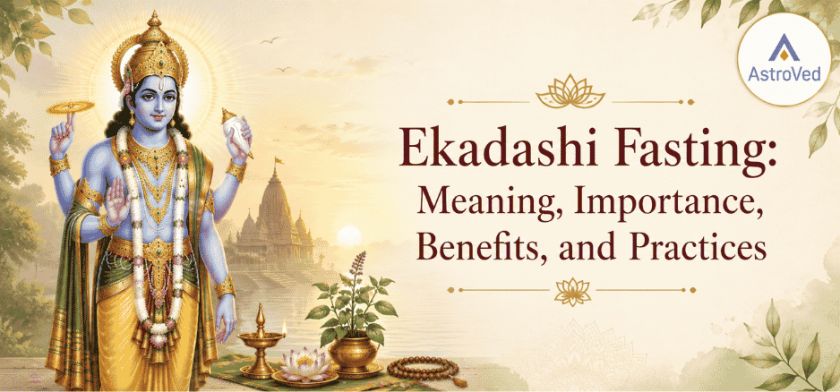
Ekadashi is the eleventh lunar day observed during both the waxing and waning Moon cycles. Devotees observe a fast, worship Vishnu, chant sacred names, read spiritual texts, and avoid worldly distractions. The observance is believed to support inner peace, self-control, purification, and spiritual growth.
Why Is Ekadashi Considered Auspicious?
Fasting on Ekadashi is viewed as a sincere expression of faith, devotion, and love for God. The practice encourages a person to step away from temporary material pleasures and move toward a calmer, more meaningful, and spiritually focused way of life.
Ekadashi fasting is also believed to bring peace and emotional balance. Traditional belief holds that its spiritual merit is comparable to bathing in the sacred Ganges a thousand times. It is further said to help a devotee seek freedom from the effects of actions committed in both the present and previous births.
The Deeper Meaning of Ekadashi Fasting
Ekadashi is not simply a day of avoiding food. Its deeper purpose is to practise restraint over the body, senses, and mind.
The ten senses constantly connect a person with the outside world, while the mind processes desires, reactions, and attachments. Ekadashi offers an opportunity to turn these eleven aspects inward and direct them toward prayer, remembrance of God, and spiritual awareness.
For this reason, the fast is regarded as a practice of austerity, detachment, and self-control. It helps create the mental quiet needed to contemplate the presence of the Divine.
Spiritual Benefits of Observing Ekadashi
Ekadashi fasting is one of the most respected forms of fasting among Hindus. Its spiritual purpose is to guide a devotee away from the restless pursuit of temporary happiness and toward peace, contentment, and inner joy.
The observance may help devotees:
- Control a restless mind
- Reduce attachment to material desires
- Develop self-discipline
- Focus more deeply on prayer
- Strengthen devotion to God
- Create inner peace and mental clarity
- Support spiritual progress
By temporarily withdrawing from ordinary routines and distractions, devotees can give greater attention to spiritual practices.
Ekadashi and Vishnu Worship
The eleventh day of the waxing lunar phase is known as Shukla Ekadashi. It is considered especially suitable for worshipping Vishnu and observing a sacred fast.
Vishnu is worshipped as the all-pervading Supreme Being. Through fasting, prayer, and remembrance, devotees seek to quiet the mind and remain focused on the Divine.
Ekadashi therefore becomes a day not only of physical restraint but also of spiritual reflection, devotion, and inner purification.
The Scientific Significance Associated With Ekadashi
The Tamil source explains that the Earth is believed to occupy a particular position on the eleventh day of the lunar cycle. This is said to create conditions that may support physical well-being and spiritual development.
It is also stated that the specific arrangement of stars and zodiac signs on Ekadashi makes fasting without water beneficial for cleansing the body. Such fasting is believed to remove toxins and purify the mind, body, and soul.
In this understanding, Ekadashi fasting is viewed as both a spiritual discipline and a practice connected with physical purification.
How Did Ekadashi Originate?
According to Hindu religious texts such as the Padma Purana, Vishnu created the divine form known as Ekadashi from his own spiritual energy.
This divine power was created to destroy Papapurusha, the personification of all sins. The story highlights Ekadashi as a sacred force associated with purification, protection, and freedom from negative influences.
Why Are Grains Avoided on Ekadashi?
Traditional scriptures state that sins take shelter in grains on the day of Ekadashi. For this reason, eating grains is strictly avoided during the observance.
However, the true meaning of Ekadashi goes beyond dietary restrictions. Giving up grains is only one part of a broader discipline involving restraint, prayer, spiritual reading, and control over worldly distractions.
The fast is meaningful only when physical discipline is accompanied by purity of thought and devotion.
How Is Ekadashi Traditionally Observed?
Devotees commonly dedicate the day to spiritual activities rather than ordinary worldly pursuits.
Important practices include:
- Chanting the sacred names of God
- Worshipping Vishnu
- Reading holy scriptures
- Visiting a temple
- Practising self-control
- Avoiding grains
- Staying away from unnecessary distractions
- Reflecting on spiritual truths
The real observance of Ekadashi is to withdraw both the body and mind from worldly distractions and turn them toward God.
Is Ekadashi Only About Avoiding Food?
No. Ekadashi is not merely a dietary fast.
A person may avoid food but still remain distracted, restless, or deeply attached to worldly concerns. Such an observance does not fully express the purpose of Ekadashi.
True Ekadashi practice involves controlling the senses, calming the mind, reducing attachment, and engaging in prayer, chanting, spiritual reading, and temple worship.
Food restriction supports the practice, but inner discipline gives it meaning.
Frequently Asked Questions About Ekadashi
What does Ekadashi mean?
Ekadashi means “the eleventh” in Sanskrit. It is the eleventh lunar day that occurs during both the waxing and waning phases of the Moon.
Why do people fast on Ekadashi?
People fast on Ekadashi as an expression of devotion, faith, self-control, and detachment. The fast is believed to support peace, purification, and spiritual growth.
Which deity is worshipped on Ekadashi?
Vishnu is especially worshipped on Ekadashi. Shukla Ekadashi is considered an auspicious day for Vishnu worship and fasting.
What are the benefits of Ekadashi fasting?
Ekadashi fasting is believed to calm the mind, develop self-discipline, support spiritual progress, bring peace, and help purify the mind, body, and soul.
Why should grains not be eaten on Ekadashi?
According to traditional Hindu texts, sins are believed to reside in grains on Ekadashi. Therefore, grains are avoided during the fast.
Is Ekadashi fasting only a religious ritual?
No. It is also a spiritual practice of self-control, restraint, detachment, prayer, and inward reflection.
What should devotees do on Ekadashi?
Devotees may chant sacred names, worship Vishnu, read holy texts, visit temples, avoid grains, practise restraint, and stay away from worldly distractions.
What is Shukla Ekadashi?
Shukla Ekadashi is the eleventh lunar day during the waxing phase of the Moon. It is regarded as an especially suitable day for Vishnu worship and fasting.
What is the true purpose of Ekadashi?
The true purpose is to turn the senses and mind away from worldly desires and direct them toward God, spiritual reflection, and inner purification.
Conclusion
Ekadashi fasting is more than a religious custom or a temporary restriction on food. It is a spiritual discipline that encourages devotees to control the senses, calm the mind, reduce attachment, and focus on the Divine.
By combining fasting with chanting, scripture reading, temple worship, and self-restraint, Ekadashi becomes a meaningful practice for inner peace and spiritual development.
Ekadashi is a sacred opportunity to purify the body, discipline the mind, and redirect one’s attention from worldly desires toward spiritual awareness.
Don’t forgot to Share this Article!

 Tags:
Tags:Leave a Reply
Follow Us
Categories
Related articles






+ =


