

 The item has been added to your cart.
12 Nakshatras to Approach with Caution
 August 12, 2026


The 12 Nakshatras That Ancient Sages Advised Us to Approach with Caution
"Does timing really matter?" It's a question many people ask today.
Our ancestors believed the answer was yes.
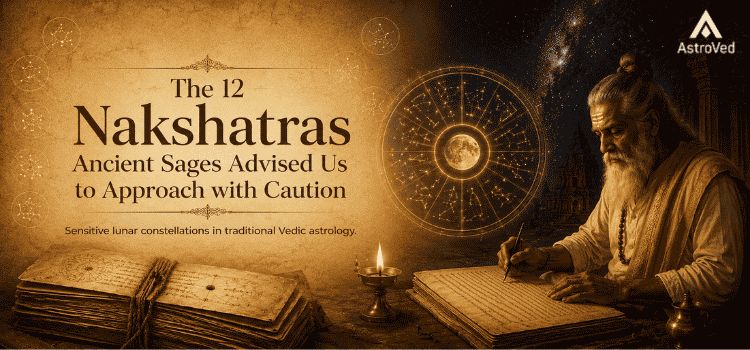
In ancient India, time was never considered ordinary. Every important event—whether beginning a journey, borrowing money, starting a business, or seeking medical treatment—was carefully aligned with the movements of the stars and planets.
When a person visited an Ayurvedic or Siddha physician, the healer often looked beyond the illness. The Nakshatra (lunar constellation) and the planetary positions of the day were also taken into account before beginning treatment. The belief was simple: the right treatment given at the right time brings the best results.
Over time, many of these traditional practices have faded from everyday life. Today, they are often dismissed as mere superstition because they have not been scientifically validated. Yet, countless families and astrologers continue to observe that timing can influence the outcome of important events.
Why Do Nakshatras Matter?
According to Vedic astrology, every Nakshatra carries its own unique energy. Just as some seasons are better for planting crops and others for harvesting, certain Nakshatras are considered more suitable—or less suitable—for specific activities.
Ancient sages identified twelve Nakshatras that deserve special attention when making significant life decisions.
The Twelve Sensitive Nakshatras
-
Bharani
-
Ardra
-
Ashlesha
-
Vishakha
-
Krittika
-
Magha
-
Purva Phalguni
-
Swati
-
Jyeshtha
-
Purva Bhadrapada
-
Chitra
-
Purva Ashadha
Traditional Beliefs Associated with These Nakshatras
According to classical astrological traditions, activities initiated during these Nakshatras may require additional care. It is traditionally believed that:
-
Borrowing money during these periods may make it more difficult to repay the debt.
-
Travelling or relocating abroad may lead to unexpected delays or a prolonged stay away from one's homeland.
-
Falling seriously ill or becoming bedridden during these Nakshatras may be associated with a longer or more challenging recovery.
These beliefs have been passed down through generations by ancient sages and traditional astrologers.
A Word of Wisdom
Astrology is not meant to create fear—it is meant to create awareness.
These Nakshatras should not be viewed as signs of inevitable misfortune. Instead, they remind us that timing is an important factor in decision-making. Just as farmers choose the right season to sow seeds, Vedic astrology encourages us to choose the right time for important actions.
At the same time, no prediction should ever be made based on the Nakshatra alone. An experienced astrologer always considers the entire horoscope, including planetary strengths, dasa–bhukti periods, planetary transits, and other astrological combinations before arriving at a conclusion.
The wisdom of the ancient sages continues to remind us of a timeless principle:
Right action, at the right time, guided by the right knowledge, often produces the best results.
This version is more conversational and engaging while also making it clear that these are traditional astrological beliefs, avoiding the impression that the claims are established facts.
Don’t forgot to Share this Article!

 Tags:
Tags:Leave a Reply
Follow Us
Categories
Related articles


+ =


