

 The item has been added to your cart.
Best Days to Worship Ketu Bhagavan: Auspicious Times for Spiritual Growth
 June 8, 2026


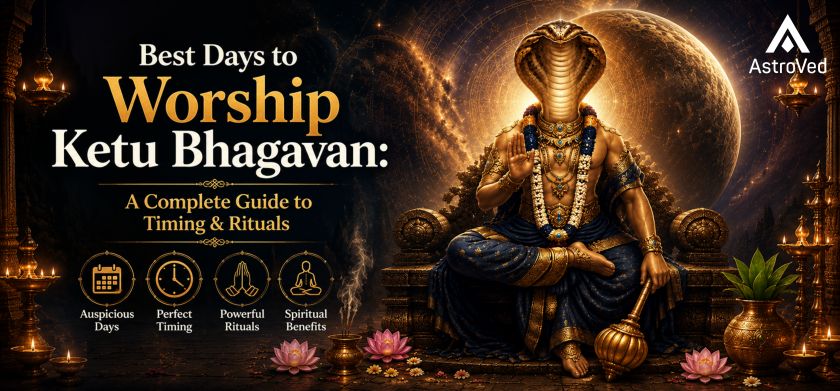
Best Days to Worship Ketu Bhagavan: A Complete Guide to Timing & Rituals
You feel the call but you're not sure when to answer it. You know Ketu wants your attention, but you're uncertain about the timing, the rituals, the right way to approach this shadow planet with devotion rather than fear.
Timing matters in Vedic practice. Everything in the cosmos follows rhythm and cycles. Ketu, like all the grahas, responds most powerfully when approached at the right moment through the right method. Worship Ketu on an ordinary day, and the connection is present. Worship Ketu on an auspicious day through proper ritual, and the spiritual impact deepens exponentially.
This is where most seekers get stuck. They know they need to address Ketu, but they don't know the optimal times or the practices that create real spiritual resonance.
Quick Answer: The best days to worship Ketu Bhagavan are Tuesday (Ketu's primary day), the dark moon period (Amavasya), Ketu's hora (planetary hour), and during Ketu's mahadasha or significant transits. Combine timing with proper rituals, mantras, and devotional practice for maximum spiritual benefit and karmic resolution.
Key Takeaways
-
Tuesday (Mangalbar) is Ketu's most auspicious day for worship
-
Amavasya (dark moon) amplifies Ketu's spiritual power dramatically
-
Ketu hora (specific hourly timing) creates direct energetic alignment
-
Consistency matters more than intensity regular practice beats occasional intensity
-
Combining worship with Graha Shanti homa increases effectiveness exponentially
-
Different lunar phases and seasons offer varying spiritual benefits
-
Personalized timing based on your chart creates the deepest resonance
Understanding Ketu Bhagavan: The Shadow Planet as Divine Teacher
Ketu Bhagavan Definition: Ketu, in Vedic philosophy, isn't merely a celestial body to fear it's a divine principle, a manifestation of cosmic consciousness that guides the soul toward liberation. Bhagavan means "the divine one" or "lord," so Ketu Bhagavan is the recognition of Ketu as a sacred force deserving of reverence and devotional practice.
Many Western astrology practitioners treat Ketu as a malefic influence to be managed. But in Vedic temple tradition, Ketu is approached as a guru a spiritual teacher whose job is to refine, purify, and elevate the soul.
This distinction changes everything about worship. When you approach Ketu Bhagavan with reverence rather than fear, you shift from resistance to receptivity. The shadow planet becomes an ally in your spiritual evolution.
Ketu governs:
-
Detachment and renunciation
-
Intuition and subtle perception
-
Mystical knowledge and esoteric wisdom
-
Healing and transformation
-
Past-life memory and karmic resolution
-
The soul's journey toward moksha
Worship of Ketu Bhagavan aligns you with these energies, making them accessible and actionable in your life.
The Primary Day: Why Tuesday Is Sacred for Ketu
Tuesday (Mangalbar) is Ketu's Primary Worship Day
While Ketu is a shadow planet without a physical body, it's traditionally associated with Tuesday in the Vedic system. Why Tuesday? Because Tuesday carries the martial, transformative energy that Ketu embodies, the power to dissolve old patterns and birth new consciousness.
Worshipping Ketu on Tuesdays creates a natural resonance. The cosmic frequency of the day aligns with Ketu's spiritual signature. Your devotional practice rides this wave rather than swimming against it.
What to do on Tuesdays:
-
Chant the Ketu beija mantra "Om Bram Breem Braum Sah Ketave Namaha" 108 times
-
Perform pooja to Ketu Bhagavan with offerings of flowers, incense, and meditative presence
-
Engage in spiritual reading or study, particularly of texts dealing with karma and liberation
-
Practice meditation focused on releasing attachment and ego dissolution
-
If possible, visit a temple and offer prayers specifically to Ketu
Even 20 minutes of dedicated Tuesday practice creates measurable spiritual shifts. Consistency matters far more than intensity. A brief but sincere Tuesday practice, performed regularly, carries more power than an intense but sporadic effort.
The Dark Moon Connection: Amavasya as Peak Worship Time
Amavasya (Dark Moon) Amplifies Ketu's Power
The dark moon, when the moon is invisible in the night sky, is Ketu's most potent window. Why? Because Ketu itself is a shadow point, a node of invisibility. The dark moon creates sympathetic resonance with Ketu's intrinsic nature.
During Amavasya, the veil between worlds thins. The ancestors become accessible. Karmic patterns surface more clearly. Spiritual practice deepens naturally. And worship of Ketu Bhagavan during this window carries exceptional power.
Amavasya Worship Protocol:
-
Perform a Ketu pooja with special intention during the darkest hours of Amavasya
-
Chant Ketu mantras, particularly the more advanced "Ketave Namaha" mantra
-
If possible, sponsor or participate in a Ketu Graha Shanti homa during Amavasya
-
Perform tarpanam (ancestral water offerings) to address karmic debts
-
Meditate on the concept of dissolution and ego release
-
Consider fasting or eating sattvic (pure) foods to heighten spiritual receptivity
Amavasya worship of Ketu Bhagavan is particularly powerful for those experiencing Ketu mahadasha, those with challenging Ketu placements, or those specifically working on karmic resolution and spiritual breakthrough.
Ketu Hora: The Hourly Window of Maximum Resonance
Timing Down to the Hour: The Power of Ketu Hora
In Vedic astrology, each planet rules a specific hour each day a period called the hora. During the Ketu hora, the planet's energy is at peak expression. Worship performed during Ketu hora carries exponentially greater power than worship at other times.
Each day has 24 hours, and each of the seven traditional planets (plus the lunar nodes) gets its turn ruling an hour. The Ketu hora appears once or twice daily, depending on your location and the season. How to Find Ketu Hora: Ketu hora changes based on sunrise time and your geographic location. You'll need:
-
Your local sunrise time
-
A Vedic astrology calendar or hora calculator
-
Awareness that Ketu hora typically lasts 40-48 minutes
Performing any Ketu practice mantra, meditation, pooja, or homa during Ketu hora creates maximum resonance. If you can align Tuesday + Amavasya + Ketu hora together, the spiritual impact becomes extraordinary.
Seasonal & Astrological Timing: Deepening Your Practice
Beyond Tuesday and Amavasya, other timings amplify Ketu worship:
Ketu Mahadasha (Your Personal 7-Year Window): If you're currently running Ketu mahadasha, this entire 7-year period is your intensive Ketu workshop. Worship during this time creates a dramatic transformation. The universe has given you this window specifically to work with Ketu's energy.
Ketu Transits (When Ketu Moves Through Your Birth Chart): When transiting Ketu aspects your natal planets, especially your Moon or ascendant, this is peak time for Ketu worship. These periods create heightened spiritual sensitivity and receptivity.
Lunar Eclipses (When Ketu Becomes Visible): Ketu becomes astronomically visible during lunar eclipses. These rare windows carry exceptional spiritual potency for Ketu practice. Worship during eclipse periods creates profound karmic shifts.
Personal Spiritual Anniversaries: The date of your birth, your Ketu mahadasha beginning, or significant spiritual experiences are all auspicious for Ketu worship. Mark these dates and make them dedicated practice days.
Ketu Worship Practices: The Rituals That Create Resonance
Understanding timing is half the equation. The other half is practice. Here's how to make your Ketu worship genuinely transformative:
Ketu Mantra Chanting (Japa): The Ketu beija mantra, chanted 108 times during auspicious timing, directly invokes Ketu Bhagavan's presence. Use a mala (prayer beads) if possible. Focus on each word. Mean what you're saying.
Temple Visits & Darshan: Many temples have shrines to Ketu or to deities associated with Ketu (like Hanuman or Shiva). Temple visits during auspicious timing intensify the worship experience. The collective spiritual energy of the temple amplifies your personal practice.
Graha Shanti Homa: This ancient fire ritual, performed by trained priests at optimal timing, creates energetic transformation at a deeper level than personal practice alone. A Ketu Graha Shanti homa performed during Tuesday + Amavasya + Ketu hora carries exceptional power.
Meditation on Release: Sit in quiet meditation and focus on the concept of detachment, ego dissolution, and liberation. Imagine yourself releasing attachments, patterns, and false identities. This meditative work aligns your consciousness with Ketu's essential nature.
Tarpanam & Ancestral Ritual: If your Ketu weakness is karmic or ancestral in nature, tarpanam (water offerings to ancestors) performed at optimal timing addresses the root cause. This ritual often produces the deepest and most lasting transformation.
At Astroved, our expert Vedic astrologers help you identify the best timing for your personal Ketu worship based on your birth chart. We perform authentic Ketu Graha Shanti homas at optimal cosmic timing, offer tarpanam and ancestral purification rituals, and guide you through mantra and meditation practices specifically calibrated to your spiritual needs.
Creating Your Personal Ketu Worship Calendar
Here's how to design a sustainable Ketu worship practice:
Weekly Practice: Every Tuesday, spend 20-30 minutes in dedicated Ketu practice. Chant the beija mantra, meditate, or visit a temple. Keep it consistent and sincere.
Monthly Practice: During each Amavasya (dark moon), perform a more elaborate pooja. If possible, sponsor or attend a Ketu Graha Shanti homa. Make this your deep-dive monthly practice.
Hourly Practice: Once you identify Ketu hora in your time zone, perform a mantra or meditation during this window at least once weekly. The energetic resonance is remarkable.
Annual Practice: During your birth month or a significant spiritual anniversary, perform a major Ketu ritual. This could be a full Graha Shanti homa, extensive mantra practice, or a temple pilgrimage dedicated to Ketu.
Crisis/Transition Practice: During Ketu mahadasha, major Ketu transits, or times of significant life change, intensify your practice. Add tarpanam, increase mantra repetition, or perform multiple homas.
This layered approach ensures you're working with Ketu's energy consistently while also honoring the special potency of optimal timing.
Conclusion
The best days to worship Ketu Bhagavan aren't arbitrary. They're cosmic invitations, moments when the universe aligns to support your spiritual practice with maximum power.
Tuesday provides the foundational rhythm. Amavasya opens the door to deeper work. Ketu hora creates the window of peak resonance. And when you combine these timings with sincere practice of mantra, meditation, pooja, or homa, you're not just performing rituals. You're stepping into conscious partnership with your soul's deepest evolutionary path.
Ketu Bhagavan isn't a force to fear or manage. It's a teacher, a guide, a manifestation of divine wisdom showing you the way toward detachment, enlightenment, and authentic liberation.
The bottom line: The best day to worship Ketu Bhagavan is Tuesday, amplified by Amavasya and Ketu hora. But more importantly, the best day is the day you choose to begin consistently, sincerely, and with an open heart.
Ready to deepen your Ketu practice? At Astroved, our expert Vedic astrologers help you identify optimal worship timing based on your personal chart. We perform authentic Ketu Graha Shanti homas aligned with peak cosmic moments, offer tarpanam for ancestral clearing, and guide you through personalized mantra and meditation practices. Let us help you build a Ketu worship practice that transforms your spiritual journey. Book your Ketu worship consultation today and step into divine alignment.
Frequently Asked Questions (FAQ)
What is the best day to worship Ketu Bhagavan?
Tuesday is Ketu's primary worship day, making it the most auspicious for regular Ketu practice. However, the dark moon (Amavasya) is even more powerful. The absolute best timing combines Tuesday + Amavasya + Ketu hora (Ketu's planetary hour). Worshipping during this triple alignment creates an extraordinary spiritual impact.
How often should I worship Ketu?
Consistency matters more than frequency. A brief daily or weekly practice, performed sincerely and regularly, creates more spiritual progress than intensive but sporadic worship. Ideally, practice every Tuesday, plus Amavasya, plus whenever Ketu hora occurs in your timezone.
Can I worship Ketu every day?
Yes. Daily Ketu worship is beneficial, particularly during Ketu mahadasha or if you have a challenging Ketu placement. Even 10 minutes of daily mantra chanting or meditation creates measurable spiritual shifts. However, weekly practice at optimal timing is the minimum for meaningful results.
What is Ketu hora, and how do I find it?
Ketu hora is the hour of the day when Ketu's planetary energy is strongest. It changes daily based on sunrise time and your location. You'll need a Vedic astrology calendar or hora calculator to identify it. Practicing during Ketu hora amplifies the effectiveness of any Ketu practice exponentially.
What should I offer when worshiping Ketu Bhagavan?
Appropriate offerings include flowers (especially white or purple), incense, ghee lamps, fruit, or simply water and meditative presence. The offering itself matters less than the sincerity of devotion. Some practitioners offer prayers, mantras, or service to others as their offering to Ketu Bhagavan.
Is Ketu worship beneficial if I don't have a challenging Ketu in my chart?
Absolutely. Ketu worship benefits everyone. Even people with well-placed Ketu deepen their spiritual practice through devotion to Ketu Bhagavan. Ketu represents the soul's evolutionary path regardless of birth chart placement. Worship amplifies spiritual growth for all seekers.
Can I do Ketu Graha Shanti homa myself, or do I need a priest?
While personal practice is valuable, a professionally performed Ketu Graha Shanti homa by a trained Vedic priest carries greater power. The priest's training, intention, and ceremonial expertise create energetic shifts that personal practice alone cannot reach. Ideally, combine personal practice with periodically sponsored homas.
Don’t forgot to Share this Article!

 Tags:
Tags:Leave a Reply
Follow Us
Categories
Related articles






+ =


