

 The item has been added to your cart.
Hanuman Jayanti: Significance, Worship Rituals, Benefits, and Gayatri Mantra
 July 9, 2026


A Sacred Celebration of Strength and Devotion
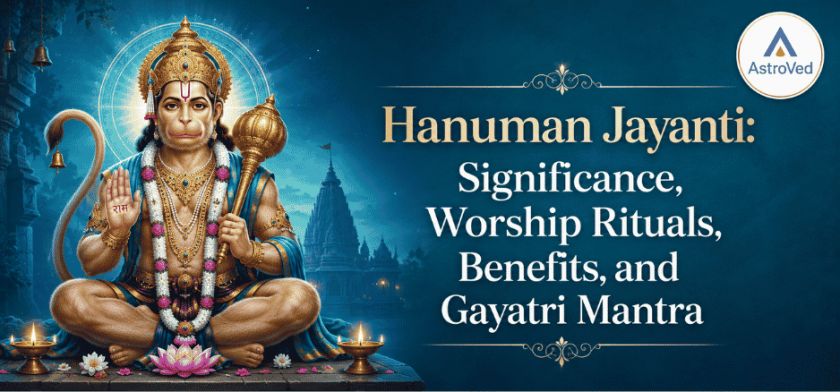
Hanuman Jayanti is a sacred Hindu festival that celebrates the birth of Hanuman, the powerful deity revered as a symbol of strength, devotion, courage, and fearlessness. Devotees observe this auspicious occasion with prayers, fasting, mantra chanting, and special worship to seek his blessings.
Hanuman is worshipped by many names, including Bajrangbali, Pavan Putra, Anjaneya, Maruti, and Sankat Mochan. Each name reflects his divine qualities and his ability to protect devotees from difficulties and negative forces.
On Hanuman Jayanti, Hanuman temples across the country are beautifully decorated with oil lamps and marigold garlands. The atmosphere becomes deeply devotional as temples resonate with bhajans, mantras, and the recitation of the Hanuman Chalisa.
Devotees offer prayers to Hanuman for courage, protection, success, and relief from obstacles. Many observe a fast, perform special Poojas, offer sindoor and oil, and participate in Hanuman Mahotsav celebrations.
What Is Hanuman Jayanti?
Hanuman Jayanti commemorates the divine birth of Hanuman, who is regarded as an incarnation of Shiva and the devoted disciple of Sri Rama.
The festival holds great importance for Hindus because Hanuman represents selfless service, unwavering faith, discipline, and complete surrender to the Divine. He is also regarded as the living embodiment of Rama Nama - the sacred name of Sri Rama.
On this day, devotees gather at Hanuman temples from the early morning hours. They chant mantras, recite the Hanuman Chalisa, and worship him with a pure heart.
Some devotees also undertake a complete fast to seek Hanuman’s blessings for success, strength, and protection in life.
Hanuman as the Ideal Devotee
Hanuman is remembered not only for his extraordinary power but also for his complete devotion to Sri Rama.
He served Sri Rama with unconditional love, humility, and dedication. For this reason, he is celebrated as the perfect disciple and a true Karma Yogi - one who performs every action with sincerity and without selfish expectations.
His devotion teaches that true strength arises from faith, discipline, and selfless service. Hanuman Jayanti allows devotees to reflect on these qualities and bring them into their own lives.
How Is Hanuman Jayanti Celebrated?
Hanuman Jayanti is celebrated with great enthusiasm and devotion. Temples are illuminated with traditional lamps and decorated with colourful flowers, especially marigold garlands.
Devotional songs, bhajans, and sacred chants fill the temple surroundings throughout the day. Special Poojas and religious gatherings are also organised as part of Hanuman Mahotsav celebrations.
Devotees commonly observe the occasion by:
- Visiting a Hanuman temple early in the morning
- Taking a sacred bath before beginning worship
- Observing a fast
- Offering sindoor and oil
- Lighting lamps
- Chanting Hanuman mantras
- Reciting the Hanuman Chalisa
- Offering sweets and Prasad
- Performing Arati
- Circumambulating the deity
- Sharing Prasad with others
These acts of devotion are performed to receive Hanuman’s blessings for courage, protection, confidence, and freedom from obstacles.
Hanuman Jayanti Worship Rituals
Devotees traditionally begin their Hanuman Jayanti observance before sunrise.
After taking a sacred bath, they visit a Hanuman temple or prepare a clean place for worship. Sindoor is applied to the forehead of Hanuman’s sacred image, and different mantras are chanted with devotion.
A lamp is lit, and sweets or other offerings are placed before the deity. Devotees then recite the Hanuman Chalisa, perform Arati, and complete Pradakshina or circumambulation.
After the Pooja, devotees apply the blessed sindoor to their own foreheads. The Prasad offered during worship is then distributed to family members and other devotees.
The most important aspect of the worship is sincerity. Hanuman is worshipped with a pure mind, deep faith, and complete devotion.
Why Do Devotees Worship Hanuman?
Hanuman is believed to possess the divine power to overcome evil and protect those who seek his blessings.
His worship is associated with the removal of obstacles, hardships, fear, and negative influences. Devotees pray to him when they need courage, inner strength, confidence, and protection.
Hanuman devotion is also believed to help devotees remain mentally strong during challenging situations. His fearless nature inspires people to face difficulties with faith and determination.
Benefits of Hanuman Worship
Regular worship of Hanuman is believed to offer the following spiritual benefits:
Removal of Obstacles and Difficulties
Hanuman is known as Sankat Mochan, the remover of troubles. Devotees seek his blessings to overcome challenges and progress in life.
Physical and Mental Strength
His worship is associated with vitality, endurance, emotional stability, and a strong mind.
Protection from Negative Forces
Hanuman is worshipped for protection from negative energies, harmful influences, and evil forces.
Courage and Fearlessness
Devotion to Hanuman is believed to develop courage, self-confidence, and freedom from fear.
Relief from Planetary Afflictions
Hanuman worship is traditionally believed to reduce the adverse influences associated with Saturn and Rahu.
Hanuman Gayatri Mantra
The Hanuman Gayatri Mantra can be chanted with concentration and devotion:
Om Anjaneyaya Vidmahe
Vayuputraya Dhimahi
Tanno Hanumah Prachodayat
Frequently Asked Questions
What does Hanuman Jayanti celebrate?
Hanuman Jayanti celebrates the birth of Hanuman, who is revered as a symbol of devotion, strength, courage, and fearlessness.
What should devotees do on Hanuman Jayanti?
Devotees may visit a Hanuman temple, observe a fast, light a lamp, offer sindoor and oil, recite the Hanuman Chalisa, chant mantras, perform Arati, and distribute Prasad.
Why is the Hanuman Chalisa recited on Hanuman Jayanti?
Devotees recite the Hanuman Chalisa as an expression of faith and to seek Hanuman’s blessings for strength, courage, protection, and relief from difficulties.
What offerings are made to Hanuman?
Devotees traditionally offer sindoor, oil, sweets, flowers, lamps, and Prasad during Hanuman worship.
What are the benefits of worshipping Hanuman?
Hanuman worship is believed to remove obstacles, strengthen the body and mind, provide protection from negative forces, increase courage, and reduce the adverse influences of Saturn and Rahu.
What is the Hanuman Gayatri Mantra?
The Hanuman Gayatri Mantra is:
Om Anjaneyaya Vidmahe, Vayuputraya Dhimahi, Tanno Hanumah Prachodayat.
Conclusion
Hanuman Jayanti is a celebration of divine strength guided by devotion. It reminds devotees that true courage comes from faith, humility, selfless service, and a disciplined mind.
By observing a fast, visiting Hanuman temples, chanting mantras, reciting the Hanuman Chalisa, and performing heartfelt worship, devotees seek Hanuman’s protection and blessings. His example continues to inspire people to face obstacles with confidence, remain devoted to righteousness, and serve with love and sincerity.
Don’t forgot to Share this Article!

 Tags:
Tags:Leave a Reply
Follow Us
Categories
Related articles





+ =


